 VIETNAMESE
Processing Pineapple Fiber: A Truly Green Solution or Just Shifting Chemical Waste?
People talk a lot about pineapple fiber in green fashion today. Also, using farm waste seems like a very eco-friendly choice. Yet, experts ask a very tough question. Is processing pineapple fiber truly “green”? Or, does it just move waste from the farm to the factory? Therefore, this post will look at the clear line between true and fake green claims.
Nội dung chính:
The Good Side and the Thin Green Line
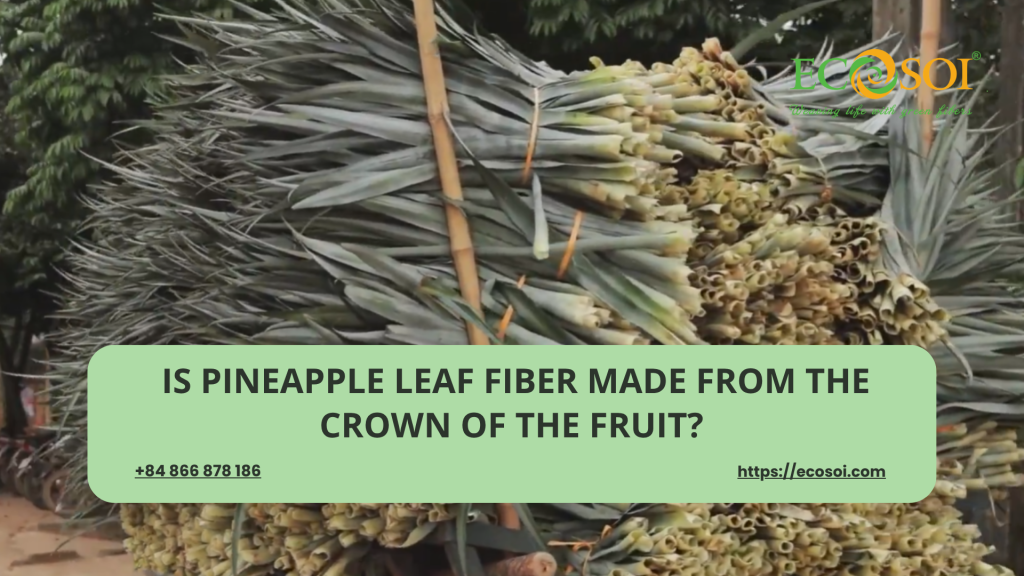
First, tropical countries create a lot of pineapple leaf waste. Often, farmers just burn these leaves. Sadly, this causes bad air pollution. Yet, saving this waste brings big benefits. It cuts down farm waste. Plus, it gives farmers more money.
According to the UN, using farm waste saves raw resources. Still, this great idea fails easily. Indeed, it fails if factories do not strictly control the technical steps.
The Truth: Processing Does Not Always Mean “Green”
Today, a very bad myth exists. Many people think that using bio-based materials always makes a “green” product.
In fact, just using pineapple leaves is not enough. Suppose processing pineapple fiber uses strong bleach. Also, suppose the factory dumps bad water and waste. In that case, the eco-impact is very bad. Basically, this process just changes the waste’s form. Thus, it does not help the earth at all.
The Main Issue: How to Process and Control It?
We must be very clear. No plant goes straight into a spinning machine. Instead, processing plant fibers always needs cleaning and smoothing steps.
According to the OECD, we must check the whole product life. Thus, the main question is not just about using chemicals. Rather, we must ask: What chemicals do you use? Also, how much do you use? Finally, how do you treat the dirty water?
Smart Chemicals and Biotech
To be truly green, factories must limit hard chemicals. Today, smart factories use safe biological tools like enzymes. Also, they strictly watch their chemical use. As a result, this stops harmful soil and water pollution.
Strict Water and Energy Control
Usually, processing natural fibers uses a huge amount of water. If ignored, the eco-impact grows very fast. Therefore, good factories must reuse their water. Furthermore, they must safely clean all dirty factory water.
Breaking the Myth: “Green” Still Uses Chemicals
Many buyers think sustainable materials use zero chemicals. Yet, this is fully wrong. In truth, even cotton, linen, or viscose needs chemical or biological help before spinning.
The real difference lies in strict control and clear data. According to ISO rules, “green” means using textile chemicals safely. Indeed, it does not mean ignoring helpful modern science. This honest approach helps prevent greenwashing in textiles.
Ecosoi: Clear Processes and Safe Biotech
Today, the market strongly fears fake green claims. Therefore, clear processes are the only way to build trust.
At Ecosoi, we know that making sustainable pineapple fiber takes hard work. Thus, we never trade the earth for fast money. Specifically, Ecosoi uses safe mechanical tools and smart biotech to clean the fibers.
Moreover, Ecosoi offers great blended yarns to cut chemical use. By mixing pineapple yarn with cotton, hemp, or linen, we make soft, green materials. Best of all, we skip toxic bleach. Ultimately, this clear data helps our B2B partners easily meet strict rules.
Conclusion
To sum up, processing pineapple fiber is not a magic fix. We cannot judge a material just by its plant origin. Instead, we must look at the final impact after the factory work. Being “green” depends entirely on human care and strict rules.
Does your brand need eco-materials with 100% clear tracking? Visit the Ecosoi Website now! You will get clear data sheets and premium blended fabric samples.
Knowing the process helps protect the earth. Please follow the Ecosoi Fanpage to learn more deep truths about green fashion!