 VIETNAMESE
Textile Material Testing: An Unskippable Step in Fashion
In the textile industry, a common myth exists today. Many people think that if a green material is good, factories can use it immediately. Actually, the exact opposite is true.
From early synthetic yarns to modern bio-materials, all must pass strict tests. They need setting adjustments to fit current factory machines. Truly, new materials do not fail because they need time. Instead, they fail because people force them to act exactly like old, mass-produced yarns. Therefore, this article explains a core truth. Textile material testing is an absolute must to unlock the true value of sustainable materials.
Nội dung chính:
Why is Textile Material Testing Mandatory for Green Materials?
Sustainable materials always carry a natural trait. Specifically, natural fibers vary a lot. They change based on seasons, local soil, and bio-processing tech.
Because of this, testing is never just an optional “extra step.” Rather, it is the core base of R&D. According to global rules, textile material testing helps businesses greatly:
-
First, it clearly defines the exact technical limits of the yarn.
-
Second, it spots early breakage risks during spinning and weaving.
-
Finally, it deeply reduces financial risks before starting mass production.
Pineapple Fiber: A Material That Needs “Getting Used To” Time
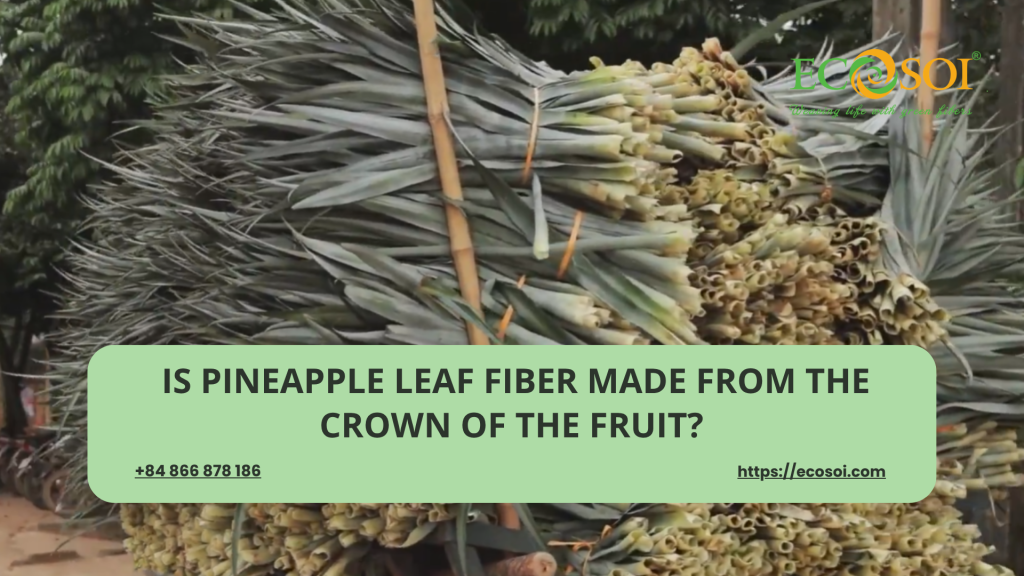
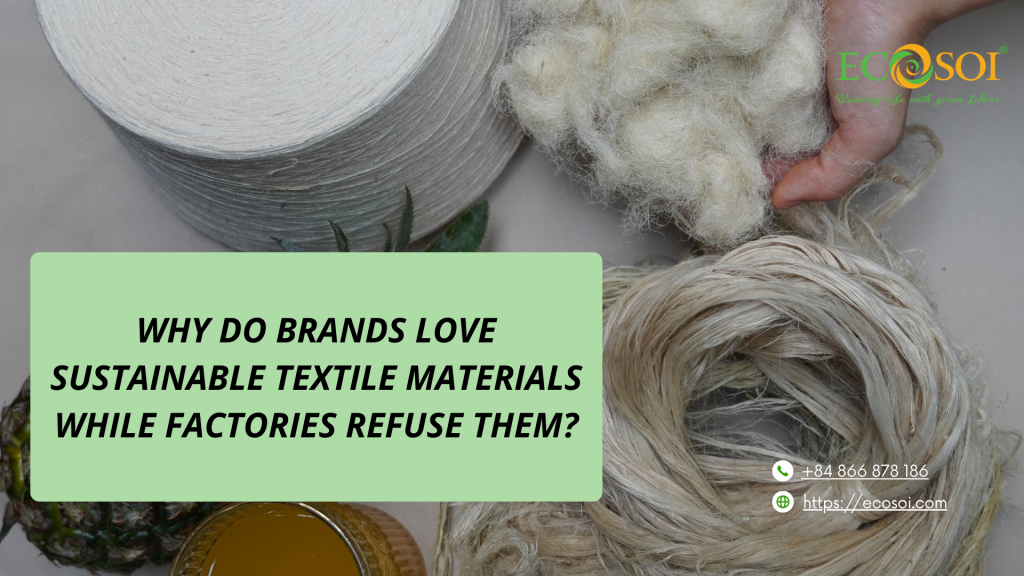
Workers extract pineapple fiber from farm waste. It has amazing natural eco-benefits. It never fights for food-growing land. Furthermore, it greatly reduces CO2 emissions by stopping farm waste burning.
However, it brings very specific technical challenges. The raw fiber length is naturally uneven. Also, its reaction on spinning machines differs completely from cotton or polyester. Thus, factories must carefully calculate the blend ratio before weaving. For this reason, we always emphasize a strict rule. You should not use commercial pineapple yarn if you skip serious textile material testing.
How Does the Textile Material Testing Process Work?
A common mistake is viewing testing just for PR. Some brands only test to prove the material is “green” for marketing. In reality, this process answers vital technical questions through four strict levels:
Raw Fiber Testing
Experts check length, thinness, and pulling strength. Then, they test blending it with viscose or cotton to find the best formula.
Weaving and Knitting Tests
Next, workers run the yarn on industrial machines. They watch how the yarn acts. Does it break often? Is the fabric structure stable? What is the exact material waste rate?
Finishing Tests (Dyeing & Treating)
Factories check how well the fabric absorbs dye. Also, they test shrinkage, softening treatments, and chemical reactions during finishing.
User Experience Testing
Finally, testers judge how the fabric feels on the skin. They check its physical strength during real use and wash it many times to see shape changes.
The B2B Puzzle: Moving Fast by Never Skipping Tests
Today, brands face huge pressure to launch green fashion fast. Because of this, some businesses rush the process and skip R&D time.
Consequently, disaster strikes at an industrial scale. The yarn breaks, colors look patchy, and the fabric shrinks heavily. Fixing these errors costs a fortune. Worst of all, it destroys brand trust with partners and buyers. In the long run, skipping tests never helps a brand move faster. Instead, it forces them to fix huge mistakes at a massive cost. For B2B clients, textile material testing is the ultimate commercial shield. It predicts costs accurately and builds strong internal quality control (QC) rules.
Ecosoi’s View: Testing to Prove True Value
At Ecosoi, we collect and standardize materials from Thanh Hoa and Nghe An. Through this, we learned that natural variation is very serious. Therefore, Ecosoi never views testing as a risk. Instead, it is an absolute requirement.
Explore: FROM IDEA TO REALITY: ECOSOI’S CUSTOM PRODUCTION SERVICE FOR PINEAPPLE FIBER MATERIALS
We never make empty promises like “pineapple yarn fits every product.” Instead, our approach focuses purely on real technical data. We test for specific uses and work closely with B2B dyeing factories. Also, we openly share the material’s limits. Ultimately, a good material is one measured correctly for its exact context.
Conclusion
To sum up, new sustainable materials are not perfect, “plug-and-play” magic fixes. Truly, they need time, data, patience, and tight supply chain teamwork. Therefore, please make textile material testing a core duty before launching any green labels.
Partner with Ecosoi in R&D: Is your business looking for honest bio-materials with clear data? Are you ready to invest in serious R&D for long-term growth? Connect with us via the Ecosoi Website or Facebook Fanpage for a deep consultation!
Frequently Asked Questions (FAQ)
1. How long does it take to test a new textile material? Testing time depends entirely on the final product’s complexity. A full textile R&D project covers spinning, weaving, dyeing, and shrinkage checks. Usually, this takes 2 to 6 months before confirming a mass production formula.
2. Are R&D testing costs expensive? In the short term, testing requires money for sampling, machine runs, and chemicals. However, skipping tests can ruin tens of thousands of products. Compared to that massive loss, early testing is an incredibly cheap and practical insurance for B2B brands.