 VIETNAMESE
SUSTAINABILITY DOES NOT COME FROM A SINGLE DECISION
In modern brand positioning, “green fashion” often brings specific images to mind. For instance, people think of natural materials. Others picture a unique eco-collection or a loud environmental marketing campaign.
However, implementing sustainable fashion practices is not that simple. True sustainability is never the result of a single, isolated decision. In reality, it requires a continuous chain of choices throughout the product lifecycle. If businesses only focus on short-term goals, they can easily fall into the greenwashing trap.
Nội dung chính:
THE CORE OF SUSTAINABILITY: A JOURNEY, NOT A LABEL
According to the United Nations, sustainable development means meeting present needs without harming future generations. In the textile industry, the value chain is long and complex. Therefore, this systemic mindset is absolutely vital.
Consequently, no single choice can create instant green value. True sustainable fashion practices demand a long-term vision. When you have this vision, every small improvement at each stage will shape your total environmental impact.
UNDERSTANDING TRUE SUSTAINABILITY IN MODERN FASHION
Green materials are necessary, but not enough
Many brands mistakenly believe that changing their raw materials completes the green process. However, raw materials are only the starting point.
- Natural fibers without clear traceability still carry environmental and social risks.
- Mechanically recycled materials that consume too much energy will not optimize emission reductions.
- Products labeled “eco” with a short lifespan will accidentally drive overconsumption.
Therefore, the modern sustainable textile business must adopt Life Cycle Assessment (LCA) thinking. We cannot just look at the surface components of a fabric.
Sustainability is a shared supply chain responsibility
A sustainable textile company cannot stand alone. According to the OECD, the best approach is to share responsibility across the entire fashion supply chain. True sustainability is the result of collaboration among many parties. This network includes fiber suppliers, dye mills, fashion brands, logistics units, and consumers.
WHY THE GREEN JOURNEY REJECTS SHORT-TERM FIXES
The supply chain has a cumulative carbon footprint
Every stage in fashion production leaves an ecological footprint. Material extraction, spinning, weaving, dyeing, and shipping all emit carbon. Therefore, a good design decision cannot offset a flawed dyeing process. Sustainable value only grows when management decisions are aligned.
Controlled trade-offs in real business
When operating a factory, businesses rarely find the “greenest” option due to cost barriers. According to McKinsey & Company, successful companies do not optimize everything at once. Instead, they choose to understand the impact of each choice. They stay transparent about technical limits and build a roadmap for improvement. Thus, they always fix the biggest bottlenecks first.
Consumers decide the product lifecycle
A green design only brings value when consumers use it responsibly. Products must serve their purpose and last a long time. They should not be replaced quickly by fast fashion. Consequently, the story of sustainable fashion practices does not end at the warehouse door. It continues through the washing and care habits of the customer.
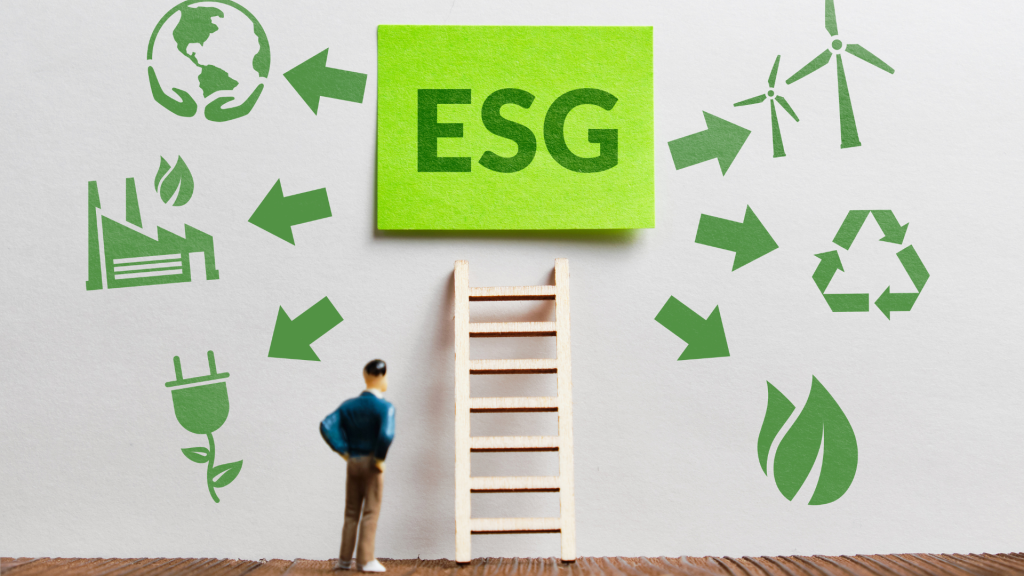
HE ESG FRAMEWORK IN MODERN TEXTILES
Today, sustainable fashion practices are standardized through the ESG governance framework:
- Environmental: Reducing emissions, managing water, and applying a circular economy.
- Social: Ensuring fair labor conditions and health safety for textile workers.
- Governance: Showing transparency through traceability and managing risks in the fashion supply chain.
Ultimately, the ESG framework proves that green development is not a short-term marketing campaign. It is a serious system of continuous management decisions.
THE ECOSOI PERSPECTIVE: BALANCING THE SUPPLY CHAIN
At ECOSOI, we do not view natural fibers as a “perfect green solution.” We do not use them as a short-term marketing tool either. Bio-materials always have their own technical limits. Therefore, instead of selling a single product, we choose to support partners with real, practical solutions.
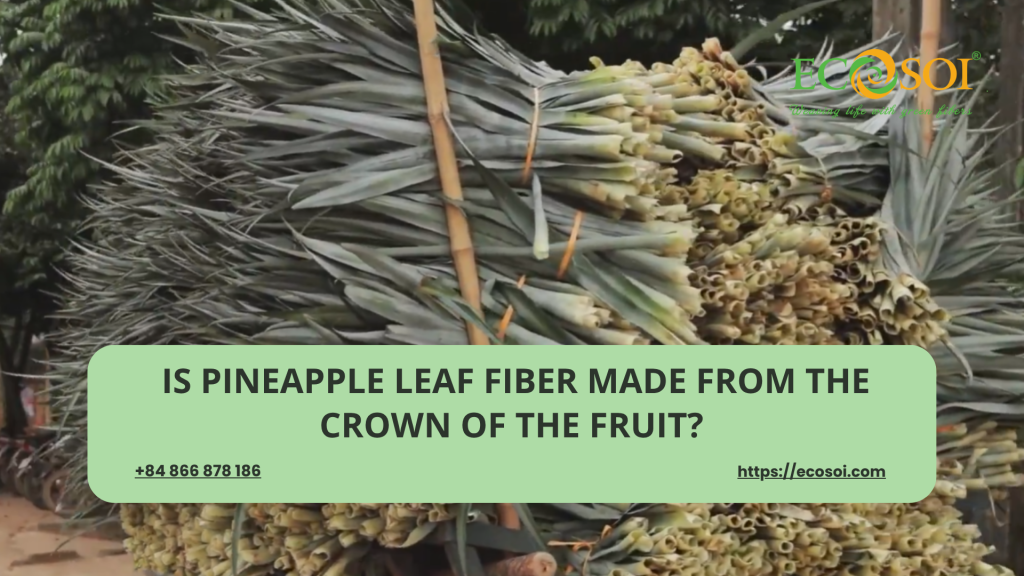
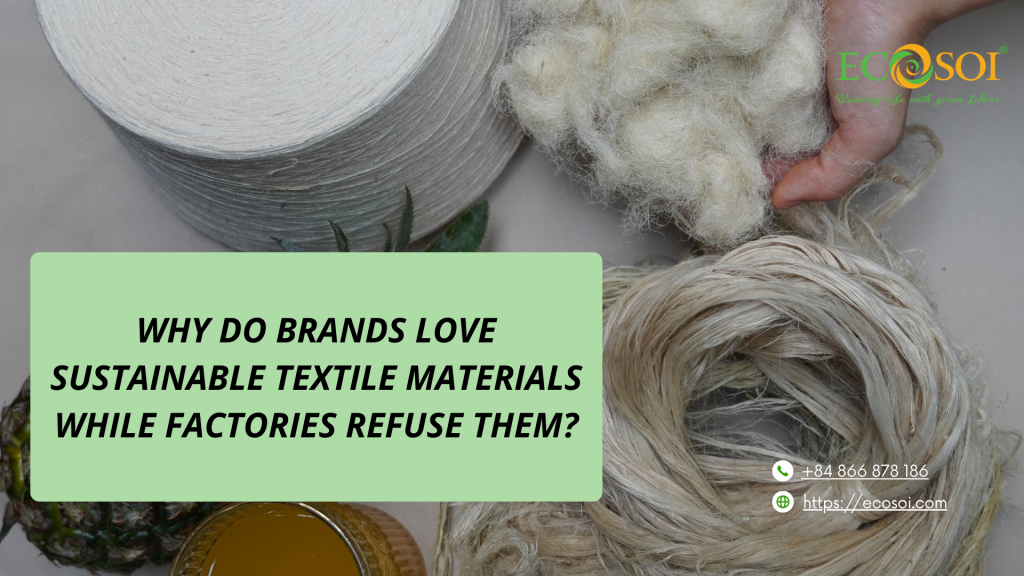
Materials are the first link to collect a carbon footprint. Because of this, we focus heavily on optimizing our R&D process. We collect fresh pineapple leaves after the harvest and extract fibers using raw mechanical methods. After that, we degum the fibers with clean water and dry them under natural sunlight.
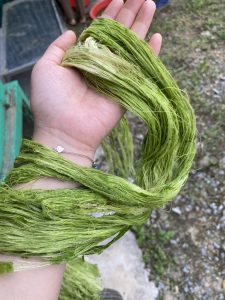
This process keeps the gum content below 10% on our Q1 raw fiber line. As a result, this solution reduces CO2 emissions from farmers burning agricultural waste. At the same time, it fully protects the soil ecosystem.
On the other hand, original pineapple fiber can have inconsistent quality and a rough texture. To solve this, we use a scientific blending mindset. We are currently researching flexible blends of sample fibers with cotton, ramie, or spandex.
Explore more: Pineapple Fabric
We actively share these material limits with our partners. Furthermore, we provide empirical data for their tests. This transparency helps businesses confidently integrate sustainable materials into their long-term ESG in textiles reports.
CONCLUSION: SUSTAINABILITY IS A DECISION CAPACITY, NOT A TALLY
In conclusion, sustainability in fashion is not a luxury privilege. It does not come from a single, top-down decision. Instead, it is the capacity for responsible management. This capacity is built and measured by real data.
A green roadmap with small, transparent, and consistent steps is the golden key. It helps Vietnamese textile enterprises confidently integrate and achieve long-term growth.
Learn more at:
- Website: ECOSOI – Weaving life with green fibers
- Facebook: ECOSOI Official Fanpage