 VIETNAMESE
ONE RAW MATERIAL, MULTIPLE DEVELOPMENT PATHWAYS
A single pineapple leaf offers many ways to develop new materials. Manufacturers can turn it into raw fiber, fluffed fiber, yarn and fabric. Each form serves a different stage of production.
These options expand pineapple leaf fiber applications in textiles and plant-based materials. However, each application has its own processing needs. Not all fiber types suit the same purpose.
For businesses, understanding these options helps them choose the right raw material. It also creates new opportunities to develop products from agricultural by-products.
Nội dung chính:
From pineapple leaves to materials for multiple industries
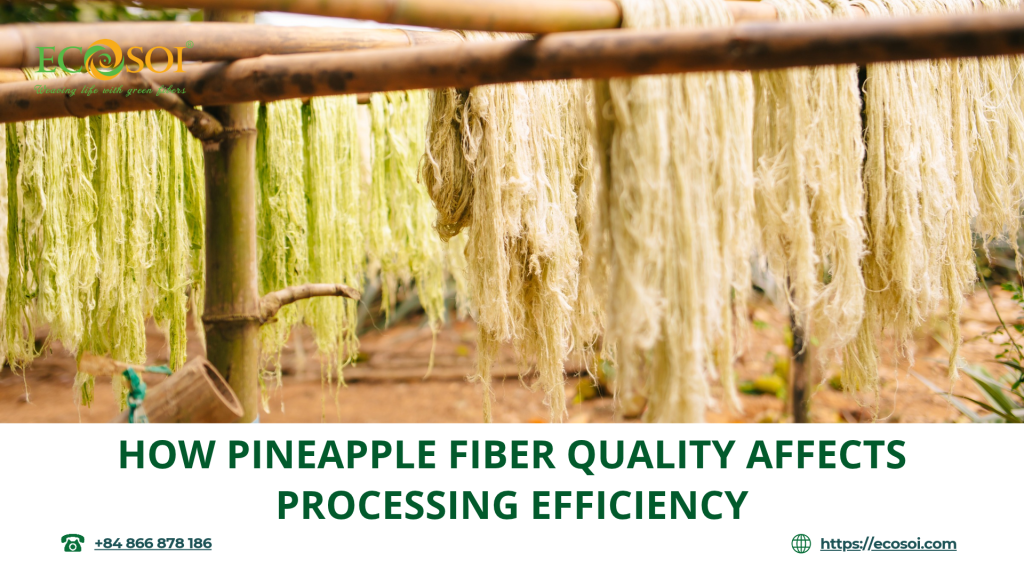
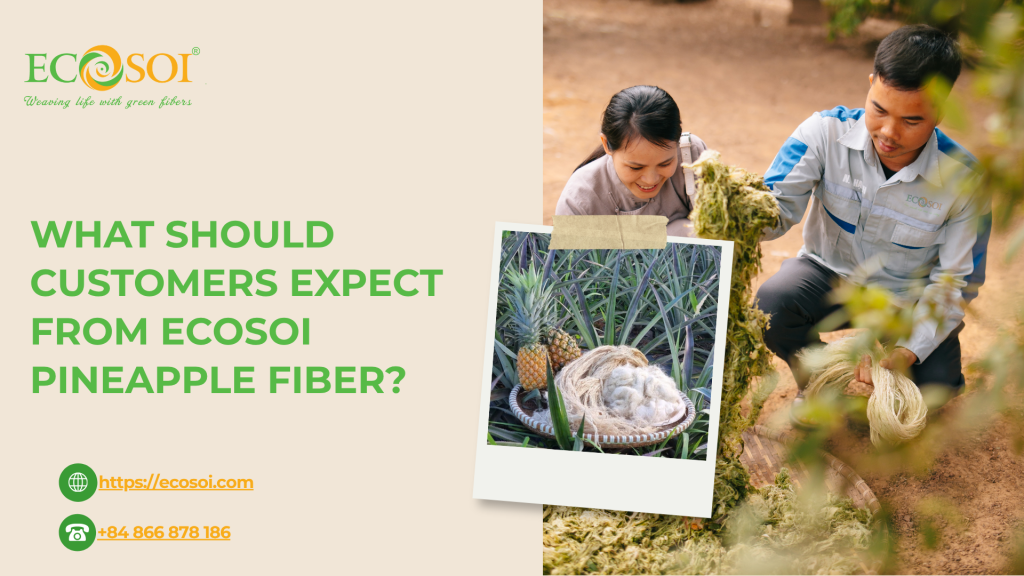
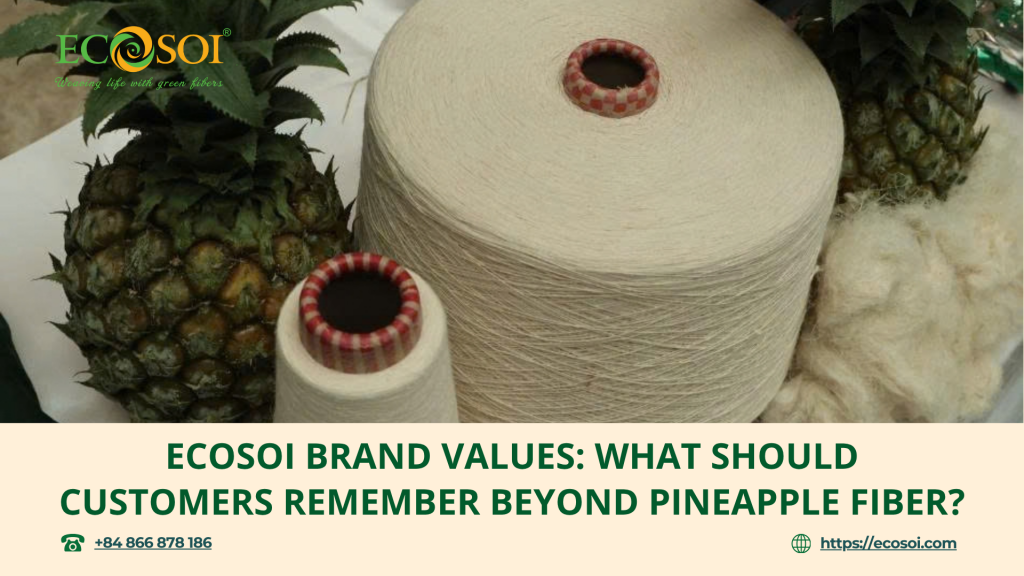
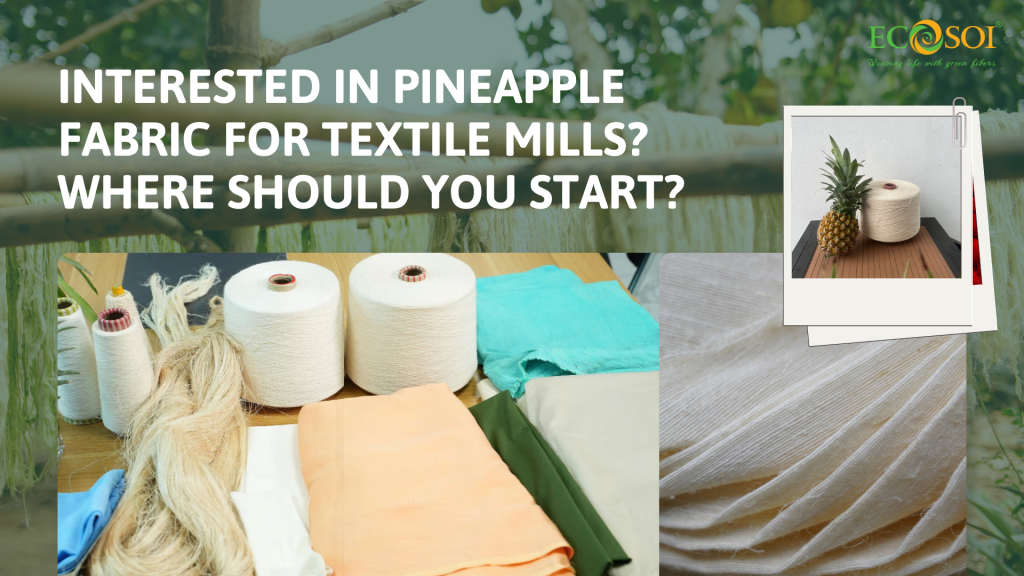
Pineapple leaf fiber (PALF) comes from pineapple leaves. Farmers can obtain this fiber from the by-products of pineapple cultivation. First, manufacturers collect the leaves and extract the fibers. Next, they clean and process them. Some applications also require degumming and structural treatment. The final process depends on the intended use. Therefore, businesses can develop pineapple leaf fiber into several forms:
- Raw pineapple leaf fiber: For further processing and manufacturing.
- Fluffed pineapple fiber: For spinning and the development of leather-like materials.
- Pineapple yarn: For weaving or knitting.
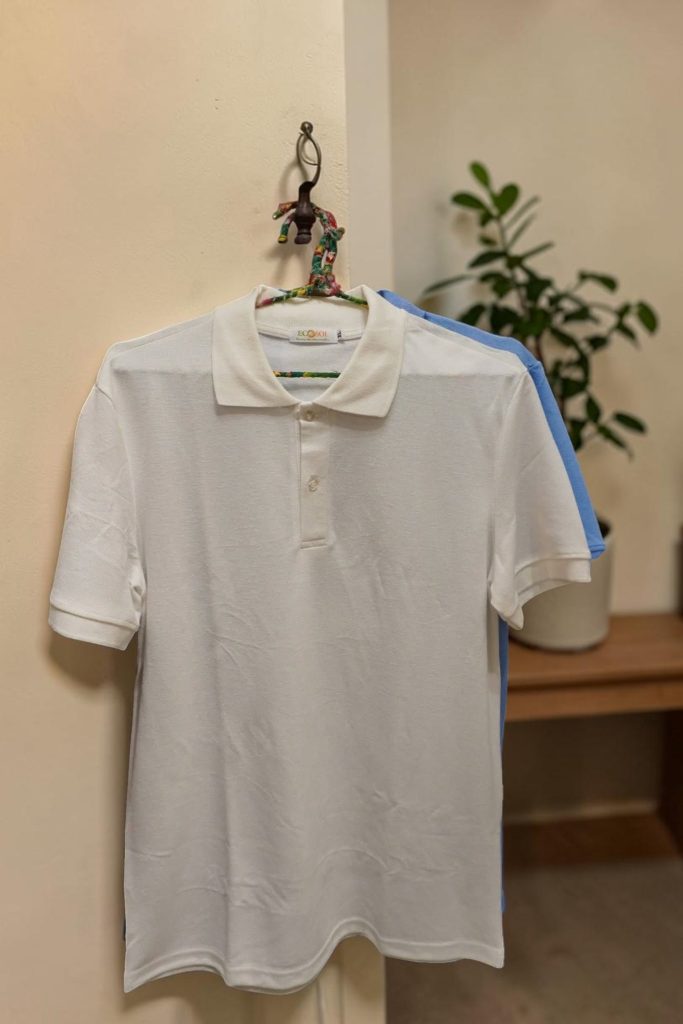
- Pineapple fiber fabric: For apparel and other textile products.
The value of pineapple leaf fiber goes beyond the raw material itself. Its potential for further processing also creates value.
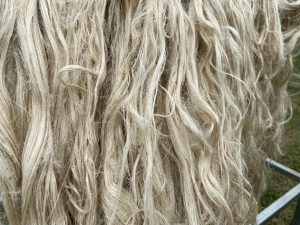
Raw pineapple leaf fiber: A starting point for different applications
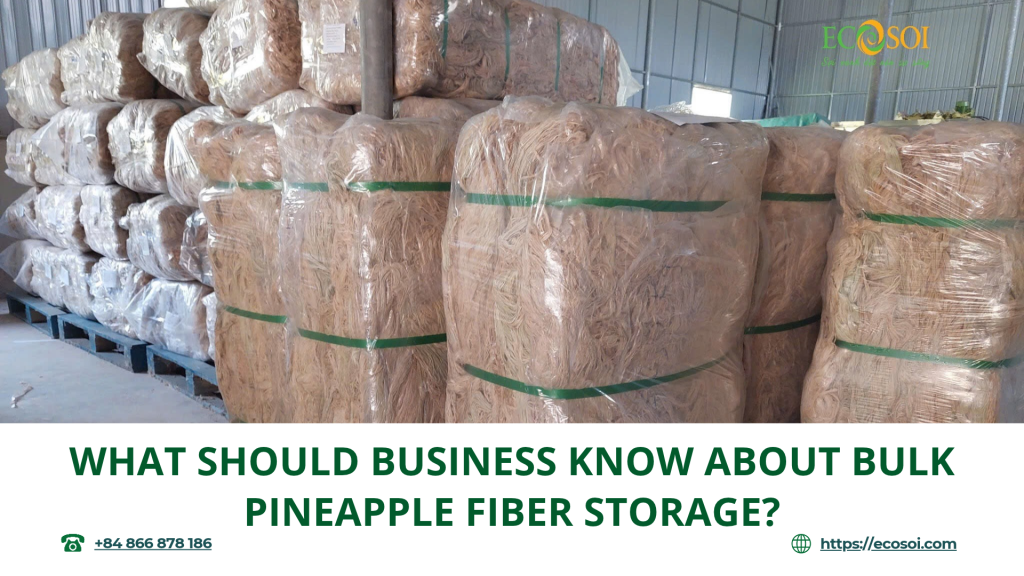
Raw pineapple leaf fiber is the material that manufacturers obtain after extraction. Depending on the processing level, it may still contain natural gum and impurities. Therefore, businesses should choose the right fiber grade for each application. Here are some possible development pathways.
Developing handicrafts and decorative materials
Pineapple leaf fiber offers options for handicrafts, accessories and decorative products. For these projects, manufacturers should consider several factors. These include fiber color, length and surface structure. They should also check how easily the fibers take shape and combine with other materials.
However, raw fibers may need further treatment before use. Some projects require cleaning or degumming first. Others may need additional processing.
Researching and developing new materials
Beyond handicrafts, researchers also study pineapple leaf fiber for composite materials. A composite combines two or more materials. Each component adds different properties to the final product. For example, some studies use pineapple leaf fiber to reinforce a polymer matrix. This approach has attracted interest in several fields. These include industrial materials, components and selected technical applications.
However, research potential does not mean a product is ready for sale. Businesses must first check fiber compatibility and adhesion to the matrix. They also need to test the mechanical properties of the final product. Therefore, businesses should define their application needs before developing pineapple fiber composites. They should also conduct suitable tests.
Fluffed pineapple fiber: For spinning and leather-like materials
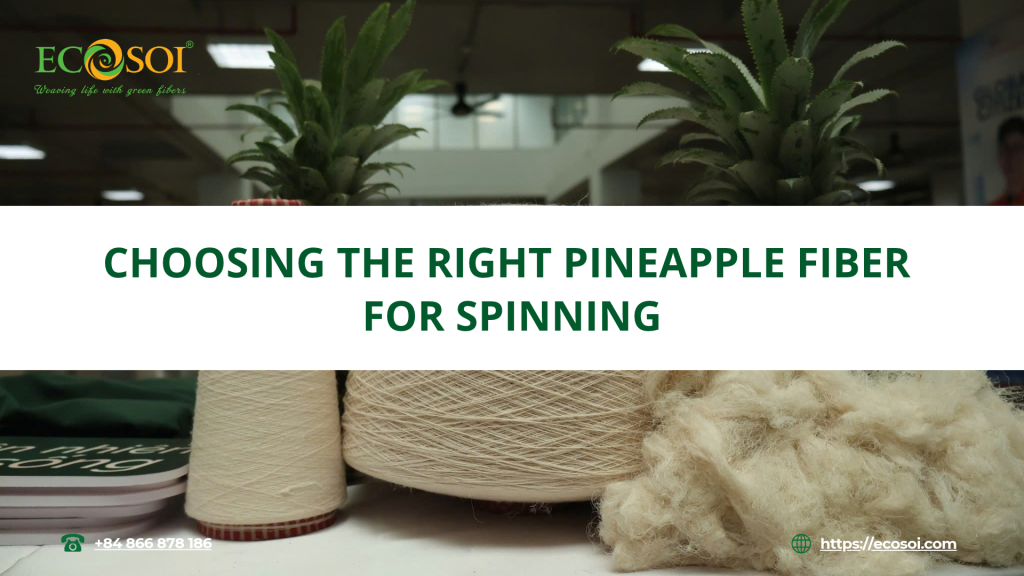
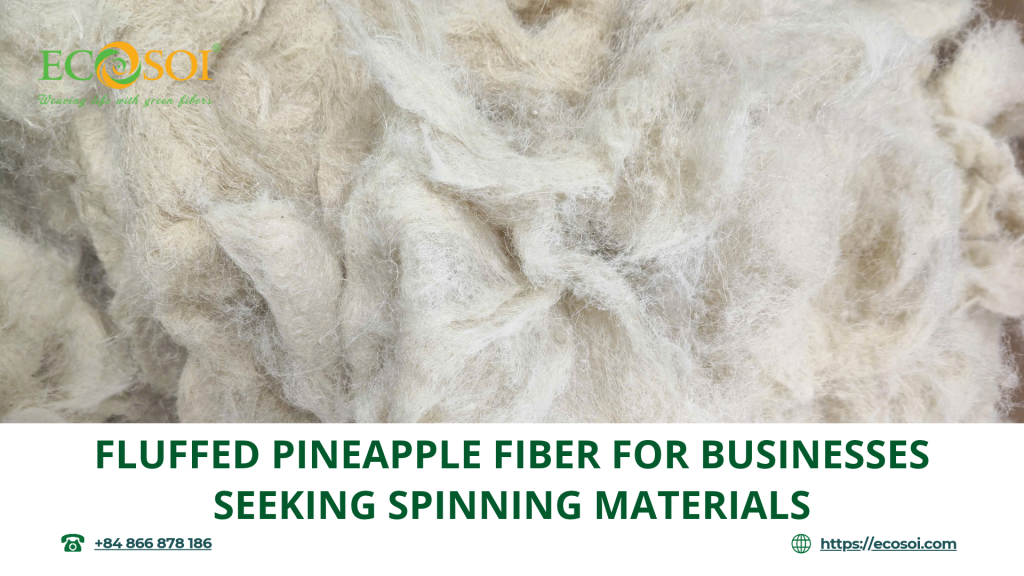
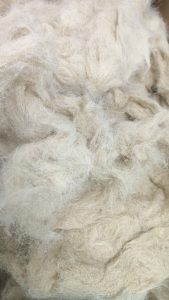
Manufacturers can also process pineapple leaf fiber into a fluffed form. This material supports further processing, including spinning. The fluffed form has a different structure from raw fiber. It aims to prepare the material for the next processing stages. However, its suitability still depends on fiber properties and available machinery.
Developing textile yarn from pineapple leaf fiber
Yarn production involves several processing stages. These include feeding, carding, blending and spinning. Fiber length and uniformity play important roles in this process. Poor fiber quality can make feeding and carding more difficult. In addition, manufacturers need to choose the right blending ratio. They may combine pineapple fiber with other fiber types. This helps them study the structure and properties of the final yarn.
According to Ecosoi’s product catalog, the company offers fluffed pineapple fiber for spinning applications. Customers can also discuss their required fiber length with Ecosoi.
Developing leather-like materials from pineapple leaf fiber
Researchers can also explore pineapple leaf fiber for leather-like materials. They can study different surface textures and material structures. However, pressing or combining pineapple fibers alone does not create finished leather-like materials. The process also needs suitable binders and substrate structures. Finishing technology also plays an important role.
Therefore, each project needs its own technical specifications. These may include thickness, flexibility, surface quality and durability.
Pineapple yarn: Connecting natural fibers with textile manufacturing
Once manufacturers process and spin the fibers, they can produce yarn. This gives textile manufacturers another option for material development. However, yarn quality depends on more than fiber composition. Manufacturers should also check yarn count and evenness. In addition, they need to test how the yarn performs on weaving and knitting machines.
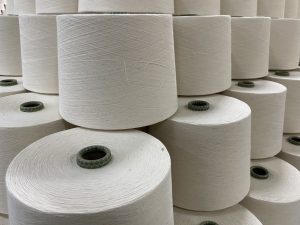
Pineapple blended yarn
One common approach combines pineapple fiber with cotton. This creates blended yarn with two different fiber types. According to Ecosoi’s product catalog, the company introduces several yarn options:
- 20% pineapple fiber – 80% cotton: Available in 20 Ne for weaving. For knitting, the available counts include 20 Ne, 30 Ne and 32 Ne.
- 40% pineapple fiber – 60% cotton: Available in 10 Ne.
- 30% pineapple fiber – 70% green hemp: Available in 18 Nm for weaving.
These ratios and yarn counts help businesses make an initial assessment. However, textile manufacturers should check other factors before production. These include fabric structure, machine requirements and final product properties.
Pineapple yarn for weaving and knitting
Manufacturers can develop pineapple yarn for both weaving and knitting. However, each method requires different yarn properties and machine settings. Woven fabric uses two yarn systems. These are warp and weft yarns, which cross each other. In contrast, knitted fabric uses interconnected yarn loops.
Therefore, businesses should select the right yarn type and count for their production method. They should also test the yarn on actual machinery before starting production.
Pineapple fiber fabric: Expanding applications in fashion and everyday products
Pineapple yarn gives manufacturers more options for fabric development. They can create different fabric structures and compositions. As a result, fashion brands, designers and product manufacturers can explore more material choices.
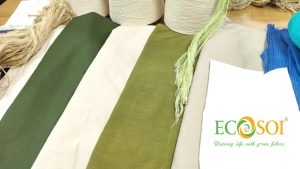
Pineapple woven fabric
Manufacturers can develop woven fabrics with different fiber ratios and fabric weights.
For example, Ecosoi offers woven fabric CFD 2500011. The fabric contains:
- 15% pineapple fiber
- 83% cotton
- 2% spandex
It has a weight of 200 g/m² and a width of 54/56 inches.
In addition, Ecosoi’s product catalog includes other woven fabrics. These options have different compositions and surface finishes. They give businesses more choices when developing apparel products.
Pineapple knitted fabric
Knitted fabric offers another option for apparel production. Its structure can provide stretch, depending on the knitting method. Ecosoi introduces several knitted fabrics that blend cotton and pineapple fiber. These samples come in different weights and widths.
Therefore, designers and manufacturers can choose fabrics based on their needs. For example, everyday clothing may require different properties from accessories.
Canvas fabric and other applications
Pineapple yarn can also support canvas fabric production. This creates more options beyond traditional apparel fabrics. One example from Ecosoi’s product catalog is canvas fabric CV40. It contains 40% pineapple fiber and 60% cotton. The fabric has a weight of 300 g/m² and a width of 1.6 meters.
Businesses can explore this fabric for bags, accessories and decorative products. However, they should check its suitability for each application. Important factors include load requirements, durability and manufacturing methods.
Shop – ECOSOI – Weaving life with green fibers
Different applications require different raw materials
One raw material can support many applications. However, one fiber or yarn type cannot meet every production need. Before choosing a material, businesses should consider several questions:
- What is the final product: yarn, fabric, accessories or technical materials?
- Does the process require raw fiber, fluffed fiber or finished yarn?
- Does the product need cotton or another blended fiber?
- Can existing machinery process the selected material?
- Which technical properties should manufacturers test?
- How much material does the project need for sampling and production?
In addition, businesses should separate research applications from products already available on the market. A material may show strong development potential. However, it may not yet meet industrial production needs. Businesses must also consider cost, production scale and supply consistency.
Environmental claims also require reliable data. Using agricultural by-products does not automatically make a product certified green or organic. It also does not prove that the product has a low environmental impact.
Ecosoi develops pineapple leaf fiber materials at different stages
Ecosoi offers more than one form of pineapple leaf fiber. Its product range covers raw fiber, fluffed fiber, yarn and fabric. This approach helps customers find materials at different stages of development.
For example, businesses with fiber-processing facilities can explore raw pineapple leaf fiber. Spinning mills may need fluffed pineapple fiber. Meanwhile, weaving and knitting manufacturers can consider blended yarn or finished fabric.
Each customer group has different needs. Therefore, businesses should discuss their applications and technical requirements with Ecosoi. They should also share their expected order quantities.
One raw material can create many development pathways. However, each pathway needs the right processing method. Ecosoi follows this approach when developing materials from pineapple leaves. First, the company considers the properties of the raw material. Next, it identifies the intended application. Finally, it selects the right material form.
If your business needs pineapple leaf fiber, pineapple yarn or pineapple fiber fabric, contact Ecosoi. Our team can help you explore the product range and discuss your technical requirements.