 VIETNAMESE
WHAT SHOULD CUSTOMERS EXPECT FROM ECOSOI PINEAPPLE FIBER?
When choosing new textile materials, businesses often focus on quality, price, and potential applications. These factors also matter when sourcing Ecosoi pineapple fiber. However, customers should understand the material’s limitations before making a decision.
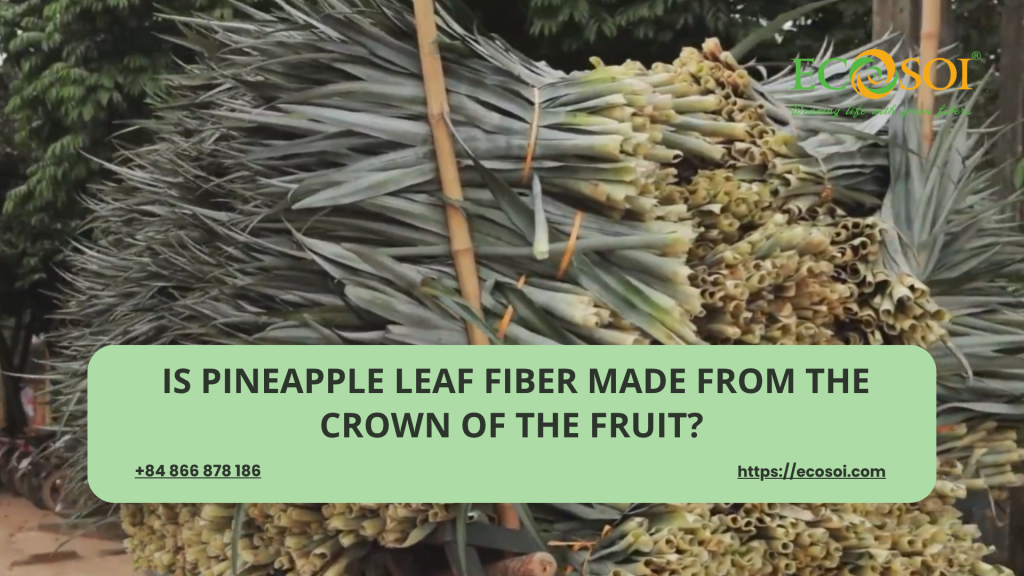
Pineapple fiber comes from pineapple leaves, an agricultural by-product. It offers a way to make use of an existing resource. However, not every product is suitable for pineapple fiber.
Therefore, Ecosoi encourages customers to set realistic expectations. A clear understanding of the material helps businesses make informed choices. It also provides a sound basis for testing and product development.
Nội dung chính:
Do not expect pineapple fiber to suit every product
Every material has its own properties. Pineapple fiber is no exception. Its potential applications depend on its composition, fiber structure, and the needs of the final product.
For instance, materials for clothing may need different properties from those used for accessories. Softness, strength, surface texture, and processability can all affect material selection.
Therefore, businesses should not judge suitability by the name “pineapple fiber” alone. Instead, they should define the intended use first. They should also clarify the required weight, composition, and handfeel.
Test the material against your actual needs
Before choosing a material, customers should define several basic requirements:
- What product will use the material?
- What composition and weight does the product require?
- Does the spinning, weaving, knitting, or sewing process have any special requirements?
- What quality standards must the final product meet?
Next, businesses can compare these requirements with the product information available from Ecosoi. If necessary, they should test samples before committing to bulk production.

This approach helps reduce risks when introducing a new material. More importantly, it allows businesses to assess pineapple fiber through practical results rather than initial expectations.
Do not assume pineapple fiber is always better for the environment
A material’s natural origin is worth considering. However, this factor alone cannot prove that a product has a lower environmental impact.
A more complete assessment requires several factors. These include raw material sourcing, processing methods, energy use, and product lifespan. Reuse and recycling options also matter.
Therefore, pineapple fiber should not be considered the better choice in every situation. The outcome depends on the material used for comparison and the intended application.
Consider the material throughout its life cycle
A product containing pineapple fiber may also contain other fibers. For example, blended fabrics may combine pineapple fiber with cotton or spandex. This composition affects fabric properties and the options available for handling the material after use.
In addition, durability plays an important role. A product that wears out quickly or sees little use may not be a suitable choice. By contrast, a material that meets the user’s needs may help extend the product’s useful life.
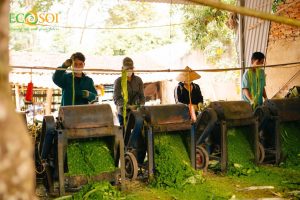
Businesses should consider several factors instead of focusing only on fiber composition. This provides a more useful basis for evaluating new textile materials.
For reliable decisions, customers should assess materials using relevant data and the actual needs of the final product. They should also avoid making environmental claims without suitable evidence.
For more information on circular economy principles, visit the Ellen MacArthur Foundation.
Do not assume Ecosoi has every certification you need
Technical documents and certifications can play an important role in the textile industry. Export-oriented brands often need these documents to meet partner or market requirements.
However, each certification has its own scope and conditions. Not every certification applies to every raw material or stage of production.
Therefore, customers should not assume that any material supplier can meet every certification requirement. Instead, businesses should define the required documents before choosing a supplier.
Confirm documentation before placing an order
Before contacting Ecosoi, customers should clarify the following requirements:
- The specific certification or standard required.
- Whether it applies to the raw material, factory, or finished product.
- Documents showing material composition and origin.
- Technical documents that must be shared with business partners.
Next, both parties can compare these requirements with the documents available. If a specific standard is mandatory, customers should confirm compliance directly before making a decision.
This approach helps prevent misunderstandings during cooperation. It also allows businesses to prepare the documentation needed for their final products.
You can visit the Ecosoi website to explore the company’s published product information. Please confirm any specific certification or document requirements directly with Ecosoi before placing an order.
Do not judge a material by its purchase price alone
Purchase price is an important factor in product development. However, the price of raw materials does not reflect the full cost of production.
When introducing a new material, businesses may need to test it and adjust their processes. These steps can require extra time, labor, and trial materials. The actual cost depends on the product and production line.
Therefore, customers should consider total costs rather than compare unit prices alone. A cheaper material may not reduce costs if it does not work well with the existing process.
Test samples before bulk production
Test results for yarn and fabric can vary between factories. Equipment, operating settings, and final product requirements can all affect performance.
For this reason, customers should explain the intended application before placing an order. Where possible, they should test samples using their actual production process. This step helps assess processability and the quality of the finished output.
Ecosoi aims to develop materials for practical applications. Therefore, early technical discussions can help both parties define what is suitable.
In addition, sample testing gives customers a clearer basis for assessing costs and risks. This is especially important before expanding to larger production volumes.
You can explore Ecosoi’s product catalogue and resources before discussing material specifications and sample requirements.
Do not expect a new material to make a product sustainable on its own
Material selection is only one part of product development. Sustainability also depends on design, durability, use, and end-of-life options.
For example, a product containing pineapple fiber must still meet users’ actual needs. If it is unsuitable or quickly discarded, the potential benefits of the material choice may be limited.
Similarly, using agricultural by-products does not automatically prove that a finished product has a lower environmental impact. Businesses need to consider production processes and relevant data before making specific claims.
Therefore, pineapple fiber should be treated as one material option to evaluate. Its value depends on how businesses design, produce, and use the final product.
For fashion brands, finding a new material is not the only priority. They must also ensure that the material meets the product’s functional needs. In addition, they need evidence to support any environmental claims.
A more responsible approach considers the whole product, not just its raw materials. This helps businesses make better-informed decisions about textile materials and product development.
What should customers expect from Ecosoi pineapple fiber?
Understanding a material’s limitations does not mean dismissing its potential. Instead, it helps businesses select and use materials more appropriately.
Ecosoi develops materials from pineapple leaves, with a focus on making use of agricultural by-products. The company also emphasizes three core values: cooperation, responsibility, and innovation.
These values should be reflected in how the company works with customers and shares product information. Therefore, customers can start with a few practical steps when exploring Ecosoi’s materials.
- Review material information. Check the published composition, specifications, and product catalogue.
- Define the intended application. Identify the technical requirements and quality criteria for the final product.
- Clarify documentation needs. State any required certifications or technical documents before ordering.
- Evaluate through testing. Test samples under the expected conditions before moving to bulk production.
These steps help both parties assess suitability based on specific information. They also create a clearer foundation for cooperation.
Start with your business needs
For Ecosoi, the priority is not to make promises that cannot be supported by evidence. Instead, the company should provide clear product information and discuss practical applications with customers.
If you are exploring pineapple fiber or pineapple fabric for your project, start by reviewing the Ecosoi product catalogue. You can also learn more about Ecosoi and contact the company to discuss composition, specifications, and sample testing.
Ultimately, the right choice depends on your product requirements and test results. Ecosoi pineapple fiber is a material option worth evaluating against your technical needs, production process, and intended application.
Learn about the material before making a decision. This helps your business choose more suitable materials and plan production with greater confidence.