 VIETNAMESE
WHY DOES PINEAPPLE FIBER COST MORE THAN COTTON?
A pineapple leaf may be discarded after harvest. However, it can gain new value when used as a textile raw material. So, why can pineapple fiber cost more than cotton when it comes from agricultural by-products?
The answer lies in the production process. Pineapple leaves may have little value as raw materials. However, turning them into usable fiber still requires labor, equipment, and technology.
Meanwhile, cotton benefits from a long-established supply chain. It also has large-scale harvesting and processing systems.
So, what determines the cost of pineapple fiber? Does a higher price mean better quality or a lower environmental impact?
Nội dung chính:
Are discarded pineapple leaves really free raw materials?
Many people assume pineapple fiber should be cheap because it comes from discarded leaves. However, this view overlooks one important fact: the cost of raw materials is not the same as the cost of the finished product.
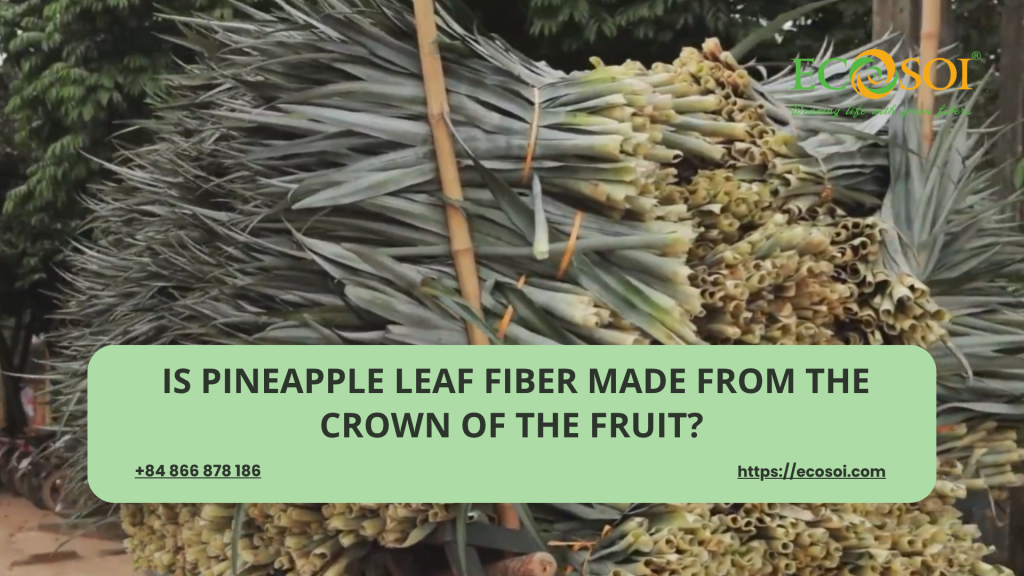
First, pineapple leaves must be collected from farms. Next, they need to be transported to processing facilities. If farms are spread across different locations, collection costs may increase.
The next step is fiber extraction. Producers must separate usable fibers from unwanted plant material. Depending on the process, further steps may include cleaning, drying, and sorting.
In addition, not all collected leaves yield usable fiber. Therefore, businesses must calculate costs based on the amount of fiber that meets their requirements.
Low-value leaves do not guarantee low-cost finished fiber. However, not all pineapple leaves are necessarily free. Actual costs depend on the location, collection methods, and processing techniques.
Four factors that can make pineapple fiber more expensive than cotton
Extracting fiber from pineapple leaves requires processing
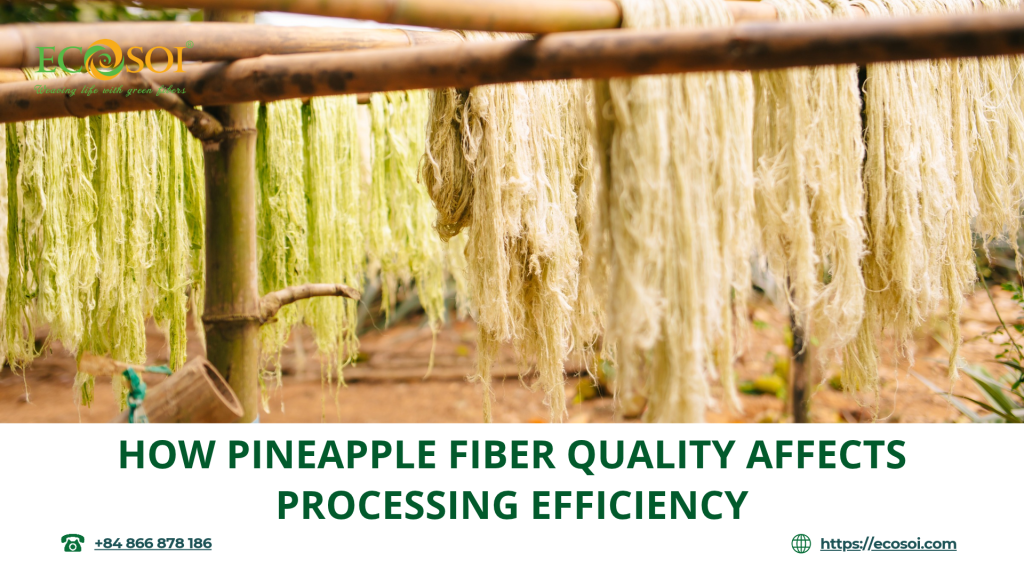
Pineapple leaves cannot be fed directly into weaving machines. First, producers must separate the fibers from the plant tissue. Depending on the technology, this may involve mechanical extraction or a combination of processing methods.
After extraction, the fibers may require further cleaning and sorting. Each step can add to production costs.
For example, businesses must account for labor, energy, equipment, and material losses. However, costs vary between production methods. Processing technology, production scale, and quality requirements all influence the final price.
Therefore, pineapple fiber may cost more to produce. However, determining the actual price difference requires production data and current supplier quotations.
Raw and processed fibers have different values
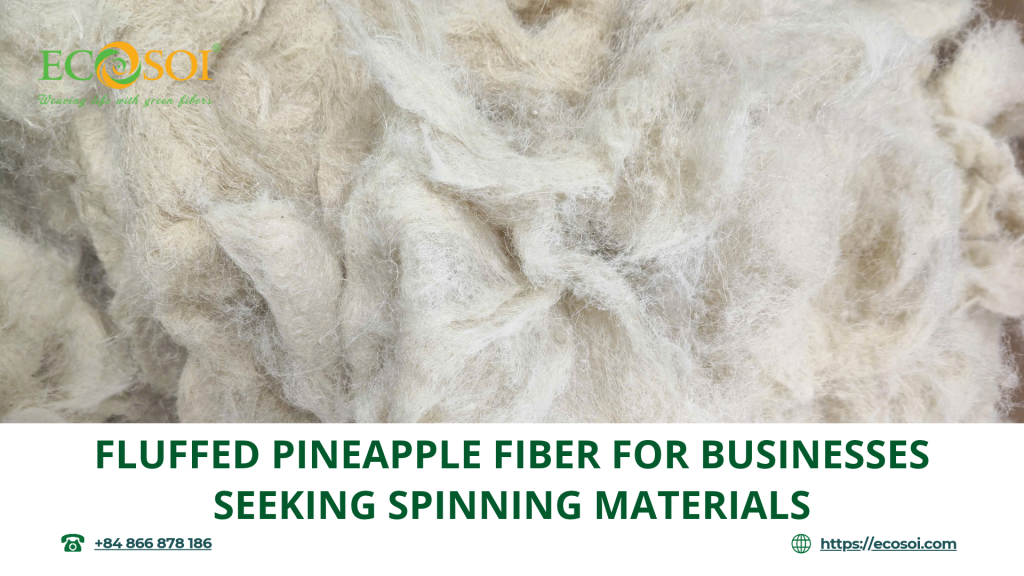
Not all pineapple fibers are ready for the same applications. Their value depends partly on their processing stage and intended use.
For instance, fiber suitable for research may not meet the requirements of an industrial spinning line. As a result, buyers should check the actual condition of the material before making a purchase.
When comparing prices, businesses should examine cleanliness, moisture content, fiber length, and consistency. However, suppliers must confirm the relevant specifications.
A lower purchase price does not always mean lower overall costs. Additional processing or high material losses can reduce the economic benefits.
Explore the Ecosoi pineapple fiber collection to learn more about the materials presented by the brand.
Cotton benefits from large-scale production
Cotton is widely used in the textile industry. Its harvesting, ginning, and fiber processing methods have developed over many generations.
As a result, the cotton industry benefits from large-scale production systems. Its supply chain also connects farms, spinning mills, and fabric manufacturers across established markets.
In contrast, pineapple fiber production depends on raw material availability, processing technology, and individual producers’ capabilities. These differences can affect production costs.
However, it would be inaccurate to assume that every pineapple fiber product costs more than cotton. Cotton prices also vary with quality, supply, demand, and market conditions.
Therefore, a reliable comparison requires quotations from the same period and materials of comparable quality.
For broader information about natural fiber markets, visit the Food and Agriculture Organization of the United Nations (FAO).
Extracting fiber does not automatically produce spinnable yarn
This distinction is particularly important for textile manufacturers. Raw fiber and spun yarn are different materials.
Before spinning, fibers must meet the requirements of the intended process. Depending on the material, manufacturers may need to adjust fiber preparation or choose a suitable spinning method.
Next, the resulting yarn must be tested for compatibility with weaving or knitting equipment. Therefore, pineapple fiber, pineapple yarn, and pineapple fiber fabric are not interchangeable products.
Each product requires different processing steps. Consequently, their prices cannot be compared directly.
For manufacturers, the key question is not simply how much the raw material costs. They must also determine whether it works with existing machinery and production methods.
Trial runs, machine adjustments, and material losses can all affect the total cost.
How should you compare pineapple fiber and cotton?
Cotton may offer a cost advantage in many situations, particularly where established supply chains support large-scale production. However, the right material depends on the intended product and the total cost of use.
Start by comparing five key factors:
- Raw material source: Pineapple fiber comes from pineapple leaves, while cotton fiber comes from cotton bolls.
- Processing stage: Identify which processing steps each material has undergone.
- Quality: Check whether the specifications meet the intended application’s requirements.
- Processing compatibility: Assess whether the material works with existing machinery and production methods.
- Total cost: Include material losses, additional processing, and quality control.
For B2B buyers, one comparison is particularly useful. Calculate the material cost required to produce one unit of finished goods that meets quality standards.
For example, a cheaper material may generate more waste during production. As a result, its total cost may be higher than expected. Conversely, a more expensive material does not automatically deliver better economic value.
Therefore, businesses should test samples before placing large orders. Actual production results provide a stronger basis for decisions than quotations alone.
Does more expensive pineapple fiber mean greater sustainability?
Not necessarily. A higher selling price does not prove a lower environmental impact.
Pineapple fiber offers potential for using leaves left after harvest. This approach may create additional value from agricultural by-products. However, the actual environmental benefits depend on how the material is produced.
For instance, collection and transportation require resources. Processing may also consume water and energy or involve chemicals. Therefore, knowing that a material comes from a plant is not enough to establish that it is more environmentally friendly.
To compare pineapple fiber with cotton, businesses need data covering the same stages of the product life cycle. Relevant factors include raw material production, processing, transportation, and end-of-life treatment.
In addition, businesses should request traceability documents and relevant test results. If a project requires a specific certification, the supplier must confirm whether the material meets its requirements.
For consumers, checking the fiber composition and care instructions is equally important. A product made from natural materials is not automatically suitable for every skin type or environmentally preferable under all conditions.
What products can use pineapple fiber?
Potential applications depend on fiber properties, yarn structure, and finished product requirements. Therefore, not every type of pineapple fiber is suitable for every textile application.
In fashion, manufacturers can explore pineapple fiber for products that require distinctive material compositions. The fiber may also be blended with other fibers if the resulting material meets the necessary technical requirements.
For businesses and textile manufacturers
Before selecting a material, define the product requirements and production goals. Then, clarify the technical specifications and expected material volume.
In particular, businesses should review the following information:
- Material composition and technical specifications.
- Sample quantities and expected order volumes.
- Compatibility with existing production equipment.
- Expected material losses and additional processing costs.
- Delivery schedules and ongoing supply capacity.
- Testing documents, traceability records, and required certifications.
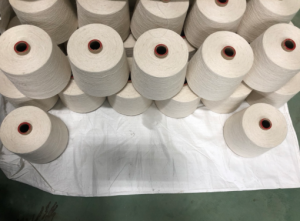
For export-oriented products, buyers should also identify market and customer requirements early. Natural origin alone does not guarantee compliance with every brand’s standards.
For individual consumers
Consumers should start with their actual needs. Check the fabric composition rather than relying on the material’s name alone.
For example, a product containing pineapple fiber is not necessarily made entirely from that fiber. Blended fabrics may also contain cotton or other materials.

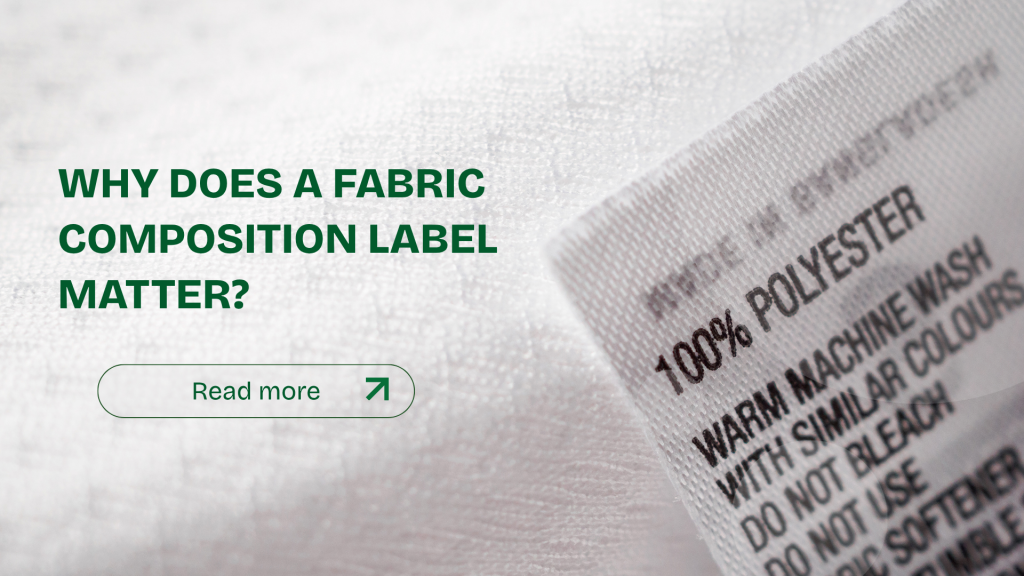
Therefore, check the composition label and care instructions before buying. Also, consider how often you will use the product.
Sustainable choices involve more than raw materials. Durability, long-term use, and proper care also matter.
How Ecosoi supports the practical use of pineapple fiber
Using pineapple leaves as raw materials creates value only when the resulting material meets real-world needs. For businesses, the first step is to define the product they want to develop.
Next, they should clarify the technical requirements and expected material volume. This information helps establish a practical basis for evaluating potential applications.
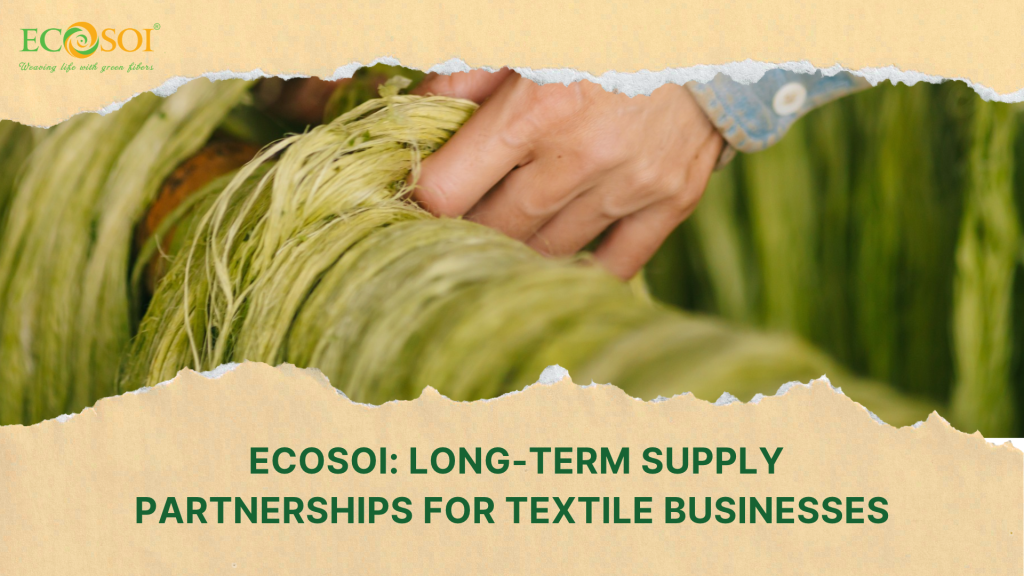
Customers can then discuss samples, specifications, and supply conditions with Ecosoi. These discussions help assess feasibility before committing to a large order.
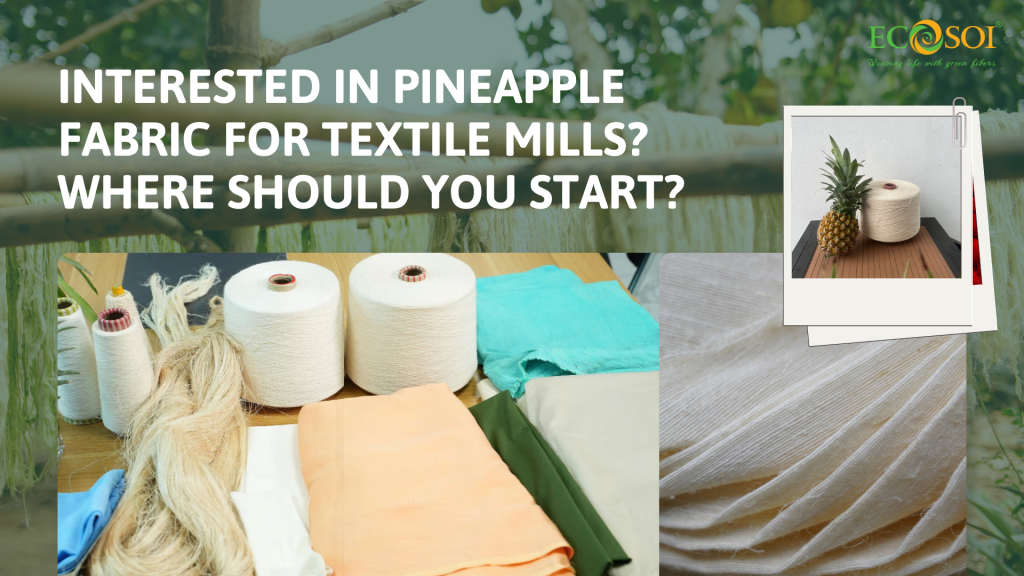
Individual consumers can also explore the pineapple fiber fabric collection to learn more about the material and its potential applications.
Conclusion: Where does the value of pineapple fiber lie?
Pineapple leaves may be agricultural by-products. However, turning them into textile materials still requires several processing steps.
Collection, fiber extraction, cleaning, and further manufacturing can all affect the final cost. Meanwhile, cotton benefits from established supply chains and large-scale production systems.
Even so, pineapple fiber cannot be assumed to cost more than cotton in every case. A reliable comparison requires consistent quality standards, comparable processing stages, and current market data.
More importantly, the material must suit its intended purpose. For businesses, this means evaluating technical performance, total cost, and supply capacity. For consumers, it means considering composition, quality, and actual needs.
Looking for pineapple fiber, pineapple yarn, or pineapple fiber fabric for your project? Contact Ecosoi to discuss samples, technical specifications, and supply requirements before moving into production.