 VIETNAMESE
INTERESTED IN PINEAPPLE FABRIC FOR TEXTILE MILLS? WHERE SHOULD YOU START?
Do you want to try pineapple fabric, but your mill has never produced it before? Are you concerned about machine compatibility, product quality or rising trial costs?
These issues should be addressed before placing a bulk order. When working with a new material, the right approach is to start with samples, define technical requirements and assess actual production capabilities. This article helps textile mills, fashion brands and anyone interested in natural materials identify the first steps.
Nội dung chính:
Is pineapple fabric suitable for your textile mill?
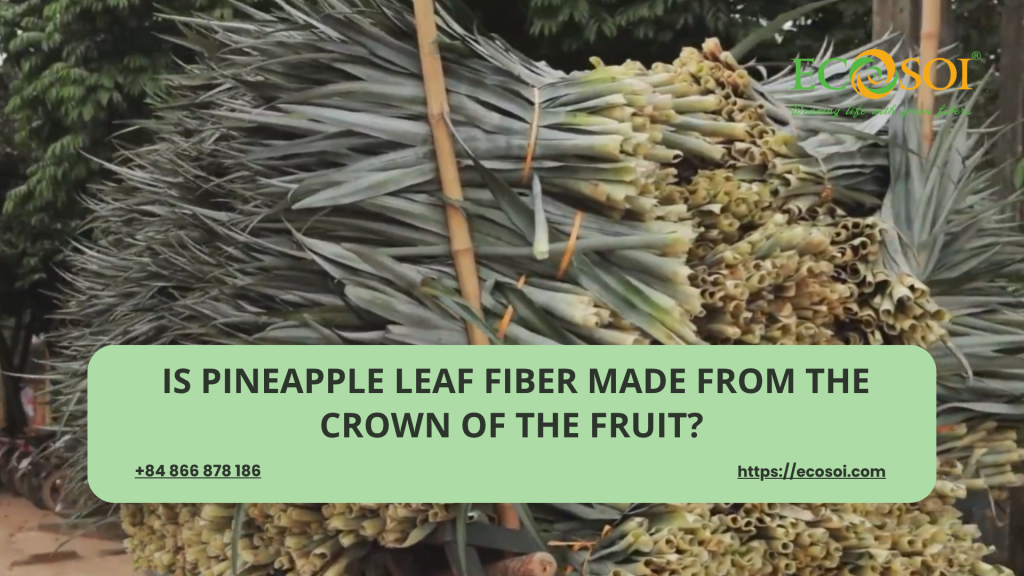
Pineapple fiber is extracted from pineapple leaves, an agricultural by-product. This raw material offers a way to make use of existing resources in textile production. However, its natural origin does not automatically guarantee the properties your mill needs.
Before making a choice, define your intended application. Do you need raw material for spinning, woven fabric development or knitted fabric trials? Each option has different technical requirements.
Define the intended application before choosing the material
If your mill specializes in spinning, consider fiber properties and blending requirements. If you focus on weaving, assess the input yarn and machine requirements. Meanwhile, fashion brands should start with the final product. For example, shirting fabric has different requirements from fabric used for bags or accessories.
Do not start by asking, “Is pineapple fiber good?” Instead, ask, “Can pineapple fiber meet my product requirements?” This approach helps your business establish clear evaluation criteria.
Where should you start if you have never woven pineapple fabric?
Rather than changing your entire production process at once, your mill can proceed step by step. This approach helps identify technical issues before moving to large-scale production.
Step 1 – Explore pineapple fiber, yarn and fabric samples
First, identify the production stage you want to test. Ecosoi offers products in several categories, including pineapple fiber, blended yarn and pineapple fabric. You can explore the pineapple yarn product range to find materials that match your needs.
If you have no experience with this material, a sample set can help you understand the differences between fiber, yarn and finished fabric. Ecosoi also offers a pineapple fabric sample set that covers several stages, from processed material and fiber to yarn and fabric.

In addition, request technical information before selecting a sample. Clarify its composition, specifications, intended use and processing status.
Step 2 – Choose samples that match your equipment
Not every mill needs to start with raw fiber. If you have limited experience processing fiber, testing a suitable yarn or finished fabric may be a more practical starting point. This allows you to evaluate the material against a specific goal.
By contrast, mills planning to develop their own yarn should discuss fiber properties and spinning requirements in detail. In this case, consider feeding performance, uniformity and other machine-related parameters.
The key is to select samples for the production stage you want to test. A good-looking fabric sample does not prove that the material will work on your existing spinning or weaving line.
Step 3 – Test the material on actual equipment
After selecting a sample, determine how to test it using your existing machines and processes. Start with a controlled trial before increasing production volume.
During the trial, record operating parameters, defects and output quality. At the same time, compare the results with those of the materials your mill currently uses.
Do not assume that a new material will behave like a familiar one. Even the same fabric can produce different results depending on the equipment, machine settings and finishing process.
Which parameters should you check when testing pineapple fabric?
There is no single set of criteria for every application. Therefore, mills should select tests based on the intended use and customer requirements.
Fiber composition and fabric specifications
First, check the fiber composition, fabric width and fabric weight. These basic details help determine whether the sample meets your design and production requirements.
Mechanical properties and surface quality
Depending on the application, you may need to assess tensile strength, elongation, shrinkage after washing, pilling or colorfastness. For apparel, handfeel and shape retention may also be important. In addition, check for defects that occur during production.
Should you choose pineapple-blend fabric or pineapple fiber?
The answer depends on your production capabilities and product development goals. These two options serve different purposes and are not fully interchangeable.
Pineapple-blend fabric – a starting point for finished fabric trials
Blended fabric combines pineapple fiber with other fibers, such as cotton. The blend composition affects the fabric’s properties and potential applications.
For mills that have never worked with pineapple fiber, testing finished fabric may be a convenient first step. You can assess its surface, handfeel, durability and processing suitability before deciding whether to develop a product.

Ecosoi offers woven and knitted fabrics with different compositions. Explore the pineapple fabric range to find samples that match your needs.
Pineapple fiber and yarn – a route to raw material development
If your goal is to spin your own yarn or develop a blending formula, you need to work directly with the input material specifications. Consider fiber properties, uniformity and machine requirements before starting production trials. In addition, assess blends with cotton or other fibers against the intended application.
Therefore, do not choose raw material based only on whether its pineapple fiber content is high or low. What matters is how well the material performs in the final product.
How can you reduce risks when introducing a new material?
A new material may suit your product concept but still fail to meet your production line’s requirements. Therefore, trials should follow a clear process with specific evaluation criteria.
Define acceptance criteria before the trial
Before starting, your mill should agree on the required results. These criteria may include surface quality, strength, dimensions, defect rates and processing performance.
At the same time, assign responsibility for checking and recording the results. Keeping production parameters helps your team compare different trials.
Evaluate the results before increasing production volume
After each trial, summarize which requirements have been met and which issues need adjustment. If the results are unsatisfactory, consider changing the settings or choosing another sample. However, do not judge production suitability based on a single trial. Repeat the test when necessary to assess consistency.
The goal is not to introduce new material as quickly as possible. Instead, the goal is to identify suitable production conditions before scaling up.
Is pineapple fabric suitable for sustainable fashion brands?
For fashion brands, material selection involves more than design. Businesses should also consider raw material origins, product composition and the information they can share with customers.
Ecosoi’s pineapple fiber is extracted from pineapple leaves, an agricultural by-product. However, using a by-product does not automatically prove that the entire product has a lower environmental impact. Specific claims require relevant data on raw materials, production processes and the scope of the assessment.
In addition, distinguish information about raw material origins from product certification. If your brand needs to meet ESG requirements or export market standards, identify the documents required by customers and business partners in advance.
You can consult Textile Exchange to learn about textile materials and programs related to raw material sourcing. The right standard depends on the product, target market and actual requirements.
Which pineapple fiber products should consumers try first?
Textile mills are not the only ones who can explore this material. Consumers can also learn about pineapple fiber through specific products. If you want to experience the material before making a choice, explore Ecosoi’s pineapple fiber products. Depending on your needs, you can look at fabrics, yarns or garments made with this material.
When choosing a product, check its composition and care instructions. Pineapple-blend fabric may contain cotton, spandex or other fibers. Therefore, do not assume that every product will have the same handfeel or performance.
Furthermore, natural origin does not guarantee that a product will never cause irritation or suit every skin type. If skin-contact safety is a concern, check the product’s specific composition and available test information.
Ecosoi supports you from the material testing stage
If your mill has never woven pineapple fabric, you do not need to start with a large order. Begin with your product requirements, select suitable samples and define the criteria you need to test.
Ecosoi offers pineapple fiber, yarn and fabric options for different applications. Depending on your requirements, you can discuss composition, specifications and suitable trial methods with the team. To make the consultation more effective, prepare the following information:
- Intended application: Spinning, weaving, apparel production or accessory development.
- Current capabilities: The machinery and production stages available at your mill.
- Product requirements: Composition, fabric weight, width and required properties.
- Expected volume: Sample quantities and estimated production volume if the trial succeeds.
These details help both parties identify suitable samples and avoid unnecessary trials.
Are you looking to test pineapple fiber, yarn or fabric? Contact Ecosoi through the official website to discuss your material requirements and possible testing options.