 VIETNAMESE
BUY FEWER CLOTHES: IS IT BETTER FOR THE ENVIRONMENT?
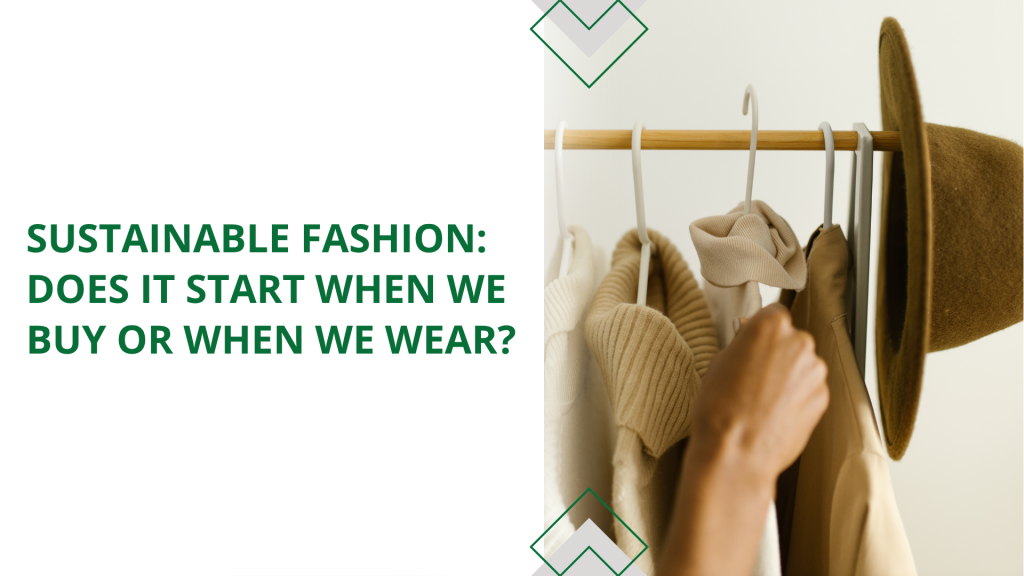
Buying fewer clothes is often seen as a way to live more sustainably. But does the number of clothes we buy determine their environmental impact?
Consider two people. One buys fewer clothes but often replaces them because they wear out quickly. The other buys only when needed and wears each item for years. Based on purchase frequency alone, we cannot say which person has a lower environmental impact.
What matters is not just how much we buy. We also need to consider why we buy, how long we use each item, and what happens when we no longer need it. This is a more practical way to approach sustainable fashion.
Nội dung chính:
Why can buying fewer clothes help the environment?
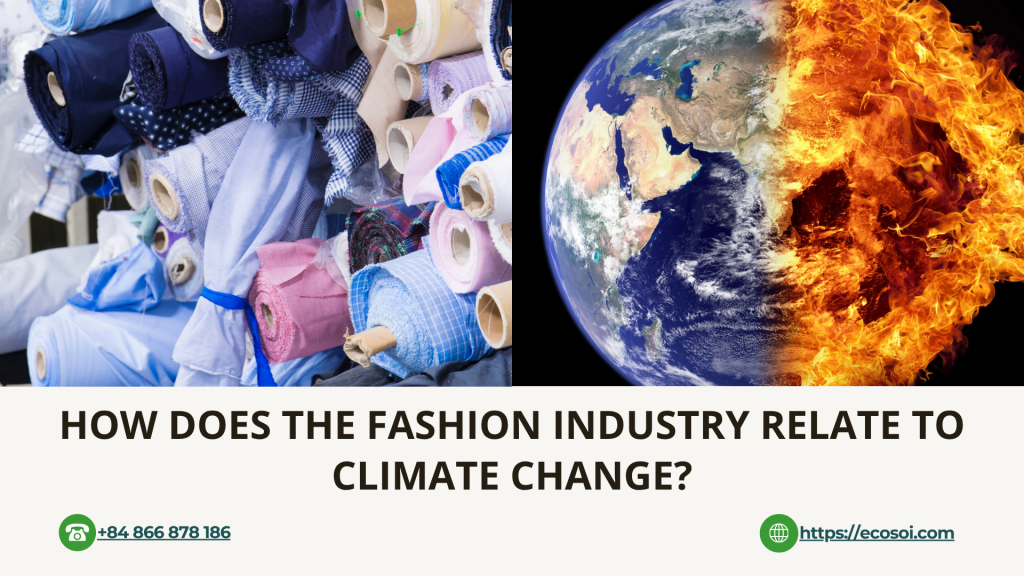
Clothing goes through many stages before it reaches the customer. These stages may include raw material production, spinning, weaving, dyeing, sewing, and transport. Each stage can use resources and affect the environment.
The European Environment Agency (EEA) highlights the need to consider textiles throughout their life cycle. This starts with design and production. It continues through use and the treatment of discarded items.
Therefore, buying something we do not need can add to demand for new products. This may require more raw materials and other resources. If it happens often, we may keep buying clothes even when our existing wardrobe meets our needs.
However, buying fewer clothes does not reduce environmental impact by a fixed amount. The result depends on the products, their production processes, and how people use them.
Buying less does not mean giving up every need
Buying new clothes is not automatically irresponsible. For example, we may need replacements when old clothes no longer fit. Some items may also become unsuitable for work or daily life.
The problem often lies in purchases that do not meet a clear need. A shirt bought on impulse, for instance, may soon be forgotten in the wardrobe.
Before buying, ask yourself three questions:
- Do I really need this item?
- Will I wear it regularly?
- Does it suit my needs and care routine?
These questions are not meant to make shopping difficult. Instead, they help you think carefully before adding something new to your wardrobe.
Is a durable garment always better for the environment?
Durability matters. Clothes that resist wear can stay in use for longer. When a garment meets our needs over time, we may also need fewer replacements.
However, durability is not the only factor. A long-lasting shirt may still go unworn if it does not suit the wearer. In addition, garments with complex construction may be harder to repair or recycle.
Therefore, durability matters most when a product is useful in everyday life. Buyers should consider quality, fit, function, and care requirements together.
How can you choose clothes that last longer?
First, choose clothes that suit their intended purpose. An item you wear regularly may offer more value than one designed for a rare occasion.
Next, check features you can assess before buying. Look at the seams and areas that may face stress. Also, read the washing instructions. If a garment needs special care, consider whether you can meet those requirements.
After buying, follow the care label to help prevent damage. You can also repair small problems, such as loose seams or missing buttons. When you no longer need an item, consider donating or reselling it.
However, reuse and recycling are not the same. Collected clothes do not always become new fibers. Recycling depends on the material composition, garment construction, and available processing technology.
Are natural materials always a better choice?
Many consumers look for natural materials when choosing clothing with a lower environmental impact. This is one factor worth considering. However, a natural origin does not automatically mean a product has a lower impact.
Each fiber has its own properties and production requirements. Environmental impacts also depend on raw material sources, processing, dyeing, and finishing. A garment’s useful life matters too.
Therefore, we cannot identify the best fabric in every situation based on its name alone.
Blended fabrics also need to be assessed according to their intended use. Combining fibers can help meet requirements for stretch or comfort. However, blends may make sorting and recycling more complex.
How should you assess a garment when its label lacks information?
Consumers can start by checking four factors:
- Composition: Which fibers does the product contain, and in what proportions?
- Quality: Does the material suit the intended use?
- Environmental claims: Does the brand clearly explain the basis for its claims?
- End of life: Can the product be repaired, reused, or processed through a suitable system?
Not every product comes with enough information to answer all these questions. When details are missing, acknowledge that limitation. Do not assume that a product labelled “green” is automatically the better choice.
Certifications also need careful interpretation. A certification for a raw material does not necessarily prove that the product has a low environmental impact throughout its life cycle.
Fashion businesses need to rethink material selection
Reducing waste is not only the consumer’s responsibility. Businesses can also make a difference through design, material selection, production, and clear product information.
For fashion brands, product development should begin with the intended use. Materials need to meet requirements for function, quality, and cost. At the same time, businesses need clear evidence to support their environmental claims.
Procurement teams and manufacturers can start with a few practical questions:
- Are the material composition and technical specifications clear?
- Does the material suit the final product?
- Can the supplier provide samples and technical documents?
- Does quality remain consistent across production batches?
- Can the supplier meet the planned order volume?
For export businesses, it is especially important to distinguish marketing messages from verifiable evidence. If a company makes an environmental claim, it needs to identify the basis for that claim.
A new material is suitable only when it meets product requirements and comes with enough information for proper assessment. Labels such as “natural” or “sustainable” cannot replace this evaluation.
Is pineapple fiber worth considering?
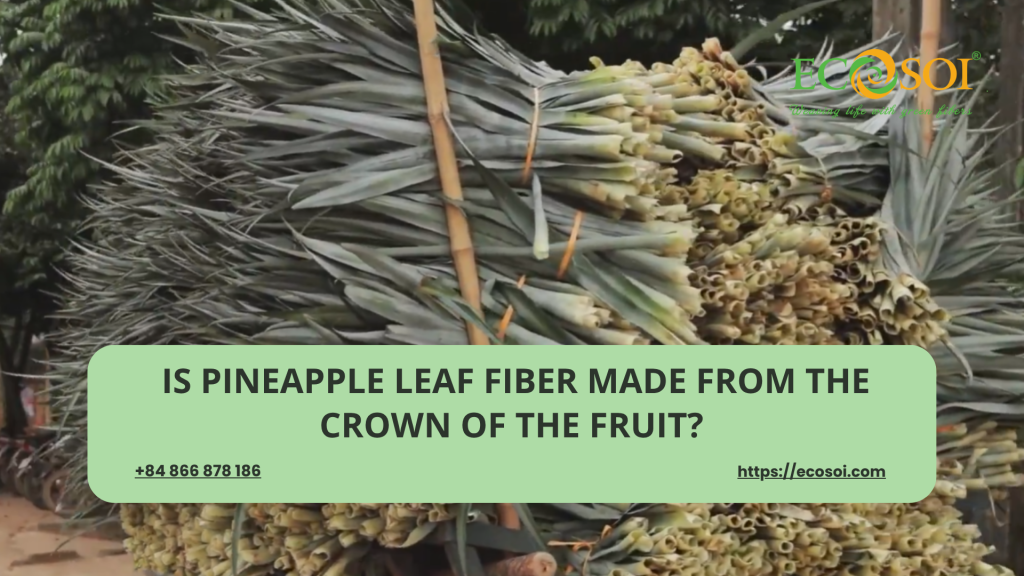
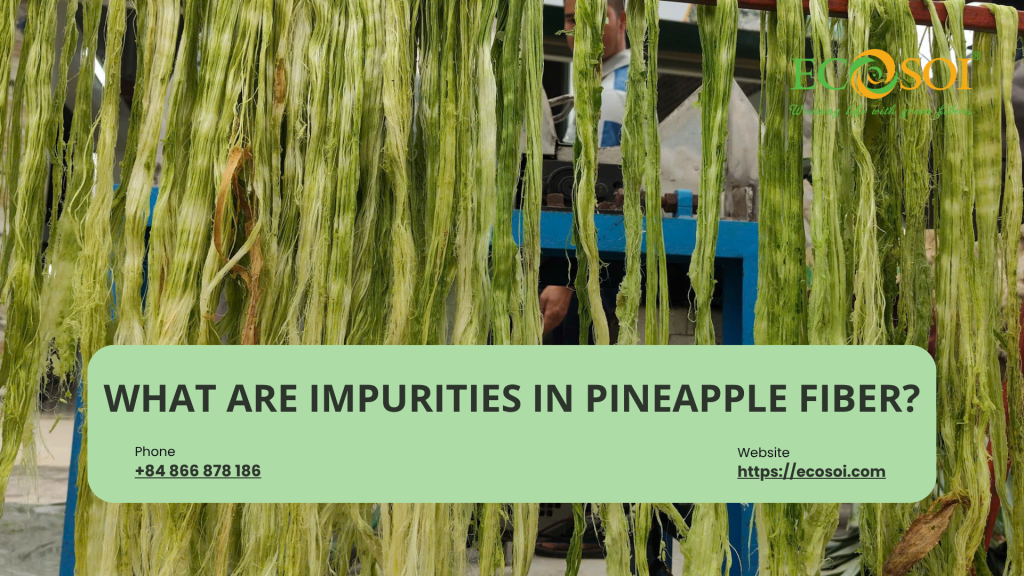
Pineapple fiber is developed from pineapple leaves, a by-product of growing and harvesting the fruit. Using these leaves offers another way to make use of agricultural by-products.
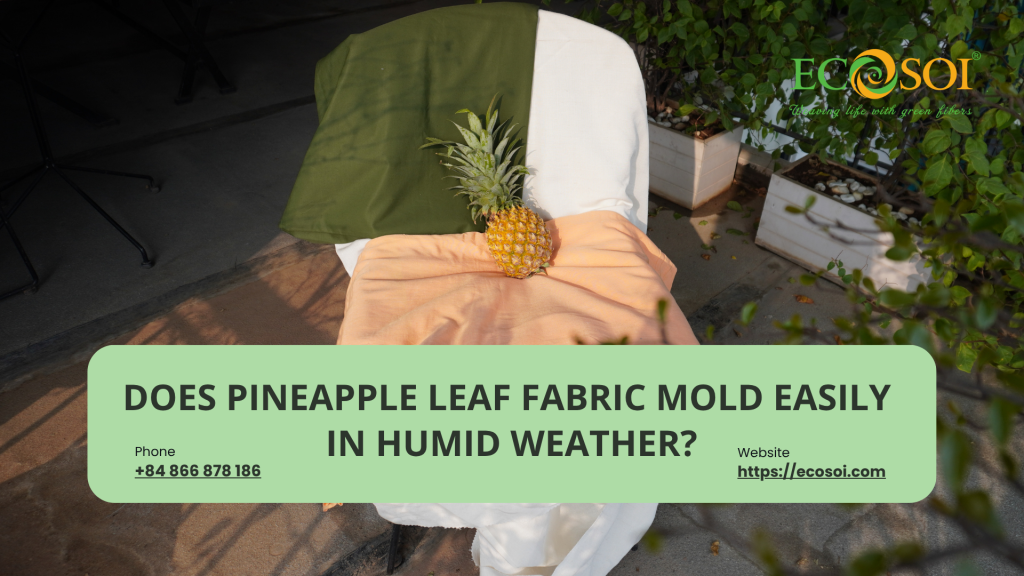
In Vietnam, Ecosoi develops fiber, yarn, and fabric from pineapple leaves. You can explore Ecosoi’s pineapple fiber products or browse its pineapple fiber fabric collection.
However, the potential of a raw material is not the same as the proven impact of a finished product. Using pineapple leaves does not automatically mean that the resulting fabric has a lower environmental impact than every other fabric.
To assess pineapple fiber fabric, businesses should review its composition and processing methods. They should also consider performance, durability, and end-of-life options. For blended fabrics, the other fibers matter as well.
If you are developing a new product, you can discuss technical specifications, samples, and supply capacity with Ecosoi. Testing the material in its intended application can help determine whether it is suitable before bulk production.
Buying fewer clothes is not enough; responsible use matters too
Buying fewer clothes can help reduce unnecessary purchases. However, focusing only on quantity overlooks durability, frequency of use, and what happens to clothing after disposal.
As a consumer, consider your needs before buying. In addition, make good use of the clothes you already own. As a business, select materials based on product requirements, verifiable information, and actual supply capacity.
The goal is not simply to buy less. It is to reduce waste and get more use from each item. This is a practical starting point for consumers and the textile industry to use resources more responsibly.