 VIETNAMESE
FROM FIELD TO RUNWAY: HOW SUSTAINABLE AGRICULTURAL MATERIALS ARE REDEFINING LUXURY
In the past, luxury goods were strictly linked to lavish displays and expensive price tags. However, this traditional benchmark is changing very clearly today. Nowadays, the adoption of sustainable agricultural materials has officially become a core value. Global premium brands look at these resources to evaluate long-term durability and operational efficiency.
Instead of focusing only on retail prices, modern textile businesses always ask practical questions. For instance, where do the raw elements come from? How does the raw extraction process affect nature? Is the final fabric strong enough? This shift in mindset has successfully driven the growth of natural fiber fabrics. Among them, pineapple fiber stands out as a prime example of this new textile paradigm.
Nội dung chính:
When luxury is no longer calculated by the scarcity of resources
Structural shifts from the end-consumer perspective
Because global resources are shrinking rapidly, saving raw materials through circular economy models is a popular trend. For individual buyers, a modern premium garment must satisfy several essential criteria:
- The fabric texture delivers a highly breathable feeling during daily wear.
- Garment surfaces remain durable without pilling while staying completely safe for sensitive skin.
- The material origin is transparent and does not violate any environmental regulations.
Strategic requirements from textile manufacturers and B2B partners
On the other hand, for commercial buyers and garment factories, material value lies in strict technical standards. Specifically, these partners demand the following conditions:
- The supply of raw fibers must remain stable all year round without seasonal disruptions.
- Material suppliers must possess sufficient international green certifications to meet ESG standards.
- Raw material profiles must be completely transparent to reduce legal risks during export.
Therefore, integrating eco-fibers into fashion lines is not just a marketing trick. On the contrary, this practice is a vital economic solution that directly protects business cash flow.
What defines sustainable agricultural materials in the modern textile industry?
Not every single type of agricultural waste can be turned into industrial fabric
By definition, sustainable agricultural materials are usable fibers harvested from farming leftovers. Typical examples include pineapple leaves, banana stems, or sugarcane bagasse. However, modern weaving mills cannot feed these raw agricultural byproducts straight into automated industrial manufacturing lines.
To qualify for mass commercial production, the biological material must pass three strict physical criteria:
- The fiber length and fineness must meet minimum mechanical processing requirements.
- Blending ratios with other baseline yarns must achieve high stability during the spinning process.
- The finished fabric must deliver high practical utility instead of only appearing in design exhibitions.
Currently, pineapple fiber in textiles satisfies these rigid technical benchmarks exceptionally well. This success happens because the material possesses a naturally long fiber structure and high cellulose content.
Pineapple fiber: the journey from farming waste to premium textile material
How to optimize and utilize a circular supply chain directly from the fields
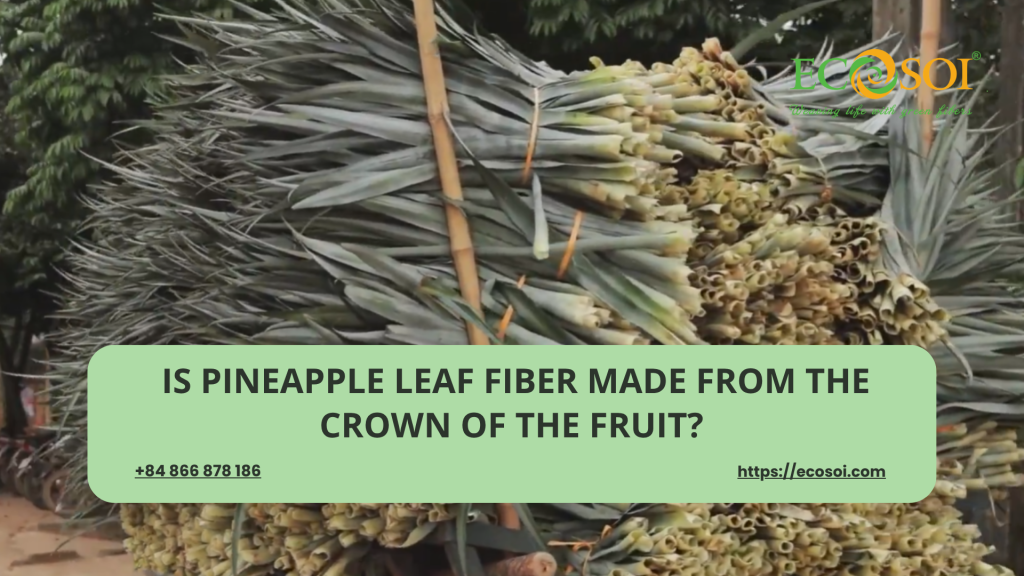
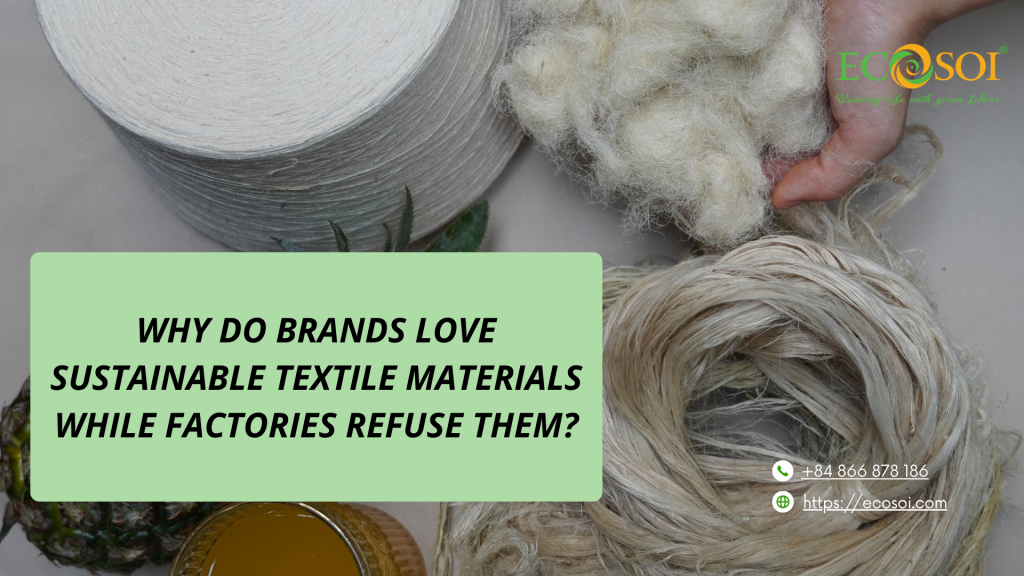
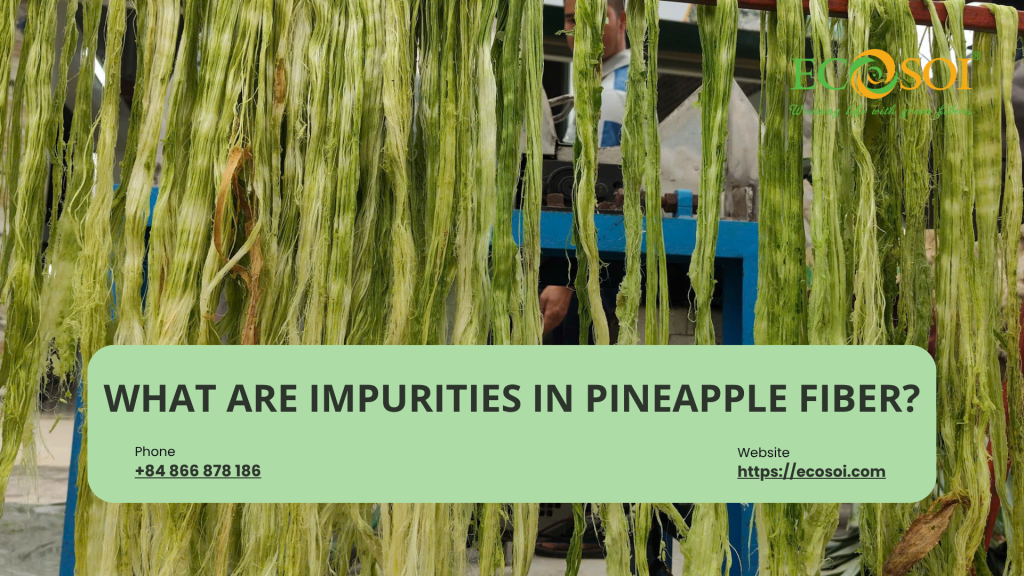
In our supply network, fibers are extracted from discarded leaves after the fruit harvest season. This sustainable collection process requires zero additional agricultural land. Furthermore, this farming model creates an extra source of steady income for local farmers. Ultimately, this approach directly extends the economic lifecycle of regional crops.
Real-world technical characteristics of pineapple fiber in factory production
From a physical standpoint, natural pineapple fiber holds several unique biological traits:
- The lightweight, porous fiber structure provides superior breathability and excellent moisture absorption.
- Single fibers offer strong cohesion when blended with other material categories.
Nevertheless, factories rarely use raw pineapple fiber alone at a 100% ratio. Instead, the most common industrial technique is blending pineapple fiber with cotton or viscose. This blending method balances fabric strength, material costs, and surface handfeel perfectly. As a result, the fiber becomes perfectly ready for large-scale industrial manufacturing.
Why do premium market segments choose sustainable agricultural materials?
Controlling and mitigating risks in the global textile supply chain
In garment manufacturing, the biggest operational risk is rarely the initial purchase cost of raw elements. Instead, factories usually worry about the following technical issues:
- Raw fiber quality fluctuates significantly between different incoming shipments.
- Xylographic sensations and end-user experiences change after each production batch.
- Fabric durability is too short, leading to structural damage after a few wash cycles.
When treated properly by professionals like Ecosoi, sustainable agricultural materials can fix these issues completely. Partnering with local agricultural hubs allows textile factories to control their input source. Consequently, they become less vulnerable to international logistics disruptions.
Practical user experience is the true benchmark of modern luxury
Smart consumers will never buy a rough, uncomfortable piece of clothing just because it has an eco-friendly tag. Sustainable textiles can only win a market share if they meet these functional expectations:
- Product designs are comfortable and highly adaptable for various daily activities.
- Fabric surfaces are gentle and cause zero irritation to sensitive skin types.
- Outfits keep their original silhouettes and mộc mạc colors after long-term usage.
Economic insights for forward-thinking textile corporations
Transitioning to bio-materials from crop waste brings three concrete financial benefits to manufacturing plants:
- Raw inputs are highly traceable back to specific farming cooperatives.
- Dyeing technicians can process the fiber batches using existing mill equipment after initial treatment.
- Material suppliers provide authentic data to help brands complete their comprehensive ESG profiles.
This alignment prevents businesses from falling into expensive greenwashing traps. Therefore, they save a massive amount of initial mold and tooling investments.
How Ecosoi develops comprehensive pineapple fiber solutions from actual production
At Ecosoi, we do not position pineapple fiber as a total replacement that destroys traditional yarn industries. Instead, our engineering team re-engineers fiber structures to fit the specific applications of each B2B partner:
- We maintain a strict closed-loop workflow from mechanical extraction to final fabric weaving.
- Our R&D department focuses on improving tensile strength and optimizing real-world fiber fineness.
- We utilize functional fabric performance and human skin safety as our primary quality control metrics.
Thanks to this synchronized quality management system, Ecosoi products always enjoy high commercial adoption in the global apparel supply chain.
Explore more: Ecosoi Product Catalog
Conclusion: true value always begins right at the agricultural fields
Modern luxury and high fashion no longer depend on wasting natural resources. On the contrary, true value comes from choosing the right components during the early design phase. When circular agriculture materials are studied thoroughly, they can easily achieve widespread commercial success.
If your business wants to integrate green solutions into production, start analyzing the physical structure of pineapple fiber today. Focus your strategy on realistic technical data rather than empty advertising slogans.
Connect with Ecosoi right now to receive our latest product catalog and order customized material samples for your upcoming textile project!