 VIETNAMESE
How to choose the right sustainable materials for brands
When searching for sustainable materials for brands, fashion labels usually ask very practical questions. For instance, they rarely ask general questions about fabric origins or prices. Instead, the most common question always focuses on whether a material fits their specific products.
Therefore, this is a completely legitimate concern for business owners. Nowadays, consumers care much more about the environment. As a result, choosing fabric is no longer just a tailor’s job. This choice directly determines whether customers will buy the products again. Furthermore, it significantly affects the survival of a brand in the competitive market.
For pineapple fiber and other natural fabrics, the answer is not simply good or bad. In fact, the most critical criterion is whether the fabric fits your business goals. Specifically, the material must match the product segment that your brand sells.
Nội dung chính:
Why no single fabric fits every fashion label
Many brand owners still want to find a fabric that meets all requirements. However, this ideal material does not exist in the textile industry. Each type of fabric always has its own strengths and weaknesses. This rule applies even to natural materials labeled as eco-friendly. Consequently, businesses always need to select fabrics carefully for each specific garment style.
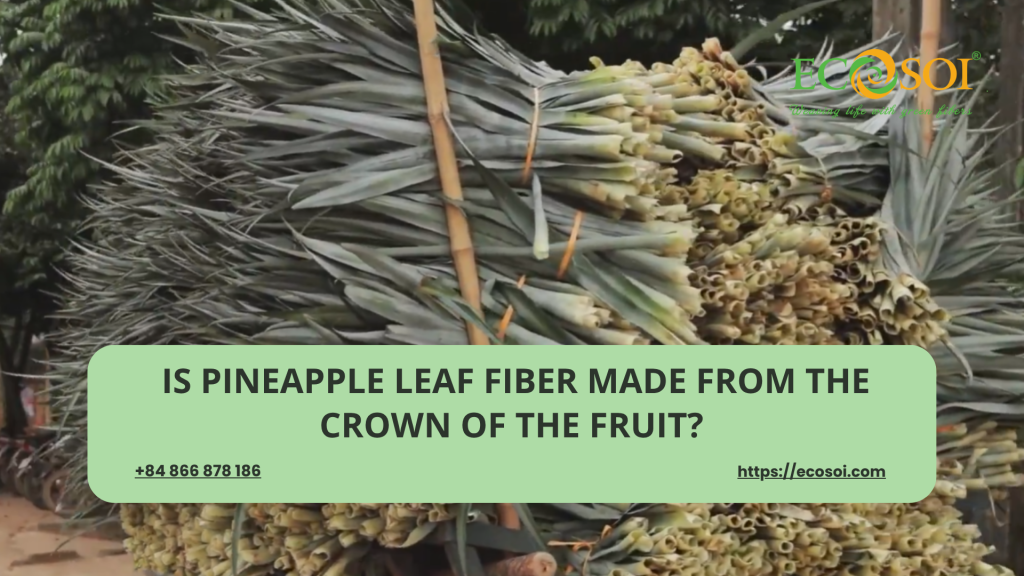
For example, pineapple fiber is highly breathable and comfortable. This material effectively utilizes discarded pineapple leaves from farmers. However, weavers must blend pineapple fiber with other fibers like cotton or silk at standard ratios. Thanks to this method, the fabric becomes soft and shapes beautifully. Therefore, businesses should not look for the best fabric on the market. Instead, you should only find the most suitable fabric for your designs.
Three factors that determine material suitability
Alignment with product positioning
Each fashion brand chooses its own business path. For instance, some companies create premium designer clothes. Others prefer a minimalist style for daily wear, while some focus exclusively on pure natural clothing.
Thus, the selected fabric must reflect the exact spirit of the brand. If you choose an eco-friendly fabric that feels rough, customers will walk away. On the contrary, when the material performs as advertised, buyers will trust your brand more.
Matching customer expectations
Customers in different segments have very diverse demands when choosing clothes. Practical buyers usually prioritize comfortable, durable, and non-irritating garments. Meanwhile, younger customers enjoy hearing stories about the origin of the fibers. They want to know exactly how artisans created those products.
Consequently, businesses must understand their target audience before purchasing textiles. This is why material suppliers like Ecosoi always work closely with partners regarding customer personas from the very beginning.
Compatibility with factory machinery
A fabric might be excellent, but it can easily ruin production if the fibers do not fit the factory machinery. For this reason, brands need to carefully check spinning capabilities, weaving methods, dyeing processes, and quality control steps.
In fact, blended fabrics with appropriate ratios usually maintain high stability on modern industrial weaving looms. They do not require complicated adjustments. All of these steps must run smoothly before businesses order large quantities of fabric. Therefore, smart brands always sew a few sample garments before starting mass production.
Why pineapple fiber requires product-specific testing
Unlike nylon fabric made from chemicals with a fixed formula, pineapple fiber comes from natural plant leaves. This source is completely renewable. However, fiber quality will vary depending on the soil conditions and farming methods. In addition, processing techniques also alter fiber characteristics. Therefore, businesses cannot apply a single formula to every order.

You should consider the following points:
- There is no universal blending ratio for both polo shirts and canvas bags. Products that require structural stiffness, such as bags or canvas shoes, have different fiber ratios than daily clothing.
- No single weaving style satisfies all wearing needs.
- No fabric surface finishing method pleases every customer.
Because of these reasons, material testing must rely directly on the exact garment samples you intend to sell.:
Explore more: Ecosoi pineapple yarn
Evaluating material suitability from all perspectives
The business perspective: Good fabric must drive sales
For business owners, choosing fabric determines the long-term path of the company. A suitable material must help you solve commercial problems.
Specifically, good sustainable materials for brands must meet these requirements:
- Maintain consistent quality and product shape across all production batches.
- Allow easy integration of new designs for upcoming collections.
- Provide transparent origin documentation for target customers.
- Retain stable quality when the business increases order volumes.
These factors are extremely important if your brand intends to export apparel products.
The consumer perspective: Customers do not buy advertisements
Modern consumers are highly intelligent and practical. A pineapple fiber shirt marketed as eco-friendly will still be ignored if it feels hot. Likewise, buyers will not purchase it if the shirt loses its shape quickly or degrades after a few washes.
This reality proves that fabric needs to do more than just look good online. Most importantly, it must provide a comfortable feeling during daily use. This real-world experience determines whether customers return to your brand in the future.
The optimal collaboration method between brands and suppliers
Professional sustainable textile materials developers never force customers to buy pre-made fabric rolls immediately. Instead, the technical team first discusses deeply with the brand using practical questions:
- Who is the target audience for this specific garment sample?
- Do you want to sell this collection for summer or winter?
- What is the most unique selling point of this shirt?
- Do you need high elasticity or a structured fabric shape?
After understanding your needs, the supplier will recommend the right weaving structure. Sometimes pineapple fiber is the best choice, but other times the solution might be a different natural fabric. The ultimate goal is to find the exact fabric that drives sales and optimizes costs for the brand.
Learn more about circular textile frameworks by the Ellen MacArthur Foundation
A right decision from the start saves significant costs
Choosing the right fabric during the ideation phase protects businesses from many future difficulties. You will reduce the number of pattern adjustments. Furthermore, this saves money on prototyping and avoids the risk of mass defects during production.
In contrast, if you blindly follow trends without checking material compatibility, your business will suffer heavy losses. You will lose both financial resources and customer trust.
Brands are shaped by these small decisions. Beautiful labels or packaging are just external appearances. The fabric material is what customers directly touch and wear every day. A high-quality fabric will naturally convince buyers without any exaggerated words.
Conclusion
No single universal fabric fits every business. The key is that you choose the right sustainable materials for brands based on your budget, customer base, and product silhouettes. For pineapple fiber, the true value of the fabric does not lie in grand words. Instead, it lies in how the material is designed and tailored into high-quality garments that fit users perfectly.
If you want to use pineapple fiber for your new collection, please clarify your brand goals before buying materials. Selecting the right fabric from the first step will make your subsequent production process much easier.