 VIETNAMESE
CIRCULAR ECONOMY IN TEXTILES: REAL IMPACT OR MEDIA HYPE?
Over the last few years, the phrase “circular economy” appeared constantly. For instance, we easily find this term in ESG reports, marketing campaigns, or brand messages. However, an important question arises. Does this model truly create a positive social impact? Or is it merely a concept polished by the media?
Truly, the textile industry has a long and complex supply chain. Therefore, we cannot judge the circular economy in textiles through words alone. Instead, its true value requires proof through real actions. These actions mean concrete changes in production, labor, and consumption habits.
Nội dung chính:
Understanding what a circular economy is – and what it is not
To evaluate social impact properly, we must first understand the true nature of this concept.
Circular economy is not just recycling
In the fashion sector, a circular model usually includes the following activities:
- Optimizing the lifecycle of materials.
- Using agricultural byproducts and waste.
- Reducing the extraction of raw resources.
- Extending the usage time of products.
However, recycling remains only a small part. Therefore, it does not represent the entire circular picture. If the social value chain does not improve, this model remains incomplete.
Common misunderstandings in the media
Some current approaches often cause confusion. For example, people often follow these trends:
- Labeling every product with recycled elements as “circular.”
- Equating a circular economy directly with sustainable fashion.
- Focusing only on the environment while ignoring the human element.
As a result, these misunderstandings turn the circular economy into a mere slogan. Furthermore, it loses its role as a long-term strategy for businesses.
Social impact – the forgotten metric in circular textiles
What does social impact mean in the textile industry?
Core aspects of social impact
In this sector, social impact usually relates to:
- Working conditions inside the supply chain.
- Incomes and livelihoods of local communities.
- Sustainable employment opportunities.
- Transparency and fairness in value distribution.
Therefore, this model becomes meaningful only when it brings value to humans. For instance, protecting environmental resources alone is not enough.
When the circular economy stops at the material level
In reality, many current business models focus only on:
- Changing input raw materials.
- Reducing emissions during the production stage.
- Optimizing technical processes.
However, if workers still suffer from low wages, the social impact remains limited. This issue is very similar to when farmers only supply cheap raw materials without fair rewards.
Natural fibers and the circular economy – opportunities or challenges?
Natural fibers present unique advantages and risks within a sustainable system.
Social potential of natural fibers
Natural fibers like pineapple, bamboo, or hemp have a major advantage. Furthermore, they always connect deeply with agriculture and local communities.
For example, these materials help:
- Use agricultural byproducts effectively.
- Create extra income for farmers outside harvest seasons.
- Reduce dependence on synthetic chemicals.
If brands use this correctly, it becomes a great economic lever. As a result, it helps develop rural areas in a more sustainable way.
Risks without a fair value distribution model
However, natural fibers also carry large risks if:
- Raw material purchase prices stay unstable.
- Brands fail to train farmers properly.
- The value chain lacks transparency.
When these issues happen, risks shift from businesses to the community. Consequently, the model fails to create shared benefits.
Does a circular economy help businesses become more sustainable?
For B2B enterprises, this model is much more than a public relations story.
Long-term benefits for businesses
When implemented correctly, this model can:
- Stabilize the supply of raw materials.
- Reduce legal risks and improve ESG compliance.
- Increase trust with international partners.
At the same time, businesses become more proactive in their development strategies. Therefore, they no longer need to chase short-term market trends.
The boundary between strategy and media hype
However, if the model stops at messages, it easily becomes:
- A short-term marketing tool.
- An added cost with low social value.
- A high risk of greenwashing accusations.
Therefore, businesses must prove their commitment through real actions, not just statements.
Do consumers truly benefit?
Modern consumers care more about green products. However, the social impact on them remains indirect.
When information lacks transparency
The circular model becomes a distant story if consumers:
- Do not understand the true origin of materials.
- Do not receive clear product lifecycle data.
- Only receive oversimplified marketing messages.
Therefore, these factors make it difficult for a brand to build long-term trust.
Social value comes from deep understanding
Conversely, consumers gladly support a brand long-term when they know that:
- The product uses agricultural waste efficiently.
- The supply chain ensures better transparency.
- Local workers receive fair benefits.
As a result, they will shop more responsibly instead of just following temporary trends.
The Ecosoi approach to the circular economy in textiles
At Ecosoi, this model is never a media slogan. Instead, we choose a highly practical approach:
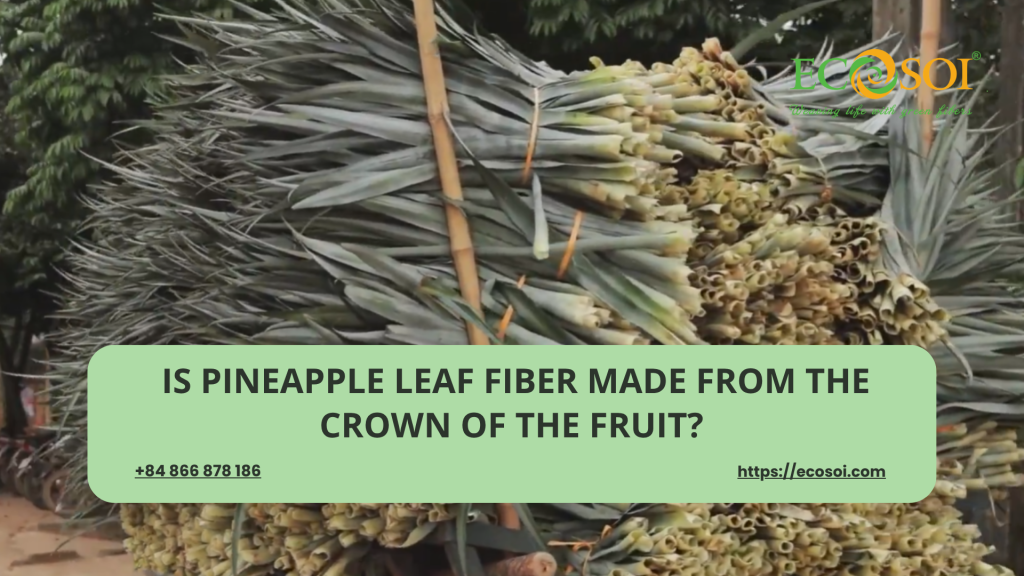
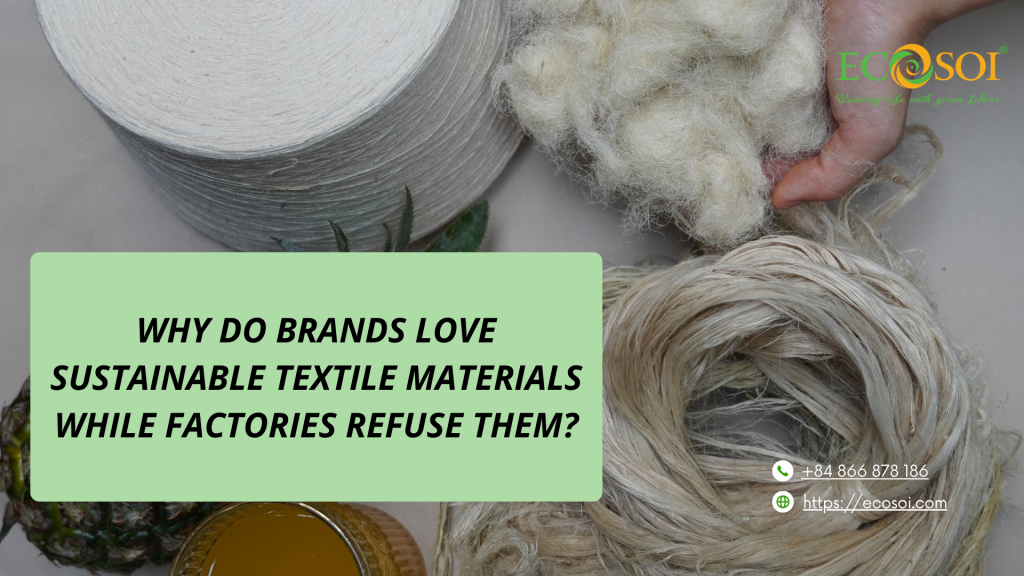
- Using discarded pineapple leaves from Vietnamese agriculture.
- Developing fibers tailored for specific product applications.
- Accompanying partners through rigorous sample testing and evaluation.
This method effectively reduces resource waste. Furthermore, it opens up sustainable economic opportunities for the entire supply chain.
When does a circular economy create real social impact?
From industry practice, we can highlight a few key conditions:
- The value chain must remain transparent.
- Benefits must be distributed fairly.
- Factories must use materials in the right context.
- Brands must provide complete information to consumers.
Without these elements, the model easily turns into media hype. Therefore, it fails to act as a genuine social solution.
Conclusion – True impact depends entirely on implementation
The circular economy in textiles does not automatically generate positive impacts. Truly, its value depends heavily on how a business designs its model. In addition, the way the supply chain operates and how consumers access data are also crucial.
When brands deploy this model responsibly, it drives positive change for the whole industry. Conversely, if it stops at media hype, it quickly loses public trust.
- Are you researching circular materials but worry about their actual real-world impact?
- Do you need a partner who understands technology, supply chains, and social values deeply?
Ecosoi stands ready to accompany you. Therefore, we help you transform the circular economy in textiles from a vague concept into concrete actions.