 VIETNAMESE
CHOOSING THE RIGHT PINEAPPLE FIBER FOR SPINNING
Pineapple fiber can be used to develop textile yarns. However, not every fiber form is ready for direct use in spinning machines.
Before choosing materials, businesses should identify their production stages and technical requirements. Raw pineapple fiber, fluffed pineapple fiber and finished pineapple yarn have different properties. Each form suits a different production stage.
So, which pineapple fiber for spinning should a business choose? Should it start with raw fiber grades Q1, Q2 or Q3? Or should it consider fluffed pineapple fiber? The answer depends on the processing level, equipment and target yarn.
Nội dung chính:
Why choose the right pineapple fiber before spinning?
In textile production, raw materials affect many later stages. This is also true for pineapple fiber. Pineapple leaf fiber comes from pineapple leaves. After extraction, the fiber may undergo cleaning, degumming and structural processing. As a result, materials can differ in length, cleanliness and uniformit. Therefore, not all pineapple fiber has the same applications.
For example, a factory with its own fiber processing system may prefer raw fiber. In contrast, a business looking for material prepared for spinning may consider fluffed pineapple fiber.
Choosing the wrong material can add processing steps. It may also make the fiber unsuitable for existing equipment. Therefore, businesses should define their production requirements before placing an order.
Understanding raw pineapple fiber and fluffed pineapple fiber
These are two different material forms. Businesses should understand their differences when sourcing pineapple fiber.
Raw pineapple fiber: fiber extracted from leaves
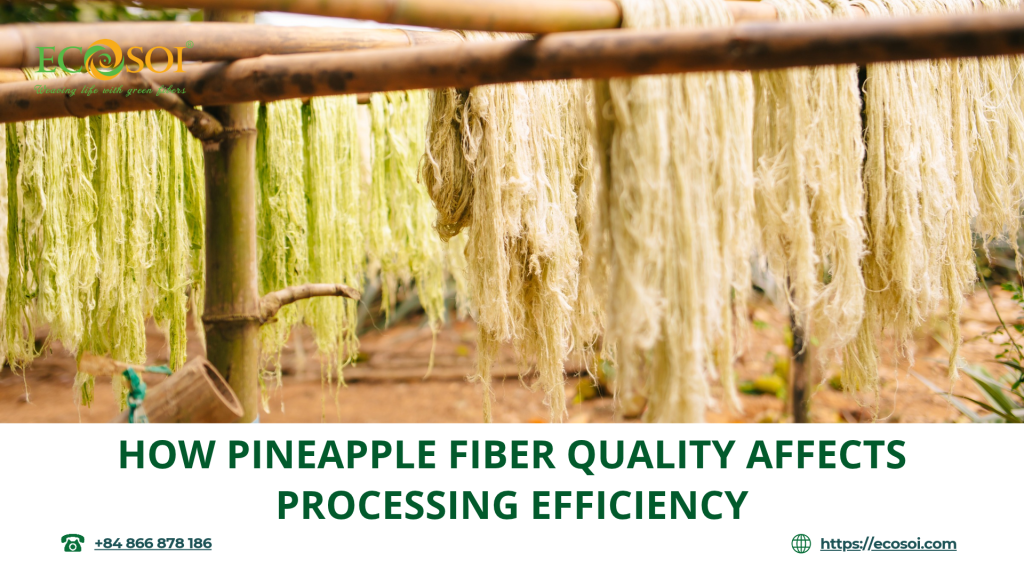
Raw pineapple fiber is obtained after the fiber has been separated from pineapple leaves. Depending on the process, it may undergo further cleaning or degumming at different levels. This form suits businesses that want to manage part of the raw material processing themselves. However, buyers should check the material carefully.
Key points to assess include:
- Degumming level and remaining gum content.
- Impurity content.
- Fiber length and uniformity.
- Color and storage condition.
- Suitability for the next processing stage.
In particular, raw fiber is not always ready for every spinning system. Businesses should check their machinery and planned processing steps before making a choice.
Fluffed pineapple fiber: material prepared for spinning
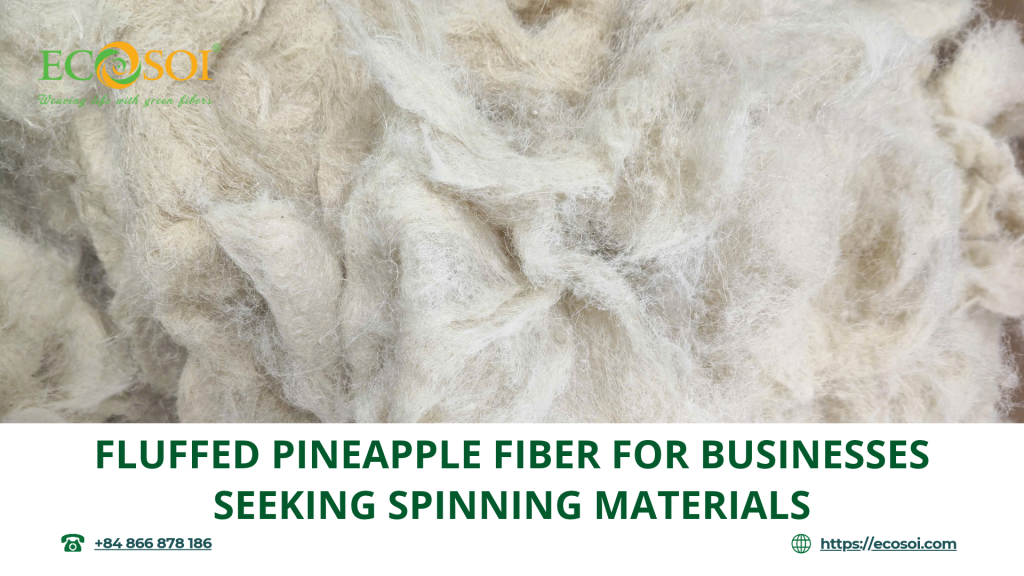
Unlike raw fiber, fluffed pineapple fiber is a material form prepared for further applications, such as spinning. At Ecosoi, fluffed pineapple fiber is used for yarn spinning and faux leather production. Its fiber length can be adjusted to meet customer requirements.
Therefore, it is worth considering for spinning mills and material research teams. However, businesses should still discuss fiber length, cleanliness and blending options with the supplier. Fluffing does not mean the material is compatible with every spinning system. Actual performance still depends on the equipment and the requirements of the target yarn.
Businesses can learn more about Ecosoi’s fluffed pineapple fiber for spinning.
Should you choose pineapple fiber Q1, Q2, Q3 or fluffed fiber?
Ecosoi currently offers three grades of raw pineapple fiber and one fluffed fiber product. These options differ in processing level and intended use.
Q1 pineapple fiber: degummed fiber
At Ecosoi, Q1 fiber is extracted from pineapple leaves through a mechanical process. It is then degummed with clean water and sun-dried. The reported residual gum content is below 10%. The fiber has a milky-white color.
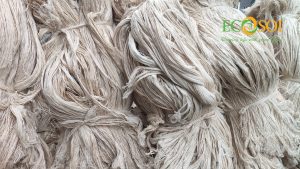
With this processing level, Q1 may suit businesses that need degummed raw material. However, buyers should also check the length, uniformity and impurity content of each batch.
Q2 pineapple fiber: partially degummed fiber
Q2 fiber has a reported degumming level of around 70–80%. Ecosoi reports an impurity content below 15%. Its stated fiber length ranges from 70 to 120 cm. Businesses may consider this material when they plan further processing or trials for textile yarn production.
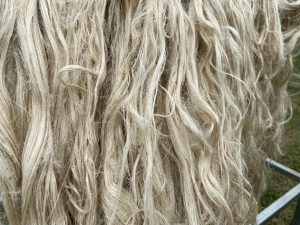
However, these specifications alone cannot confirm that Q2 suits every production line. Buyers should assess the machinery and target product requirements.
Q3 pineapple fiber: non-degummed fiber
Q3 is a raw fiber grade that has not undergone degumming. At Ecosoi, its reported residual gum content is around 20%. The reported impurity content is above 25%. This form may better suit businesses with their own raw material processing systems. However, they should account for further cleaning and degumming steps.
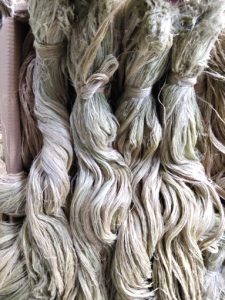
Therefore, businesses should not choose Q3 based on its initial purchase price alone. They should also consider processing costs and material loss during production.
Fluffed pineapple fiber: an option for spinning
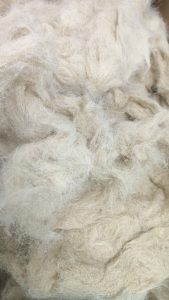
If the main goal is yarn development, businesses should also assess fluffed pineapple fiber. Ecosoi positions this material for the spinning stage. In addition, its fiber length can be discussed based on customer requirements.
However, buyers should request specific technical information before making a decision. They should clarify the actual fiber length, uniformity, cleanliness and blending suitability.
Note: Q1, Q2 and Q3 are product grades defined by Ecosoi. They are not a universal grading system for the entire pineapple fiber industry.
Businesses can compare the available options in Ecosoi’s pineapple fiber range.
Technical factors to check before spinning
Choosing the right product name is only the first step. To assess its suitability, businesses should examine the material’s actual properties.
Fiber length and uniformity
Fiber length affects how material feeds into machines and moves through the spinning process. If the length is unsuitable, the fiber may be difficult to feed or card evenly.
In addition, large differences between fiber bundles need attention. Therefore, businesses should define their target length range. They should also check uniformity across samples from the same batch.
Cleanliness and remaining gum content
Pineapple fiber may retain natural gum and other components after extraction. The processing level affects the material’s properties.
However, removing more natural components does not always make the material more suitable. The required processing level should match the intended use and production technology.
For spinning mills, it is important to define an acceptable level of cleanliness. They should also assess whether their existing production line can handle the remaining gum.
Blending with other fiber types
Businesses can explore blending pineapple fiber with cotton or other fibers. The aim is to develop materials with properties that suit the target yarn.
However, blending ratios should not be based on the desired fiber content alone. Businesses also need to assess feeding, carding, sliver formation and spinning performance. Therefore, they should conduct trials on the actual machinery before setting a production blend.
How spinning mills can select suitable raw materials
To reduce risks when developing pineapple yarn, businesses can follow these steps.
Step 1: Define the target yarn
First, identify the yarn count, fiber blend and intended application. These details provide a basis for selecting the required fiber properties.
Step 2: Check the spinning system
Each spinning system has different processing requirements. Therefore, businesses should identify their existing equipment and the steps they can perform in-house.
Step 3: Choose the right fiber form
If a business wants to manage raw material processing itself, it can consider raw fiber grades Q1, Q2 or Q3.
In contrast, fluffed pineapple fiber is an option to assess when the goal is to prepare material for spinning.
Step 4: Conduct trials and record the results
After selecting the material, businesses should test it on their actual equipment. They should monitor feeding, fiber carding, blending and the quality of the resulting yarn.
Step 5: Check consistency between batches
One batch that meets the requirements does not guarantee long-term production consistency. Therefore, businesses should agree on inspection criteria and acceptable variation between deliveries.
6. What materials does Ecosoi offer for spinning?
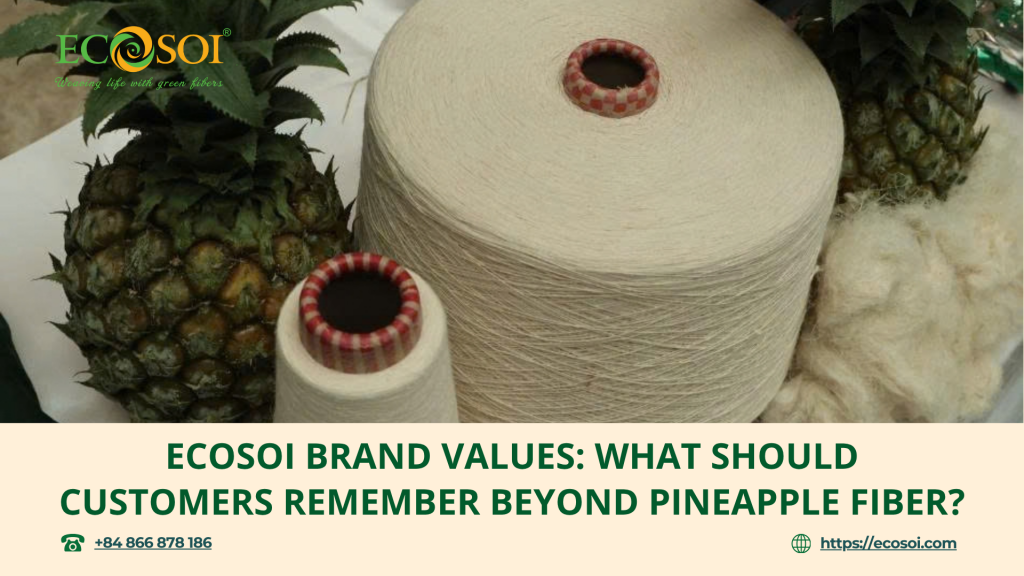
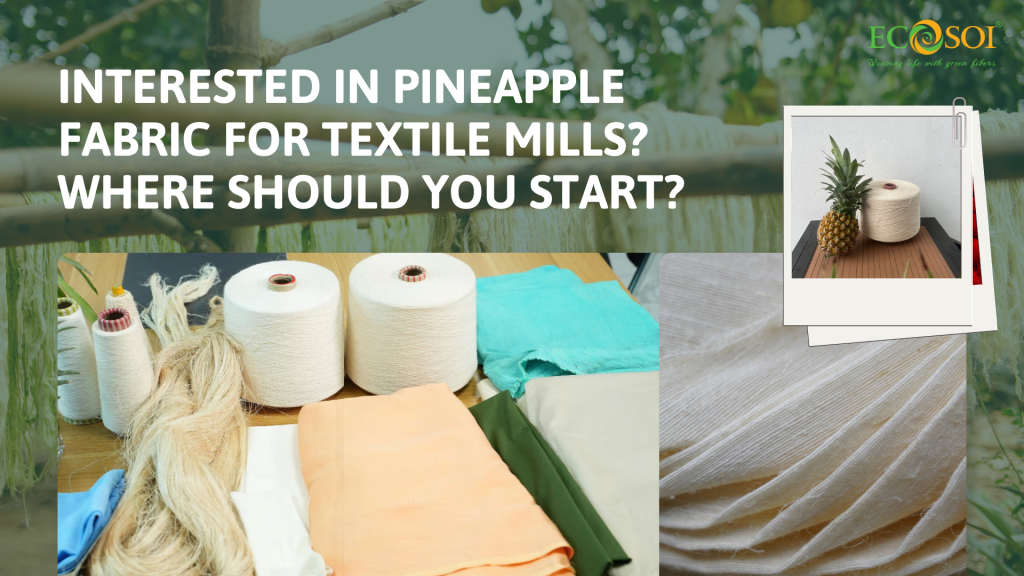
Ecosoi develops pineapple leaf materials for different production stages. Its current range includes raw pineapple fiber grades Q1, Q2 and Q3, fluffed pineapple fiber and pineapple yarn. For raw fiber, businesses can choose based on the processing level they need. Meanwhile, fluffed pineapple fiber is intended for spinning and material development. At the next stage, Ecosoi also offers pineapple-cotton blended yarn. For example, one sample cone contains 20% pineapple fiber and 80% cotton.
The available yarn counts include:
- Woven applications: 20 Ne.
- Knitted applications: 20 Ne, 30 Ne and 32 Ne.
These products show how pineapple leaf materials can move through different production stages. However, each business should still select materials based on its own technical requirements.
In addition, businesses should distinguish plant-based material content from environmental certification. Using pineapple fiber does not automatically mean a product has a green or organic certification. Nor does it prove a lower environmental impact. Such claims require relevant records and supporting data.
Businesses can also explore Ecosoi’s pineapple yarn products.
Start with the right fiber form to develop suitable pineapple yarn
Spinning pineapple fiber involves more than choosing a new raw material. Businesses need to consider the processing level, fiber length, cleanliness and compatibility with their equipment.
Therefore, no single fiber form suits every spinning mill. Raw fiber may meet the needs of businesses that want to manage further processing. Meanwhile, fluffed pineapple fiber is an option intended for the spinning stage.
Ecosoi offers different pineapple leaf material forms for various production needs. If your business is looking for pineapple fiber for spinning, discuss the material type, technical requirements, machinery and expected order volume with Ecosoi.
Contact Ecosoi to identify the fiber form that best suits your production process.