 VIETNAMESE
HOW PINEAPPLE FIBER QUALITY AFFECTS PROCESSING EFFICIENCY
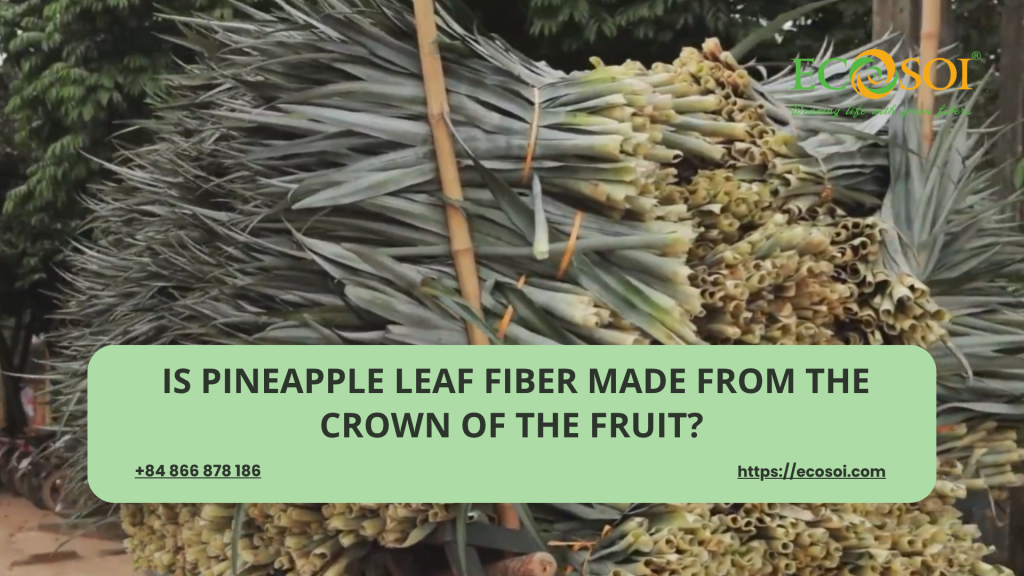
In pineapple fiber production, the final product depends on more than processing technology. The quality of the incoming pineapple leaves also affects the fiber obtained.
Although all leaves come from harvested pineapple plants, their moisture, structure and surface condition may differ. These differences can affect fiber extraction and cleaning.
For businesses, this is not only a technical concern. Raw material quality also affects processing costs and consistency between batches. So, what should manufacturers monitor? And how should they assess a pineapple fiber supplier before placing an order?
Nội dung chính:
Key factors that affect pineapple leaf fiber processing
Leaf characteristics and condition
Pineapple leaves can vary in age, size and structure. These factors may affect the properties of the extracted fiber.
In addition, businesses should check the condition of leaves during collection. Damaged or decomposing leaves may increase the risk of contamination and mold. Poor storage can also affect the raw material.

Therefore, businesses should consider both the source and condition of the leaves. Inspecting them before extraction helps identify unsuitable batches at an early stage.
Collection and storage time
After harvesting, pineapple leaves should be collected and sent for processing. However, their condition may change if they remain in storage for too long or under unsuitable conditions.
Moisture is an important factor during this stage. For example, damp and poorly ventilated storage areas can encourage mold growth.
Therefore, businesses should monitor storage time and conditions. They should also inspect the leaves before fiber extraction begins.
Fiber extraction methods
Fiber extraction separates the fibrous parts from other leaf tissues. The method used can affect the properties of the resulting fiber.
Research on pineapple leaf fiber (PALF) discusses several extraction methods. These include mechanical extraction and biological retting. Each method affects the raw material in a different way.

For instance, a 2024 study on Azores pineapple leaf fiber compared manual scraping with biological retting. The researchers found that the extraction method could change certain fiber properties.
Therefore, businesses should not assess an extraction method by its name alone. Instead, they should check whether the processed fiber meets the intended application requirements.
You can read the 2024 study on Azores pineapple leaf fiber extraction for further details.
Remaining gum and impurities
After extraction, pineapple fiber may still contain gum and non-fibrous matter. The amount depends on the raw material and processing method.
If the fiber contains too many impurities, the factory may need additional cleaning steps. Similarly, fiber that requires degumming must receive a suitable level of treatment.

However, a lighter fiber color does not always mean better cleanliness. Color alone cannot show how much gum or impurity remains.
Therefore, businesses should request clear information about the processing level. They should also compare these details with an actual material sample.
How does pineapple fiber quality affect production efficiency?
Differences in raw materials can create different processing requirements. The actual impact depends on fiber properties and the intended application.
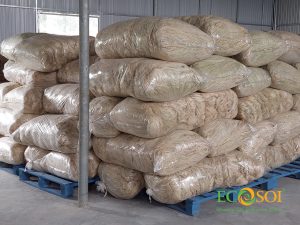
- First, impurities affect the cleaning process. If the fiber contains too much non-fibrous matter, the factory may need more intensive cleaning. As a result, processing may require more time and resources.
- Second, fiber properties affect further processing. Length and uniformity are important when preparing fiber for spinning. If these properties do not match the machinery, the fiber may be difficult to feed and card evenly.
- Third, differences between batches affect production consistency. When fiber properties vary significantly, factories may need to adjust their processes. This can make it harder to maintain consistent output quality across production runs.
Therefore, controlling raw material quality helps businesses manage processing more effectively. However, the final product still depends on the equipment, production methods and quality control at each stage.
What should businesses check when choosing a pineapple fiber supplier?
When looking for a supplier, businesses should consider more than price and available volume. They should also clarify material properties and the supplier’s ability to maintain consistent quality.
Before placing an order, consider asking the following questions:
- Source: Where do the pineapple leaves come from? Can the supplier provide information about the raw material source?
- Extraction method: How is the fiber extracted? Which processing steps has the material undergone?
- Cleanliness: How much gum and impurity remains? How are these properties checked?
- Fiber properties: Are the fiber length and uniformity suitable for the intended application?
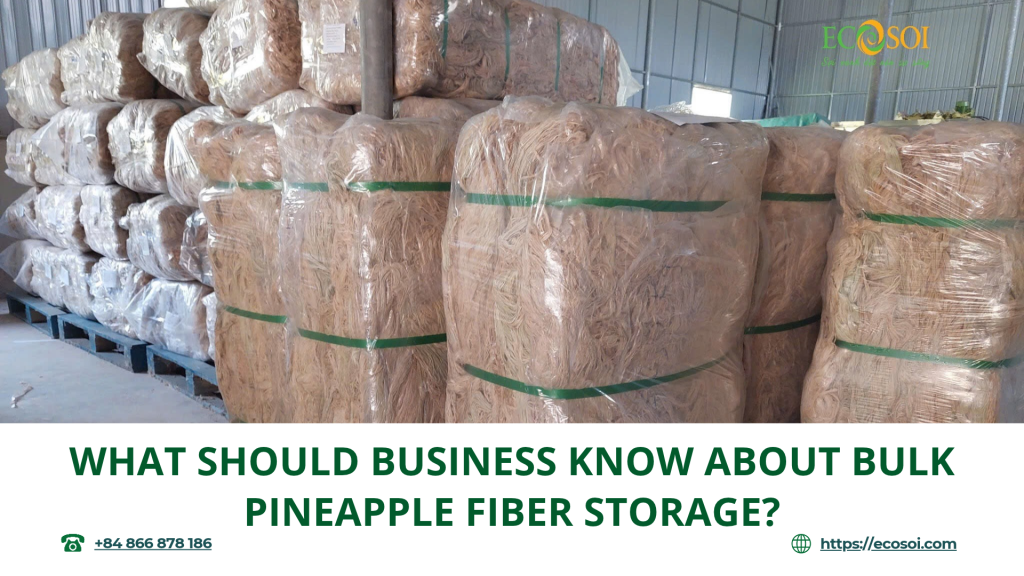
- Storage conditions: How is the fiber dried, packed and stored?
- Consistency: Can the supplier compare technical specifications across different batches?
In particular, businesses should define inspection criteria for each production stage. Fiber for spinning may require different properties from fiber used to develop other materials.
If no clear criteria are available, both parties should agree on the key properties to assess. They can then use samples or trial batches to check whether the material meets the requirements.
For large orders, consistency across deliveries also matters. One batch that meets the requirements does not prove that a supplier can maintain stable quality over time.
Ecosoi pineapple fiber products and material selection
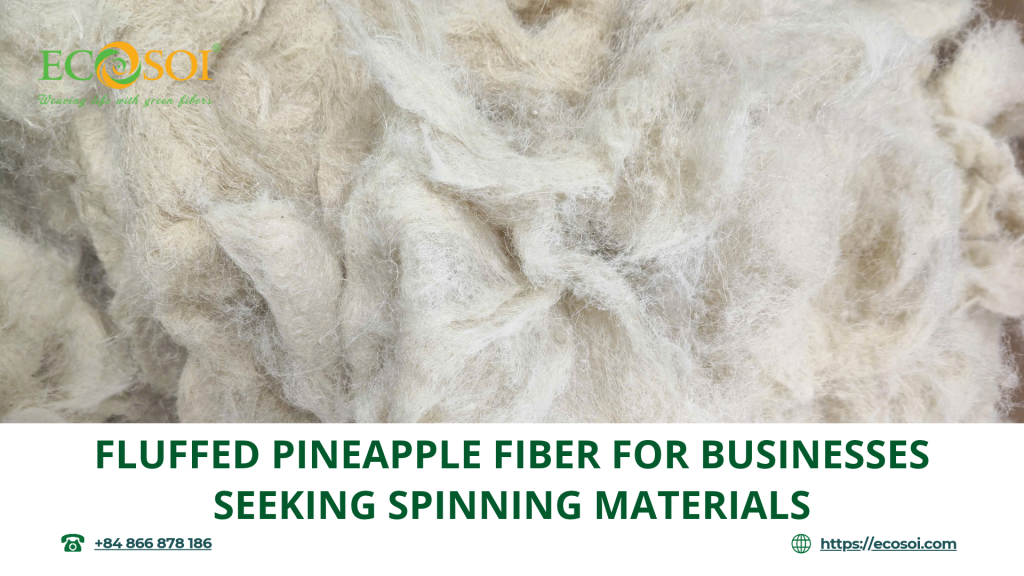
Ecosoi develops materials from pineapple leaves. Its current product range includes raw pineapple fiber, fluffed pineapple fiber and pineapple yarn.
Each product form serves a different production stage. Therefore, businesses should select materials based on their actual manufacturing processes.
For raw pineapple fiber, Ecosoi offers three grades based on their level of processing:
- Q1: Treated with clean water for degumming. The remaining gum content is below 10%.
- Q2: Around 70–80% degumming. The impurity content is below 15%.
- Q3: Not degummed. The remaining gum content is around 20%.
Businesses can explore Ecosoi’s pineapple fiber product range to learn more about the available materials.
Raw material control is the first step towards stable production
Pineapple fiber quality is not determined by processing alone. It is also affected by the leaf source, extraction method and storage conditions.
Therefore, businesses should assess raw materials against criteria that match their intended applications. They should also check consistency between batches.
For manufacturers and purchasing teams, choosing a supplier should involve more than comparing prices. Access to technical information and cooperation during material inspection are also important.
Ecosoi is ready to discuss its pineapple fiber products based on your production needs. You can share your intended application, technical requirements and estimated order volume through the Ecosoi contact page.