 VIETNAMESE
FLUFFED PINEAPPLE FIBER FOR BUSINESSES SEEKING SPINNING MATERIALS
When developing yarn from plant-based materials, fiber preparation plays an important role. It affects how well the material can be processed. Therefore, businesses need to choose fiber that suits their spinning systems and final product needs.
Ecosoi offers fluffed pineapple fiber for yarn spinning and faux leather production. The product also allows customers to request different fiber lengths. However, is fluffed pineapple fiber suitable for every spinning system? What should businesses check before placing an order? This article looks at these key questions.
Nội dung chính:
What is fluffed pineapple fiber and why do its properties matter?
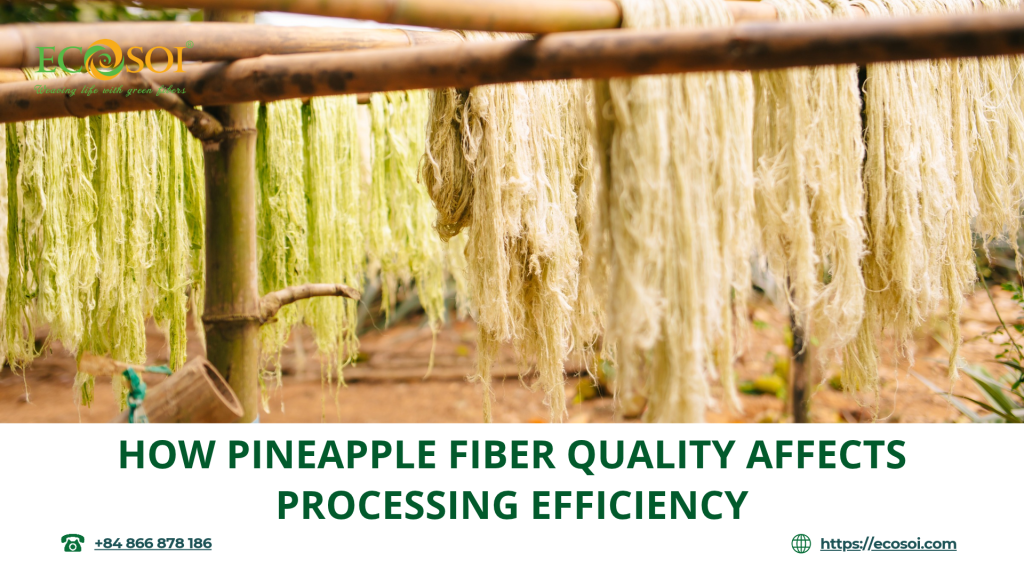
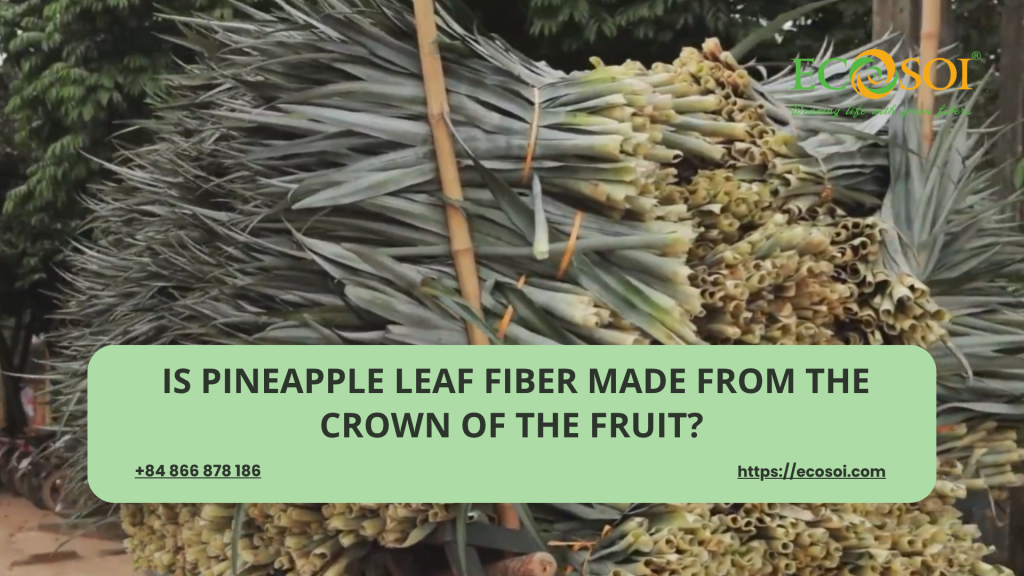
Fluffed pineapple fiber is pineapple leaf fiber that has undergone processing for further use. Its main applications include yarn spinning and faux leather production. At Ecosoi, customers can request fiber lengths to suit their needs.
First, it helps to understand the three main product forms:
- Raw pineapple fiber: Fiber extracted from pineapple leaves. Its level of processing and properties depend on the product grade.
- Fluffed pineapple fiber: Processed fiber for yarn spinning and material development.
- Pineapple yarn: The product obtained after spinning. Manufacturers can use it on its own or blend it with other fibers.

These products differ in more than appearance. Each form serves a different stage of production and has its own uses. Therefore, businesses should define their needs before choosing a material.
How do fiber properties affect yarn spinning?
Yarn production usually involves several steps. These include fiber opening, cleaning, carding and blending. Each step helps prepare the fiber for spinning.
Pineapple leaf fiber (PALF) needs special attention during preparation. Its natural properties can make it hard to process with standard carding machines. Therefore, mills need to consider how they open, clean and blend the fiber.
Fiber length is one key factor. If the fiber is too long or too short for the machine, it may not feed or card well. As a result, the mill may find it harder to produce a stable sliver.
Businesses should define a suitable fiber length range. This range depends on the machines and yarn type they plan to use. The exact target should be discussed based on each customer’s process and production goals.
Explore Ecosoi’s pineapple fiber products to learn more about the available materials.
What should businesses check when choosing fluffed pineapple fiber?
A product name alone cannot show whether the fiber suits a specific process. Spinning mills need to compare fiber properties with their actual production needs. Below are the key points to discuss with suppliers.
Fiber length and uniformity
Fiber length affects how the material moves through the spinning process. Therefore, businesses should set a target length range before ordering.
They should also check how even the fiber lengths are. A batch with too many short fibers or wide length gaps may cause problems during carding and blending.

For this reason, ask the supplier for fiber length data. If possible, inspect a sample that represents the batch. This helps businesses make a more informed choice.
Cleanliness and remaining impurities
Impurities can affect fiber processing. Therefore, businesses should check fiber cleanliness before production.
They should also discuss the test method and quality limits with the supplier. Both sides need to agree on these points before placing a bulk order.
Do not judge cleanliness by color alone. Two batches may look similar but still contain different levels of impurities.
Fiber fineness and surface properties
Fineness is another key factor in yarn development. It can affect fiber blending and the properties of the final yarn.
In addition, businesses may need to check fiber stiffness, softness and surface condition. These features should be assessed under actual processing conditions.
Moisture and material condition
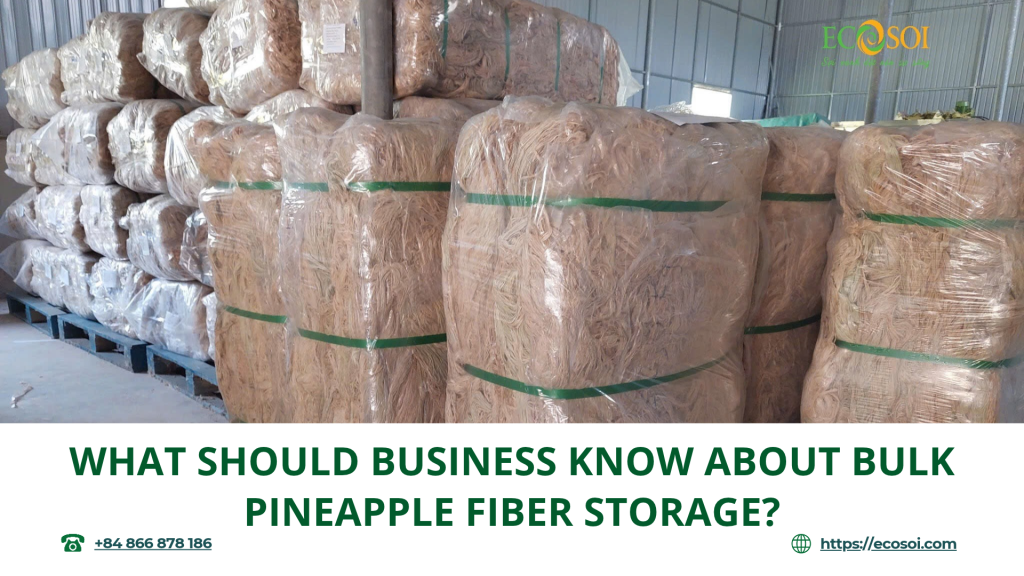
Businesses should also check moisture when receiving fiber. Look for unusual dampness or signs of mold.
In addition, pay attention to any strange smell and the condition of the packaging. These signs may help identify problems during transport or storage.
Is fluffed pineapple fiber suitable for every spinning system?
The answer is no. Businesses should not assume that it works with every system. Spinnability depends on several factors. These include fiber length, fineness, cleanliness, uniformity and mechanical properties. The machine type and blend ratio also affect the results.
A 2025 review of PALF research shows that researchers have studied this fiber in several spinning systems. However, each system has its own material needs. The natural properties of PALF can also create challenges. In particular, fiber cohesion and ease of processing need careful attention. Standard carding machines may not work well with PALF due to its rough surface.
Therefore, businesses should ask more than just, “Can this fiber be spun?” A better question is: Does the fiber suit the mill’s machines, blend formula and target yarn properties?
Can pineapple fiber be blended with other fibers?
Blending is one option for developing yarn from PALF. Researchers have studied blends of pineapple leaf fiber with cotton and other fibers. However, one blend ratio will not work for every product. The results depend on the fiber properties and the needs of the final yarn.
Therefore, businesses should define their goals first. For example, they should set a target PALF content, choose the blending fiber and define the required yarn properties.
Next, the mill can test the material under its actual production conditions. This gives a more reliable basis for choosing a blend ratio than relying on published data alone.
What should businesses prepare before placing an order?
Businesses should prepare key details before contacting a supplier. This helps reduce gaps between the material ordered and the material received.
Define the production goals
First, decide what type of yarn you want to develop. Also, explain which spinning system your mill uses. These details help the supplier understand your needs. They also provide a basis for discussing the right fiber properties.
Agree on technical requirements
Do not ask for fiber with a certain length alone. Businesses should also define other key properties. For example, cleanliness, uniformity and moisture can all form part of the acceptance criteria. If needed, both sides should also agree on test methods and allowed limits.
Test the fiber before placing larger orders
A sample can help a mill check the material at an early stage. However, results from a small sample may not fully reflect large-scale production.
Therefore, businesses should run a suitable production trial. They should record how the fiber behaves after processing. They should also check the quality of the resulting yarn. Next, both sides can compare the results with the original requirements. This helps identify changes needed before moving to a larger order.
Discuss supply capacity and delivery plans
Quality is not the only concern for spinning mills. They also need to consider order volume and supply schedules. Businesses should share their expected needs for each order or production stage. In addition, they should confirm supply capacity, preparation time and packaging details. Both sides should agree on these points for each order.
Choosing spinning materials from Ecosoi
Ecosoi offers a range of materials made from pineapple leaves. These include raw pineapple fiber, fluffed pineapple fiber and pineapple yarn. Each product serves a different stage of the production chain.
For businesses seeking spinning materials, fluffed pineapple fiber is one option to consider. However, the final choice should depend on technical properties and actual processing results. This is why businesses should discuss their machines, yarn goals and expected order volumes with the supplier.
If your business is exploring pineapple fiber for yarn production, contact Ecosoi to discuss fiber length, technical needs and bulk order requirements.