 VIETNAMESE
SUSTAINABLE BRAND: WHY SAYING “GREEN” IS NOT ENOUGH
The fashion world faces a big puzzle today. When more labels talk about nature, everyday shoppers feel more confused. One shirt carries an eco-tag in the store. Meanwhile, another item uses words like “green” or “natural.” However, such terms rarely show the true impact on living ecosystems.
Consequently, greenwashing in fashion has become a huge barrier in modern textiles. To build a true sustainable brand, a firm cannot rely on catchy words alone. Instead, companies must prove their green claims with clear, solid facts.
Nội dung chính:
What is greenwashing and why are shoppers easily confused?
Greenwashing means boasting about eco-perks far beyond the real facts. In fact, this trouble is not just about direct lies. More dangerously, it often hides behind half-truths.
For instance, a shirt made with 10% plant fiber is a real fact. However, calling that shirt “fully green” misleads buyers. After all, the other 90% of the cloth may use plastic threads made from crude oil. In addition, factory dyeing steps can still pour toxic waste into clean rivers.
According to guidance from the United Nations Environment Programme (UNEP), green facts must help shoppers see the truth. Therefore, brands must share honest numbers rather than neat sales images.
Why is the word “green” no longer enough to persuade buyers?
In today’s open market, using fuzzy words harms customer trust.
A broad slogan can hide many critical facts
Consider two different ways to describe a piece of cloth:
- First option: “High-grade eco-cloth, 100% friendly to nature.”
- Second option: “Woven cloth made of 15% pineapple fiber, 83% cotton, and 2% spandex, 200 GSM weight, 54/56 inch width.”
The second choice skips fancy words. Yet, it shares clear physical metrics so partners can test the cloth themselves. Indeed, an honest message must always explain fiber contents, product limits, and real test proof.
B2B clients demand stricter data than retail shoppers
Everyday store shoppers rarely check where raw fibers grow. In contrast, corporate B2B clients must check technical details before signing deals:
- First, brand designers need to see the weave structure and cloth feel.
- Next, factory teams must test yarn counts and wash shrinkage rates.
- Furthermore, sourcing managers require clear farm origin records.
- Finally, ESG teams need solid audit numbers for yearly green reports.
Therefore, a charming eco-story can never take the place of a technical data sheet (TDS).
Four data layers to identify a genuine sustainable brand
To test the green claims of any textile item, buyers should review four clear layers of data:
- Actual quantitative fiber contents (detailed blending ratios)
- Geographic raw material origins (farming zones, crop waste collection)
- Processing methods and exact boundaries of the green claim
- Third-party lab reports and independent certifications
Actual quantitative composition of the finished fabric
This metric provides the easiest check on any product tag:
- What exact share of eco-fiber does the fabric hold?
- Is the plant fiber mixed with cotton, linen, or synthetic threads?
- Does that percentage apply to the yarn, the fabric cut, or the whole garment?
Today, Ecosoi shares open blend ratios for every product line. Some yarn lines mix 20% pineapple fiber with 80% cotton. In addition, other options pair 40% pineapple fiber with 60% cotton. As a result, buyers never confuse different product grades.
Shop – ECOSOI – Weaving life with green fibers
Geographic origin and raw material supply chain
The next vital question asks where the crop waste comes from.
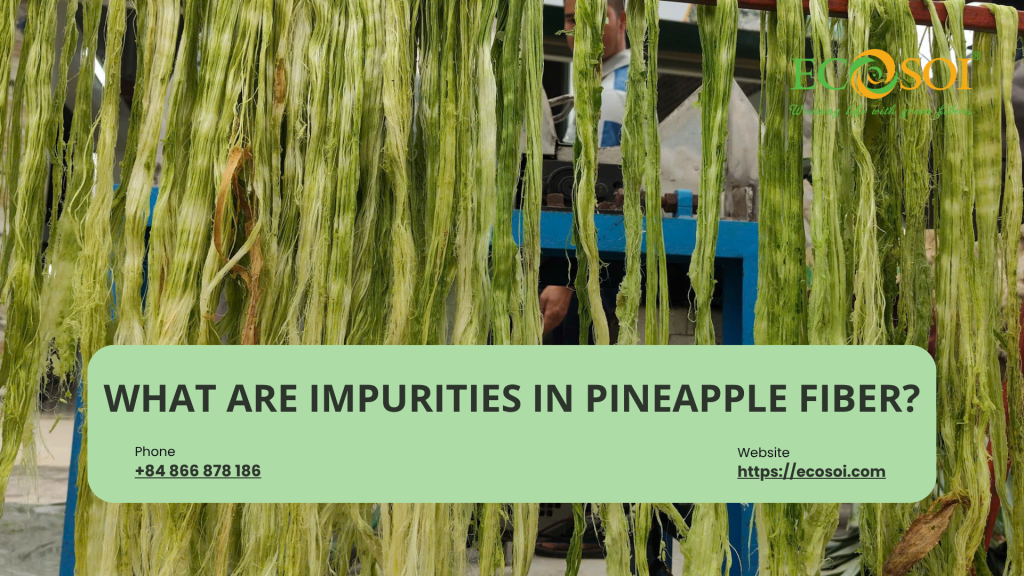
For textiles made from farm waste, local sourcing plays a huge role. Ecosoi pulls fibers straight from fresh pineapple leaves across major farming zones in Vietnam. Furthermore, our team sorts raw decorticated fiber, carded sliver, and finished fabrics into clear tiers. Thus, this clarity helps B2B partners build solid origin records.
Processing methods and the true scope of claims
An ethical marketing claim must set its exact working scope:
- For example, saying “the box uses recycled paper” differs completely from claiming “the entire dress is recycled.”
- When brands use vague words, shoppers wrongly assume the whole outfit is green.
For this reason, the European Union passed the Empowering Consumers Directive to stop fake green claims. In fact, this law brings legal fines starting on September 27, 2026. The global trend is clear: every green promise needs written proof.
Independent test reports and third-party certificates
A self-made green logo does not guarantee certified industrial quality. Therefore, sourcing teams should ask direct technical questions:
- Which approved agency issued this certificate?
- Does this test report match this exact fabric lot?
- Can the supplier provide certified third-party lab test sheets?
In B2B commerce, an official test paper carries far more weight than hundreds of social media posts.
How should B2B buyers audit raw material suppliers?
Before signing purchase orders for green textiles, buying teams should clear up four technical points:
- Verify exact fiber ratios: First, ask for verified blend sheets, fabric weight (GSM), and cuttable width.
- Trace origin boundaries: Next, learn where crop waste starts, checking if vendors trace origins down to farm towns.
- Request verified test logs: Furthermore, ask for wastewater logs or fabric safety sheets if a supplier claims low chemical use.
- Order physical fabric swatches: Finally, avoid booking bulk runs from screen photos alone. Hands-on cuts let mills test drape, pull strength, and dye uptake.
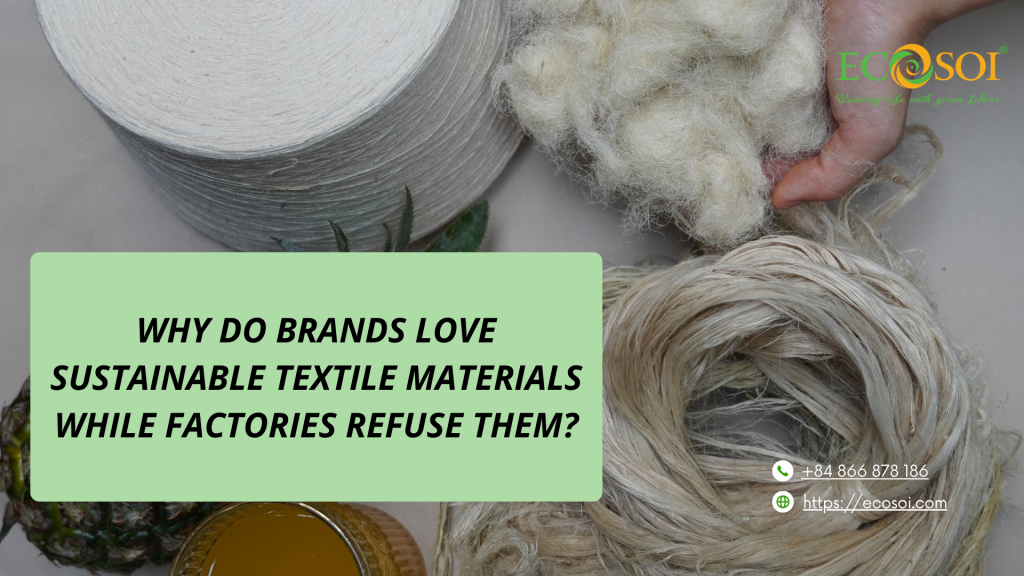
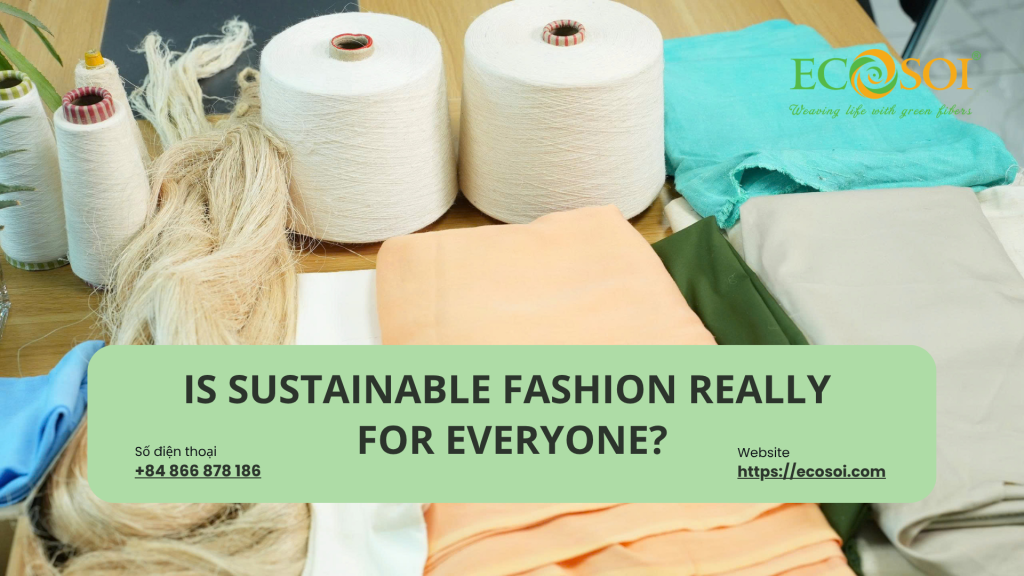
Currently, Ecosoi supplies ready sample sets with raw fiber, combed sliver, yarn spools, and woven cloths so partners can test items before buying.
How can retail consumers spot genuine green products?
Shoppers do not need textile degrees to pick safe clothes. Instead, you can simply ask five quick questions:
- What raw material makes up this item?
- What exact share of natural fiber does it contain?
- Does the green claim cover the whole garment or just tiny trims like buttons?
- Can the brand share the sewing mill town or fabric origin?
- Does the tag use buzzwords like “100% natural” without sharing any test facts?
If a brand cannot answer these basic questions, shoppers should pause before spending money.
Does a pineapple fiber label automatically make a fabric better?
Ecosoi takes a direct and honest view on this matter. Sourcing teams should never judge textile quality on a fiber name alone.
Upcycling farm leaves into yarn is a big green step forward. However, fabric performance still depends on washing steps, weave setups, and target uses:
- For casual shirts and daily wear, woven cloth with 15% pineapple fiber feels soft and cool on the skin.
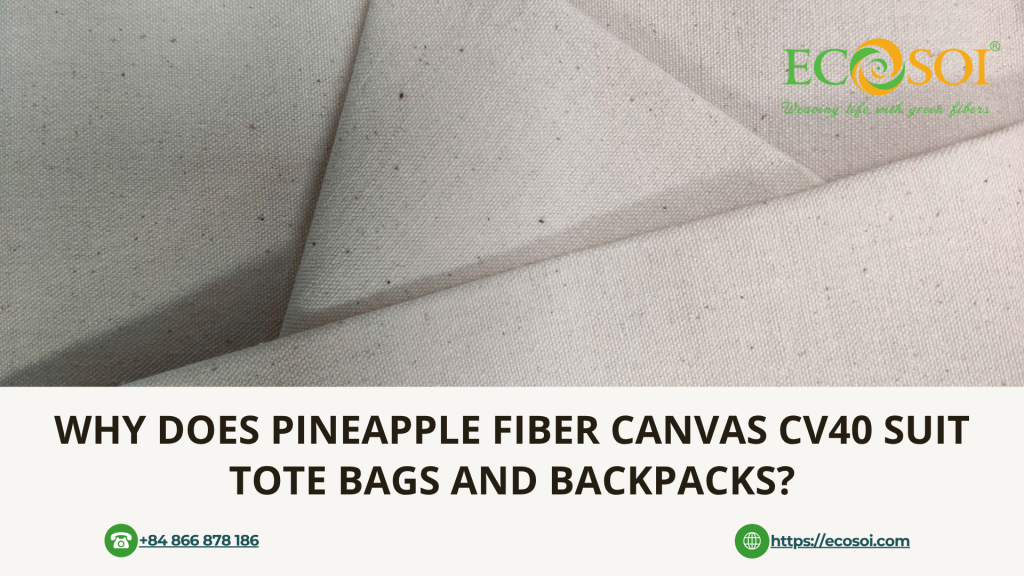
- In contrast, strong canvas cloth with 40% pineapple fiber gives great durability for tote bags, shoes, or couch covers.
Therefore, rather than making broad claims, suppliers must state exact blend ratios and match them with the right clothes.
Conclusion: Transparency is the foundation of a sustainable brand
The clothing trade will keep seeing new green materials arrive. Indeed, this growth brings positive choices to global fashion.
Yet, as marketing claims grow, buyers demand true honesty. A real sustainable brand does not need to claim it is perfect. Instead, firms just need to tell the truth: where fibers come from, what they contain, and how they run on real sewing lines.
Is your company searching for a clear pineapple fiber and natural textile supplier?
- Explore our verified catalog of eco-fibers, yarns, and woven textiles on the official Ecosoi platform.
- Request technical sample kits and wholesale quotes via the Ecosoi contact channel.