 VIETNAMESE
WHY DO BRANDS LOVE SUSTAINABLE TEXTILE MATERIALS WHILE FACTORIES REFUSE THEM?
Many fashion brands feel drawn to novel green cloth. They love clean plant sources. In addition, designers want to add eco-friendly goods to their lines. However, sewing mills see this topic in a very different way.
For textile plants, the core issue goes beyond green appeal. Mill managers must know if sustainable textile materials will run well on current looms. If a new yarn slows down work or snaps often, mills will reject it right away.
This article explores the contrasting views between fashion brands and fabric mills. Furthermore, it outlines practical steps to bring eco-friendly fibers into mass factory production.
Nội dung chính:
Brands and mills view sustainable textile materials through two different lenses
This friction comes from different daily operational goals across the value chain:
Fashion brands prioritize the product narrative
For consumer labels, raw materials help define market brand identity:
- Green origins upcycled from agricultural crop waste.
- Safe plant strands that feel gentle on the skin.
- Clear origin papers for export customs checks.
- Distinct rustic looks and rich cloth textures.
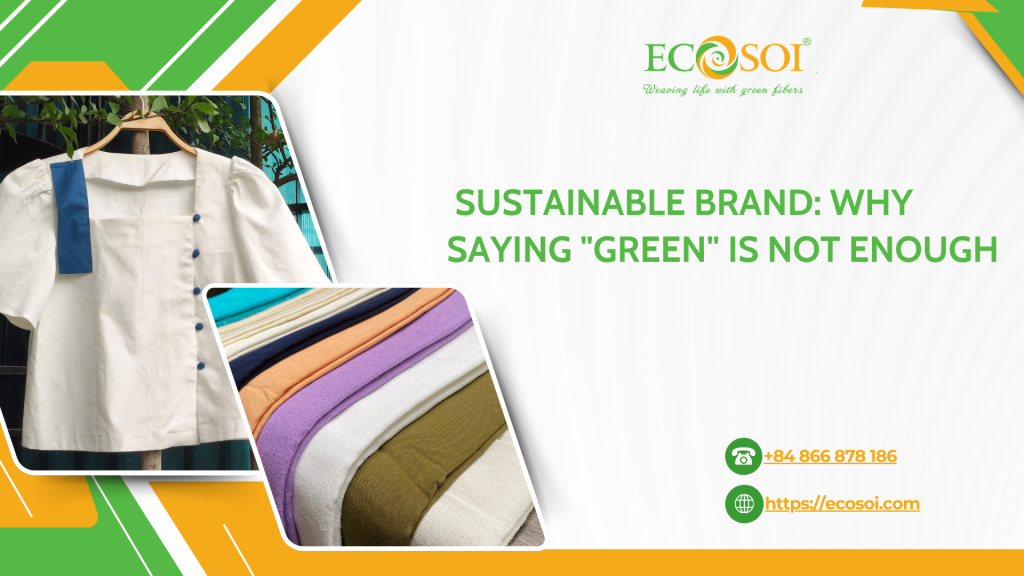
For these reasons, pineapple leaf fiber lines from Ecosoi naturally attract fashion designers.
Manufacturing factories prioritize production feasibility
In contrast, production plants care about daily output and floor costs. Therefore, technicians must ask clear factory questions:
- Can the new yarn run at normal factory machine speeds?
- Do winding teams need to change spindle setups on the line?
- What are the yarn break rates and material losses per shift?
- Do fiber pull strength and yarn evenness stay stable across lots?
Consequently, a simple sales chat between a brand and a vendor is never enough. The fabric choice must always include the voice of factory technicians.
Why are factories hesitant to introduce new materials to their lines?
Apparel plants always work under strict factory rules. When testing unfamiliar textiles, mill managers face several practical operational risks:
- Machine tuning needs: Swapping fibers forces factories to reset spinning frames, looms, and dye vats.
- Equipment mismatches: In fact, not every plant owns tools suited for strong plant fibers.
- Extra defect costs: If weak threads jam looms, mills face late orders and heavy chargeback fines.
Therefore, proving that a fiber can form cloth does not mean it runs smoothly on existing tools. Indeed, this machine gap remains the biggest barrier for eco-fibers today.
Factories do not just buy yarn; they buy operational stability
In commercial B2B trade, steady machine runtime decides factory profits:
- Brands usually ask: “Where does this green fiber come from?”
- Mill engineers will ask: “What are the twist counts and stretch values of this yarn?”
Both questions are genuinely important. Even if a brand story sounds great, mills will still hesitate if the yarn pills easily.
To solve this issue, Ecosoi creates balanced blended yarns. Popular options include 20% pineapple fiber with 80% cotton, or 40% pineapple fiber with 60% cotton. As a result, the yarn keeps its natural rustic look while running smoothly on both weaving looms and knitting frames.
Explore more: Shop – ECOSOI – Weaving life with green fibers
A higher percentage of natural fiber is not always better
Many people assume that more pineapple fiber always makes a better fabric. However, textile rules require close balance with the planned end use:
- Daily shirts and casual wear: These items need soft drape and slight stretch. Therefore, a woven fabric with 15% pineapple fiber, 83% cotton, and 2% spandex offers a balanced choice.
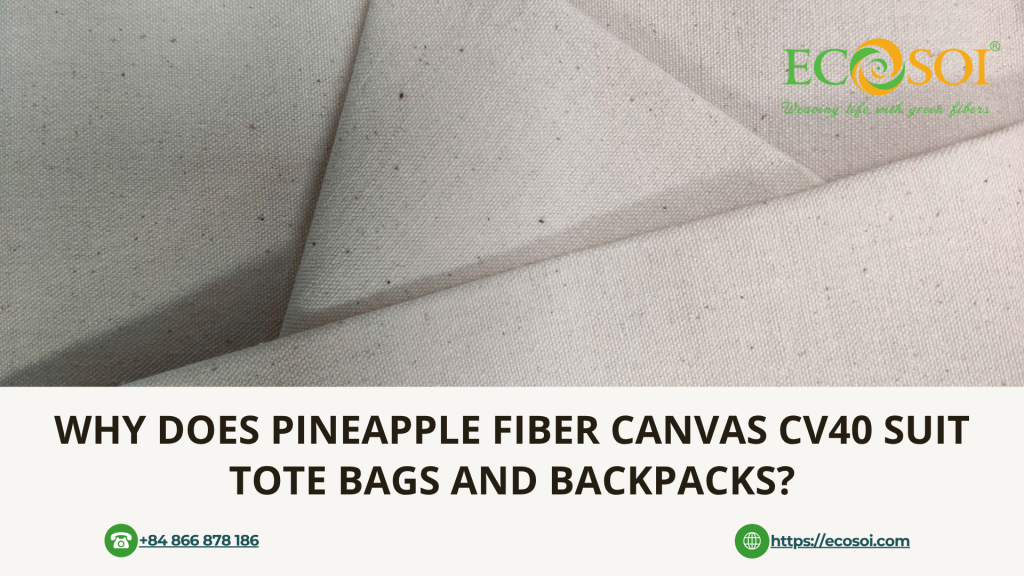
- Bags, shoes, and home decor: These goods need stiff, durable builds. In this case, a sturdy canvas fabric blending 40% pineapple fiber and 60% cotton provides great load-bearing strength.
For these reasons, companies should pick fiber blend ratios based on end use rather than chasing high percentages alone.
What technical data do factories need before running trials?
To convince plant engineers to test a new yarn, material vendors must provide two vital assets:
A clear and transparent technical data sheet (TDS)
Factories cannot evaluate textiles using vague words. Instead, engineers need precise physical facts:
- Exact fiber types and detailed blend rates.
- Standard yarn counts (such as 10Ne, 20Ne, 30Ne, or 32Ne).
- Cloth weight (GSM), width, and weave style.
- Wash shrinkage rates and safe yarn storage rules.
Physical testing swatches for machine compatibility trials
Promotional flyers only give buyers a basic overview of a material. Only hands-on swatches allow engineers to test machine smoothness on the factory floor.
Today, Ecosoi supplies diverse testing sets ranging from raw fiber and carded sliver to spun yarn spools and woven swatches. A reliable testing path follows these clear steps:
Review TDS data -> Ship test samples -> Run trial weaving -> Tune machine settings -> Begin bulk manufacturing.
Sustainability must go hand in hand with stable supply capacity
A neat lab swatch alone cannot convince a plant to sign a long-term supply deal. Mills require firm commitments regarding annual volume and batch consistency.
According to the Materials Benchmark report from Textile Exchange, 423 global brands now share verified material data. This figure shows that demand for clean textiles is climbing quickly.
However, each weaving plant follows its own mechanical testing rules. Raw material suppliers must prove steady leaf collection year-round so mills can plan production with confidence.
Practical ways to bridge the gap between brands and factories
To launch green textiles successfully, material vendors should adjust their sales approach:
Share targeted information for each department:
- Design teams (Brand): Share origin stories, aesthetic photos, and tactile fabric textures.
- Sourcing teams (Purchasing): Provide wholesale pricing, minimum order quantities (MOQ), and shipping lead times.
- Technical teams (Factory): Supply technical data sheets, weave structures, and machine test yarn spools.
Focus on the finished product: Instead of just saying “green pineapple cloth,” ask: “What garment are you making, and what spinning frames does your mill run?”. Asking this question makes yarn selection far more accurate.
Conclusion
A sustainable textile materials line holds real value only when it runs efficiently on bulk production lines.
Therefore, fashion brands and manufacturing mills must work together from the very first swatch test. When technical numbers are clear and proven, eco-friendly cloth becomes a lasting competitive edge for the brand.
Is your company searching for pineapple fiber and natural fabrics that run smoothly on industrial textile lines?
- Discover our complete collection of natural fibers, yarns, and woven textiles on the official Ecosoi platform.
- Request technical advice and order your factory trial sample kit via the Ecosoi contact channel.