 VIETNAMESE
CLEANLINESS VS. WHITENESS: EVALUATING THE QUALITY OF PINEAPPLE FIBER
Nội dung chính:
INTRODUCTION: THE CONCEPT OF WHITENESS IN TEXTILES
For many years, people viewed whiteness as a direct sign of fiber quality. For pineapple fiber, this sensory view is even more common. This happens because it is a natural material. Furthermore, the industry has not yet standardized it on a mass scale.
However, practical applications in the textile supply chain show a different story. Technical data shows that the cleanliness of pineapple fiber is actually the foundational factor for product quality.
Cleanliness determines mechanical processing efficiency and yarn tensile strength. Moreover, this factor directly affects fabric structural stability and biosafety. In contrast, whiteness is merely a surface attribute. Manufacturers can easily change this look by using proper chemical treatments.
TECHNICAL CONCEPTS: CLEANLINESS AND WHITENESS ARE NOT THE SAME
To build a standardized textile process, businesses must separate these two concepts. Understanding this correctly helps companies optimize their raw material selection steps.
What Is the Cleanliness of Pineapple Fiber?
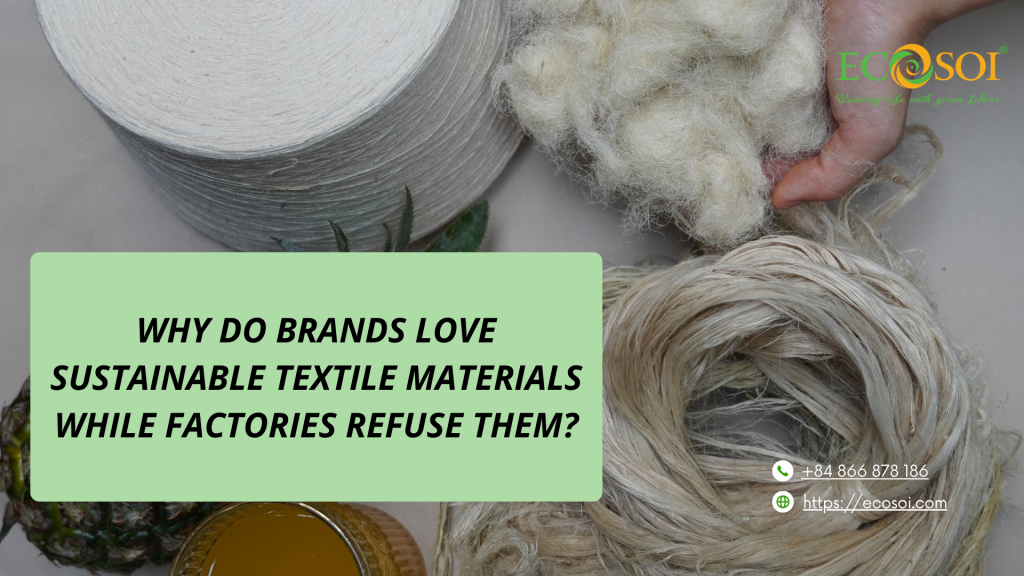
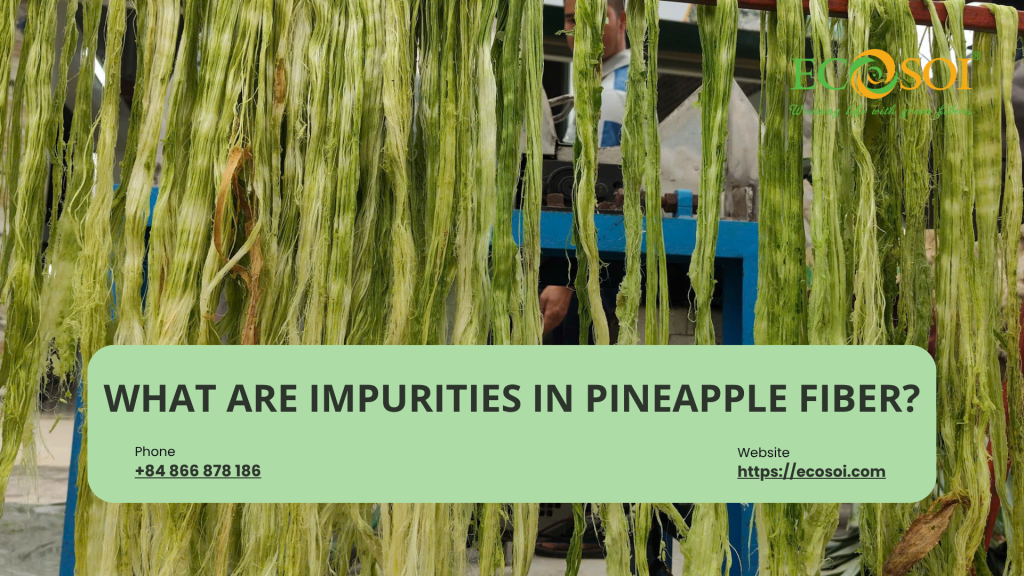
Cleanliness reflects how well a process removes natural impurities deep inside the fiber structure. These impurities include lignin, residual pectin, and plant waxes. Additionally, this index represents the removal of organic residues. These residues often remain after the raw mechanical extraction phase.
A clean process ensures no toxic chemical residues from industrial treatments. Therefore, this indicator belongs to the inner nature of the fiber structure. We cannot judge it accurately by eye. Instead, experts must test it in a laboratory.
What Is the Whiteness of Pineapple Fiber?
On the contrary, whiteness is purely a visual perception of the material’s surface color. This index depends entirely on bleaching methods. Chemical surface treatments also determine this color appearance.
Consequently, a bundle of pineapple fiber that looks whiter is not necessarily cleaner. This issue occurs when chemicals temporarily cover organic impurities instead of removing them completely.
THE CRITICAL ROLE OF CLEANLINESS IN TEXTILE PROCESSES
Direct Impact on Yarn Strength and Tensile Force
Natural impurities like lignin or pectin can remain in pineapple yarn. As a result, they form physical blockages within the structure. This issue severely interrupts the hydrogen bonds between single fiber bundles. These weak points cause breakage and yarn failure during spinning, carding, and weaving.
Natural material science proves a clear principle. Highly cleaned fiber helps distribute tensile force evenly along the vertical axis. Therefore, spinning efficiency increases. The mechanical strength of the finished pineapple yarn also improves significantly.
Deciding the Success of Downstream Processing Steps
Physically, pineapple fibers are relatively sensitive materials. They react easily to high temperatures and harsh chemical agents. For this reason, the input fiber must meet strict cleanliness standards. Otherwise, the fabric dyeing process becomes extremely difficult to control.
Residual impurities block the absorption of dye molecules. Consequently, this issue leads to color bleeding or fabric finishing errors. The colorfastness of the final product also drops.
Currently, international bodies like ISO or ASTM International have not issued specific standards for pineapple fiber. However, their general standard sets always emphasize raw material preparation. Input material cleanliness is a prerequisite condition to guarantee total textile quality.
Ensuring Biosafety and Sustainability Standards
In addition, accumulating organic impurities without deep cleaning causes serious harm. Fabrics can easily develop unpleasant odors in damp environments. This condition creates an ideal place for microorganisms and mold to grow. Ultimately, it directly threatens skin safety during contact.
Today, international markets are tightening chemical safety rules on finished fabrics. Therefore, the cleanliness of pineapple fiber has become a mandatory foundation. This direction aligns perfectly with OECD guidelines to promote responsible supply chains.
CHARACTERISTICS OF WHITENESS IN PRACTICAL APPLICATION
Application Context of Whiteness
Of course, whiteness still holds a specific role in the fashion industry. This index is necessary for bright or pastel color product segments. High-precision dyeing techniques also require a clean, colorless fabric base. Nevertheless, technical data proves that whiteness is not a comprehensive measure of pineapple fiber quality.
Impacts of Intensive Whitening Technology
Chasing whiteness at all costs brings technical risks. Manufacturers must use high chemical concentrations and long treatment times.
As a result, these chemicals destroy the natural cellulose structure of the fiber. This damage seriously reduces fabric lifespan and durability. At the same time, the process increases the burden of waste treatment on the environment.
Therefore, reputable material research groups, like Textile Exchange, constantly issue warnings about this issue. They state that factories should not trade the core technical quality of bio-fibers for excessive chemical processing.
B2B MANUFACTURER MATERIAL TRENDS
For large-scale textile enterprises, a supply source with stable cleanliness brings direct economic benefits. Specific advantages include:
- Minimizing yarn breakage rates on high-speed automatic looms.
- Increasing consistency between different production batches.
- Standardizing operating processes easily and saving corrective chemical costs.
Because of this, modern supply chain management prioritizes structural stability. A fiber source that meets standard cleanliness is always rated higher than a white fiber source with uneven mechanical properties.
THE RELATIONSHIP BETWEEN CLEANLINESS AND NATURAL COLOR
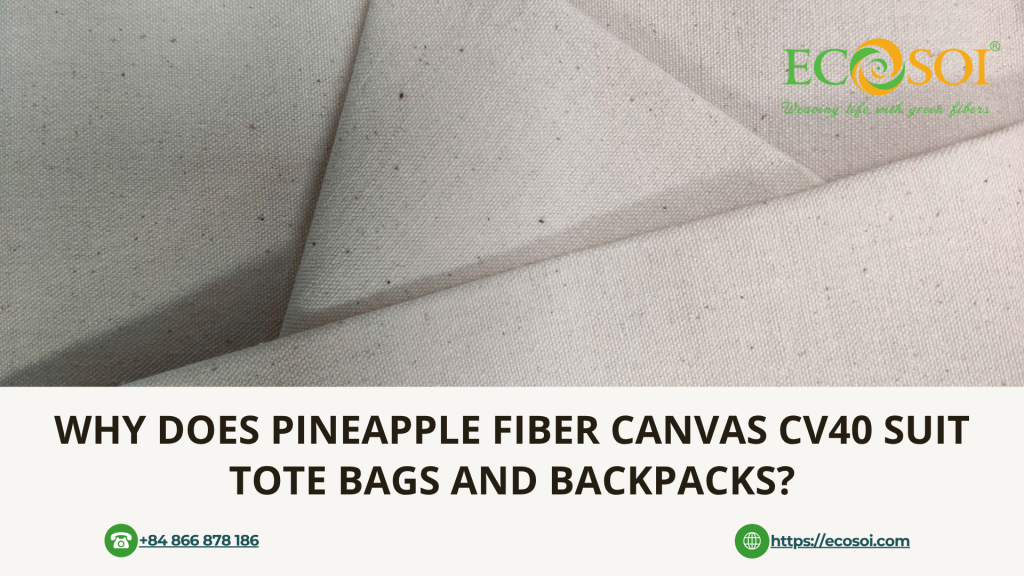
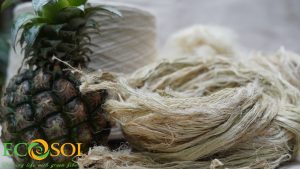
According to bio-material standards, clean pineapple fiber does not need to be pure white. Natural ivory or cream colors are clear evidence of the material’s pure biological origin. This color characteristic does not mean the product is of low quality.
In fact, this feature fits coarse weaving, eco-interior designs, and sustainable fashion lines perfectly. This rustic, natural color creates an authentic marketing advantage. It helps brands share transparent origin stories with customers.
CONCLUSION
In summary, analyzing the cleanliness and whiteness of pineapple fiber requires technical parameters and practical consumer data. Cleanliness remains the core commitment to a strong yarn structure. It ensures standard dyeing processes and extends the product lifecycle.
Explore more: Pineapple Fiber – ECOSOI – Weaving life with green fibers
ECOSOI BRAND SOLUTION INFO BOX
Staying true to our sustainable philosophy, Ecosoi always places the original cleanliness of pineapple fiber as our top core standard. By optimizing advanced mechanical extraction and limiting excessive chemical bleaching, Ecosoi proudly supplies pineapple fiber and yarn with superior mechanical performance. Our products are safe for the skin and friendly to the environment. Contact Ecosoi today to receive material samples for your business!