 VIETNAMESE
WHAT MAKES A MATERIAL FAIL DESPITE BEING ECO-FRIENDLY?
A sustainable material does not always become a top hit in shops.
In the clothing world, a green fabric may use plant leaves or cut carbon output. However, real use stays low if yarns snap, cost too much, or jam fast looms. Therefore, fashion designers and brands must ask a simple question: How well does this cloth run on real factory lines?
Nội dung chính:
Evaluating sustainable materials beyond the origin story
Many shoppers judge a green item based only on its raw source.
A natural plant fiber often carries a very charming tale. However, a good story alone cannot prove that the final outfit is truly green in all cases.
According to global guidelines from Textile Exchange, a good cloth requires a full check across many key areas:
- Raw material origin: First, mills must trace farm soils, field health, and clean water supplies.
- Processing methods: Next, plants must track power use, wash steps, and safe chemical dyes.
- Quality consistency: In addition, raw fiber lots must stay uniform across large industrial runs.
- Technical performance: Furthermore, fabrics need strong pull strength, stretch, and color hold during wash cycles.
- Product lifespan: Moreover, high durability helps clothes last much longer for the buyer.
- Circularity potential: Finally, worn items should break down safely or recycle into fresh yarns.
For these reasons, a natural raw source does not make an item safe in every setting.
Practical barriers that prevent eco-friendly materials from commercial scaling
To move from small labs to large sewing lines, makers must clear several big hurdles:
Technical performance fails manufacturing demands
This issue creates the most direct hurdle on real factory floors:
- Designers may love a new green cloth, but weavers need smooth yarn feed on fast looms.
- Finished fabrics must resist high shrinkage, fuzzy pilling, color fading, and weak seams.
- If clothes wear out fast, buyers must replace them too soon.
Indeed, research from the European Environment Agency shows that long product life is key to a circular clothing trade.
Lack of stable supply and commercial scale
A small fabric swatch may look neat, but it often fails large shop orders:
- First, trade partners need steady crops through every harvest cycle.
- Next, shipping lots must maintain low error rates.
- Finally, delivery dates and material supply must stay predictable.
Therefore, materials made only in tiny runs cannot serve as broad replacements.
High material costs and conversion expenses
Eco-friendly products cannot help our planet without wide market access:
- First, new green options must compete against cheap classic threads with huge supply lines.
- In addition, brands must track all costs, from raw crops and dye vats to loom tuning.
- As a result, high price tags may fit tiny luxury lines, but they block mass-market sales.
Lack of verified data and supply chain traceability
Modern buyers and global agencies now demand clear test data:
- First, broad claims like “natural fabric” need solid test facts.
- In addition, brands must show verified Life Cycle Assessment (LCA) papers or trusted trade badges.
- Thus, clear carbon and chemical data now forms the core value of clean textiles.
Material mismatch with product function and silhouette
Each garment type needs its own unique physical traits. For instance, a light fabric fits soft shirts, but it lacks the stiffness needed for tough bags. Similarly, fibers suited for hand crafts often snap on high-speed spinning frames.
Consequently, picking a green material must always start with the end use of the item.
Overlooking the end-of-life stage
A garment is not clean just because of its raw plant tag:
- First, makers must check if the final item is easy to mend, reuse, or recycle.
- In addition, European Union rules now enforce strict circular rules and ban excess stock burns.
Picking raw inputs is only the start. Indeed, safe disposal after use completes the green loop.
Ecosoi pineapple fiber: A practical answer for sustainable textile supply chains
Understanding these factory hurdles, Ecosoi makes pineapple leaf fibers focused on real trade needs:
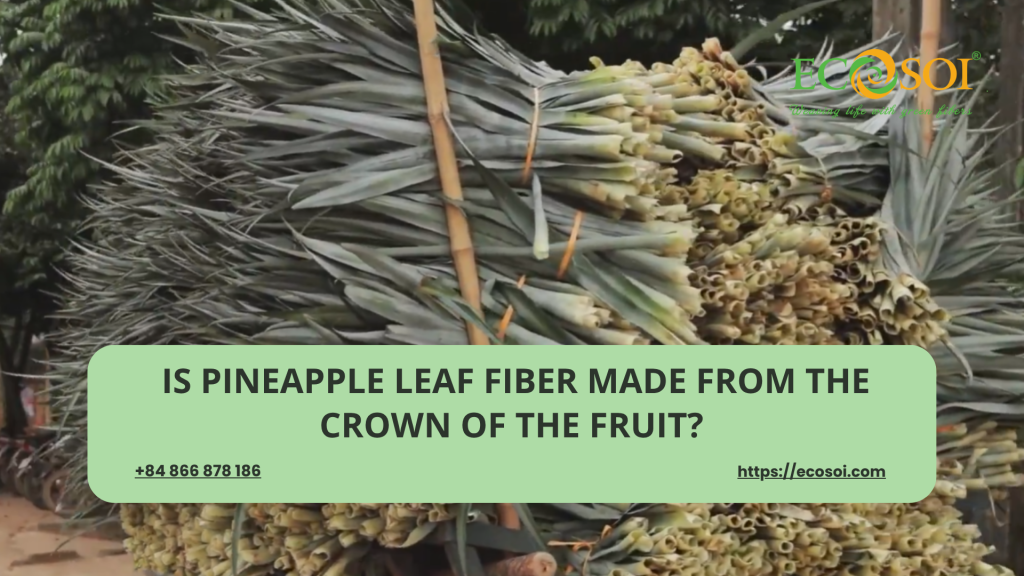
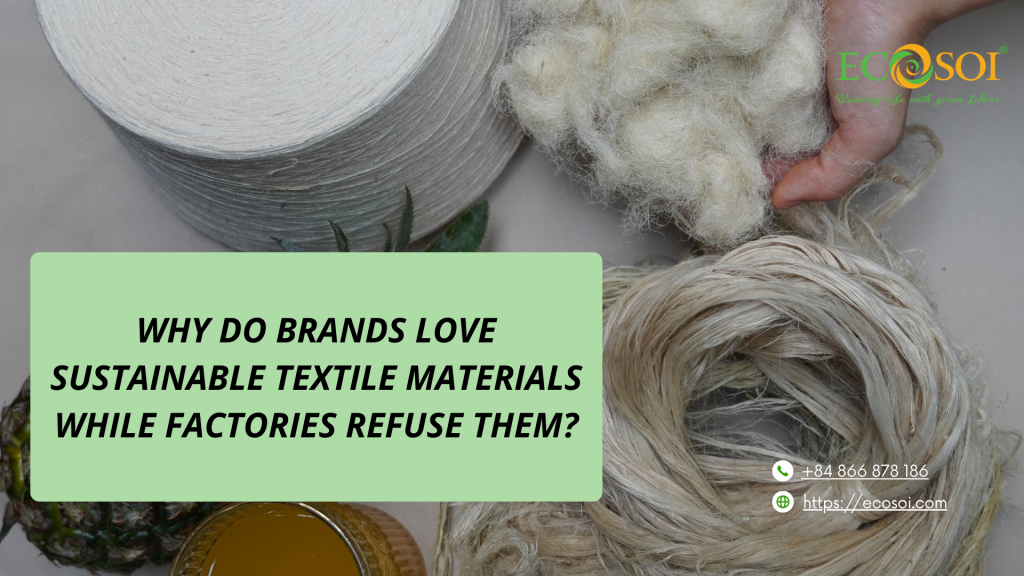
- Agricultural waste recovery: First, workers collect fibers from leftover pineapple leaves in Vietnam without using new farm plots or extra tap water.
- Safe processing: Next, teams wash fibers with gentle steps and sun-dry them naturally to keep carbon emissions low.
- Diverse product portfolios: Furthermore, Ecosoi supplies raw fibers, blended yarns, and custom fabrics for both woven and knit clothes.
In addition, blending pineapple fiber with other natural yarns delivers airy comfort and natural germ resistance while keeping costs fair.
Explore more: Shop – ECOSOI – Weaving life with green fibers
Conclusion: Balancing ecological value with commercial performance
A sustainable material fails not because it lacks green perks, but because it misses the practical balance between strength, price, and real market needs.
The future of sustainable fashion belongs to proven goods. Specifically, the trade rewards clear materials with solid strength, steady supply runs, and scalable methods.
For fashion brands, mills, and designers looking for real solutions, Ecosoi provides complete pineapple leaf materials backed by factory support:
- Discover technical specs across Ecosoi pineapple fiber and yarn lines.
- Explore our commercial pineapple fabric collections ready for garments and bags.
- Contact Ecosoi today to order test swatches and discuss custom material mixes for your brand.
Get in touch with Ecosoi: Request your sample kit and build a commercially viable sustainable collection today.