 VIETNAMESE
WHAT IS ESG? IS ESG JUST A PASSING TREND?
What is ESG and why does it appear everywhere in modern business, investment, and supply chains? ESG represents three core pillars: Environmental, Social, and Governance.
Over the past few years, ESG has become a major talking point in fashion and textiles. This shift raises a practical question: Is ESG simply a passing trend? The short answer is no. Market rules and reporting formats may evolve over time. However, the core issues behind ESG continue to reshape business operations.
Nội dung chính:
What is ESG and what should businesses care about?
ESG provides a structured framework to examine three essential areas: environmental impact, social responsibility, and corporate governance. These pillars help companies identify operational risks and opportunities.
E – Environmental
The environmental pillar examines how companies consume natural resources and affect surrounding ecosystems. Common concerns include greenhouse gas emissions, energy consumption, water management, waste generation, raw material sourcing, and biodiversity loss.
In textiles, these impacts begin right at the raw material stage. Therefore, checking input materials is a crucial step when brands design a sustainable supply chain.
S – Social
The social pillar focuses on people across the entire supply chain. Working conditions, fair labor practices, worker rights, and workplace health and safety are essential priorities.
In addition, companies must evaluate how production affects local communities and external stakeholders. This review is especially critical in industries where supply chains span multiple regions and diverse labor groups.
G – Governance
Governance covers how an organization structures, manages, and audits its internal operations. Key focal areas include information transparency, board oversight, risk mitigation, and executive accountability.
Data accuracy has also become indispensable. Consequently, ESG is no longer just about whether a finished garment looks green. Rather, it reflects how a company operates and proves its ethical claims with clear facts.
Is ESG just a passing trend?
Corporate implementation methods will certainly change. Government regulations may tighten, and reporting standards will adapt over time. Nevertheless, the problems that ESG addresses are not new.
Enterprises must still control natural resources, reduce carbon emissions, and prevent supply disruptions. Fair labor conditions also demand ongoing attention. At the same time, brands need clear data and transparent operating controls.
In many global markets, buyers now demand verified evidence instead of vague green promises. This shift fundamentally alters how brands choose their manufacturing partners.
Previously, purchasing managers focused mainly on unit price, order volume, and lead times. Today, depending on target markets, they also request data on crop origins, material contents, and processing methods. Product traceability has also become a standard requirement in supplier audits.
For these reasons, ESG is far more than a marketing trend. Reporting metrics may change, but the demand for transparency and risk control remains permanent.
Why is ESG particularly important for the textile industry?
The textile sector operates through exceptionally complex production networks. In fact, a single shirt passes through multiple vendors before reaching the consumer. These steps range from raw farming to spinning, weaving or knitting, dyeing, sewing, and final packaging.
Therefore, ecological and social impacts occur long before garments reach sewing lines. Raw agricultural inputs are a vital part of the ESG equation.
Material sourcing decisions directly affect water use, energy consumption, and factory waste. Traceability is equally critical for modern fashion labels.
For apparel brands, this reality creates an urgent operational need. Companies must thoroughly understand the fibers they use. Furthermore, sourcing teams must know where crops grow, how fibers are processed, and what data partners can verify.
This explains why sustainable supply chains receive intense focus in modern apparel. Evaluating a fabric is no longer just about technical weight or wholesale price. Upstream origins and documented proof now shape final buying decisions.
Does a natural material equal ESG compliance?
No. This assumption remains a widespread misconception in sustainable sourcing. Using a natural fiber does not automatically mean the entire production chain leaves a low impact. Similarly, upcycling farm waste does not guarantee full ESG compliance on its own.
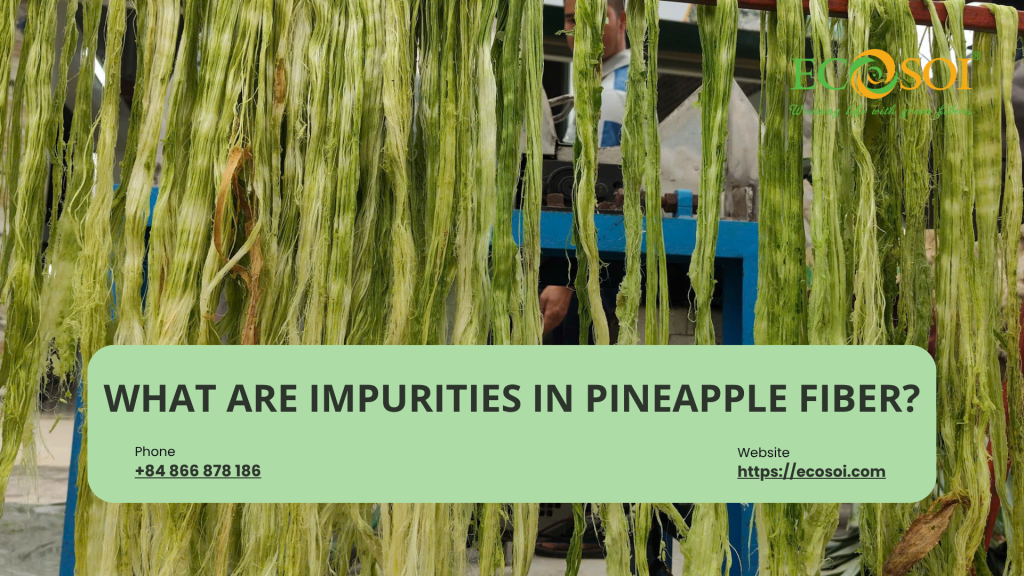
Instead, brands must review the complete processing path. For instance, workers can harvest raw fiber from pineapple leaves after the fruit harvest. However, final fiber quality depends on farming regions, decortication methods, impurity levels, and subsequent washing stages.
Such processing factors directly determine whether the fiber can spin smoothly into fine yarns and fabrics. Therefore, instead of merely labeling a material as green, businesses should ask precise technical questions:
- Where do the raw crops originate?
- What is the exact material composition?
- Which processing steps are involved in fiber refining?
- Are physical specifications tested and controlled?
- Do separate shipping lots maintain consistent quality?
- What verified technical data can the supplier provide?
This practical mindset shifts brands from marketing stories to actionable supply chain data. More importantly, it helps companies evaluate materials across multiple metrics instead of trusting a simple natural label.
What should businesses prepare for an ESG supply chain?
Companies do not need to launch an elaborate ESG system right away. A more practical route begins with data tied directly to daily operations and active vendors.
Know raw material origins clearly
Tracking crop origins provides a simple yet essential foundation. Businesses should document where raw resources come from and how teams collect or manufacture them.
For agricultural inputs, documenting farm regions supports reliable traceability. This data also gives companies solid proof when speaking with commercial clients about material sourcing.
Standardize technical specifications and quality
Detailed documentation of fiber properties helps brands evaluate materials accurately. Depending on the material, specs include staple length, cleanliness, moisture regain, fabric weight, or yarn structure.
In addition, factories must control quality variances across separate production lots. A material with a great environmental narrative can still disrupt factory lines if quality fluctuates.
Collect verified data from suppliers
Fashion brands cannot generate end-to-end impact data without active supplier cooperation. Therefore, raw material vendors must provide clear documentation covering product specs and refining steps.
This requirement also creates a valuable differentiator for forward-thinking vendors. Rather than just selling materials, suppliers can help clients understand fiber origins, technical properties, and processing metrics.
Maintain organized documentation and proof
Environmental claims carry genuine value only when backed by reliable data or proper certificates. Enterprises should systematically organize documentation by raw material, supplier, and product line.
This organized approach simplifies buyer audits and client discussions. Moreover, it allows companies to verify supply claims quickly whenever partners or regulators request documentation.
How will ESG evolve in the coming years?
ESG requirements will continue to develop in the years ahead. Reporting mandates may expand, and verification standards will adapt to different business sizes and regions.
However, these shifts do not mean companies can ignore ESG principles. A clear market trend is the rapid movement from talking about sustainability to proving sustainability with data.
For the textile sector, this transition drives greater demand for supply chain facts. Material origins, factory energy data, and chain-of-custody tracking all play vital roles.
This transition is not limited to multinational conglomerates. Small and medium enterprises can begin with manageable, practical steps. For example, they can standardize product data sheets and collect verifiable records across their supply tiers.
Ecosoi approaches ESG from raw materials
At Ecosoi, the journey begins with a specific agricultural resource: post-harvest pineapple leaves. Ecosoi refines these leaves into raw pineapple fibers, spun yarns, and blended fabrics for diverse apparel applications.
Explore more: Shop – ECOSOI – Weaving life with green fibers
Beyond physical performance, crop origins and technical parameters remain central to our supply process. For brands looking for plant-based solutions, this represents a practical material option.
Nevertheless, natural fibers should never be selected solely for an eco-friendly narrative. Sourcing teams must examine physical strength, manufacturing feasibility, origin traceability, and verified technical logs. Practical alignment with the final garment remains paramount.
Therefore, asking what ESG is reveals that it is not a temporary trend destined to fade away. What continues to evolve is how businesses track, prove, and communicate their impact.
Ultimately, understanding supply networks, managing environmental footprints, and ensuring transparent data will remain core priorities for the global textile industry.
Connect with Ecosoi: Request testing samples of natural pineapple fibers, yarns, and blended fabrics, and discuss data-backed material solutions for your brand.