 VIETNAMESE
IS SUSTAINABLE FASHION REALLY FOR EVERYONE?
Sustainable fashion often connects with clean production and less waste. However, a practical question remains: Is this green trend truly meant for everyone?
A green item can only succeed widely if it meets multiple clear goals. Specifically, it must offer fair pricing, high durability, daily use, and steady material stocks. Therefore, balancing these points is the core task for brands starting a green shift.
Nội dung chính:
Practical barriers to sustainable fashion
Eco-friendly clothing is not just about the shoppers. Many people think buyers drive the entire green market. However, this journey really begins with brand planning.
When a fashion label wants to launch an eco-line, it must check several practical points:
- Good material fit: First, the cloth must match the required garment shape.
- Bulk production scale: In addition, the fabric should sew easily in factory runs.
- Steady raw supply: Furthermore, raw fiber output must stay stable through every harvest.
- Fair customer pricing: Finally, the end cost must fit the budget of target buyers.
Therefore, the real goal is turning raw green fibers into viable shop goods.
Market barriers for everyday consumers
Many shoppers care deeply about nature, yet they still buy basic items. Of course, this does not mean they lack green habits. Instead, two main market hurdles exist today:
- Higher price gaps: Green items often cost more without showing obvious daily perks.
- Narrow retail access: In addition, eco-clothing usually stays in niche shops or luxury lines.
To solve this issue, apparel makers should lower industry harm with easy eco-friendly materials for all markets.
The balance between cost and long-term product value
Developing new green fibers often costs more than making cheap plastic yarns. However, raw material price is only one part of total item value:
- Scale benefits: First, factory costs drop quickly as order sizes grow.
- Smart fiber blends: In addition, makers can blend yarns in balanced mixes to fit budgets.
- Cost per wear: Most importantly, long-lasting clothes lower the true cost per wear for users.
A green outfit must satisfy daily comfort and visual appeal:
- Daily tops must hold their shape and feel soft all day.
- Travel bags need strong seams and great wear resistance.
- Smart extras must stay durable so buyers keep them for years.
True sustainability never fights practical use. Instead, it pairs long wear with reliable materials.
Material selection criteria for a green textile supply chain
A good textile choice needs more than just a raw natural label. Specifically, it must meet strict production rules:
- Open farm origins: Raw fields must stay clear and easy to renew.
- Strong physical traits: Fibers must give good strength, soft touch, and even color uptake.
- Smooth blending: Yarns should mix easily with other threads to balance final costs.
- Design compatibility: Materials must fit the exact technical needs of each product type.
Real benefits of ecological materials for fashion brands
Using natural materials gives clothing makers strong market perks:
- Fresh origin stories: Natural roots add a unique spirit to new collections.
- Better daily wear: Plant textiles feel gentle, light, and kind to skin.
- Global trade compliance: Brands follow the official EU Strategy for Sustainable and Circular Textiles.
Therefore, labels should share clear fiber facts instead of empty marketing claims.
Expanding material options with natural pineapple fiber
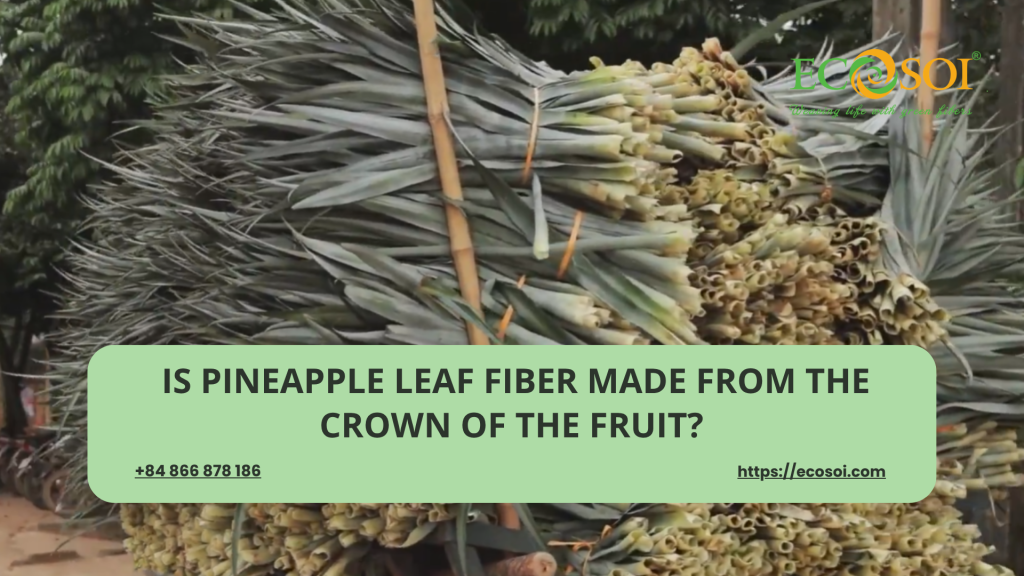
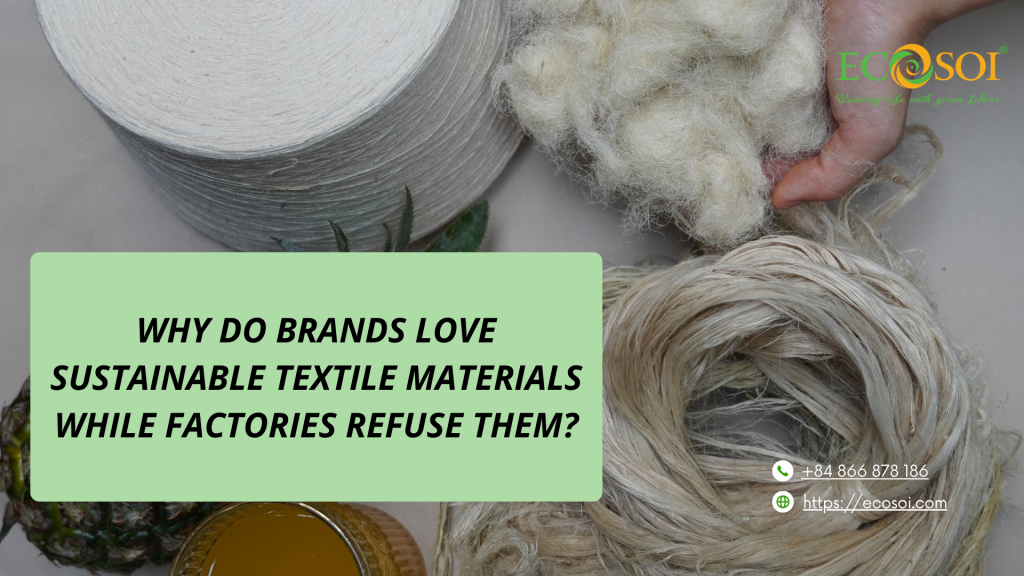
Among plant options, natural pineapple leaf fiber offers huge commercial promise. Farm crews gather this raw fiber from pineapple leaves after the fruit harvest:
- Farm waste recovery: This clean process turns farm trash into high-grade natural yarn.
- Zero extra inputs: In addition, fiber harvesting needs no extra farm plots or extra tap water.
- New design options: Furthermore, pineapple yarn gives designers fresh fabric textures.
However, pineapple fiber is not made to replace all classic yarns. Instead, it blends smoothly with other fibers to create strong, unique cloths.
Practical material solutions from Ecosoi
Ecosoi focuses on bringing pineapple leaf materials directly into real-world textile supply chains. In fact, our product family covers diverse trade needs:
- We supply uniform raw pineapple fibers and spun yarns for textile mills.
- Our team creates diverse pineapple yarn lines with flexible blending mixes.
- Our materials support finished garments, bags, shoes, and home interiors.
Explore more: Shop – ECOSOI – Weaving life with green fibers
The right path to scale sustainable fashion
Indeed, sustainable fashion can reach everyone if the textile trade builds enough choices:
- Diverse price tiers: Brands should offer both mass-market and premium goods.
- Versatile uses: Designers should pick the right cloth blend for each item type.
- Flexible yarn ratios: Mills should tune mix rates during factory testing.
When green materials become easy to use, shoppers will adopt sustainable habits naturally.
Choosing the right materials for your green transition
True sustainability never starts with loud slogans. Instead, this journey begins by picking the right raw material for each specific garment. When style, strength, and cost stay in balance, green items reach everyday buyers naturally.
Ecosoi is always ready to work with designers and garment makers to develop natural pineapple fiber lines.
Learn more detailed facts about our pineapple fiber products today.
Contact Ecosoi today: Get your fabric swatch samples and find the best yarn blend for your new collection.