 VIETNAMESE
CAN PINEAPPLE LEAF FIBER BE MACHINE-WOVEN? WHEN SHOULD HAND WEAVING BE CHOSEN?
As pineapple leaf fiber (PALF) is increasingly mentioned as a bio-based alternative material for sustainable fashion and interior applications, one key question is frequently raised by brands and designers:
“Can pineapple leaf fiber be processed on industrial weaving machines, or is it only suitable for hand weaving?”
The answer is not a simple yes or no.
The suitability of pineapple leaf fiber for machine weaving or hand weaving depends on fiber structure, processing methods, end-use objectives, and the ESG strategy of each user.
With experience in researching and developing natural pineapple fibers for international B2B markets, Ecosoi analyzes this question from a technical, application, and sustainability strategy perspective.
Nội dung chính:
Key Fiber Characteristics That Affect Weaving Capability
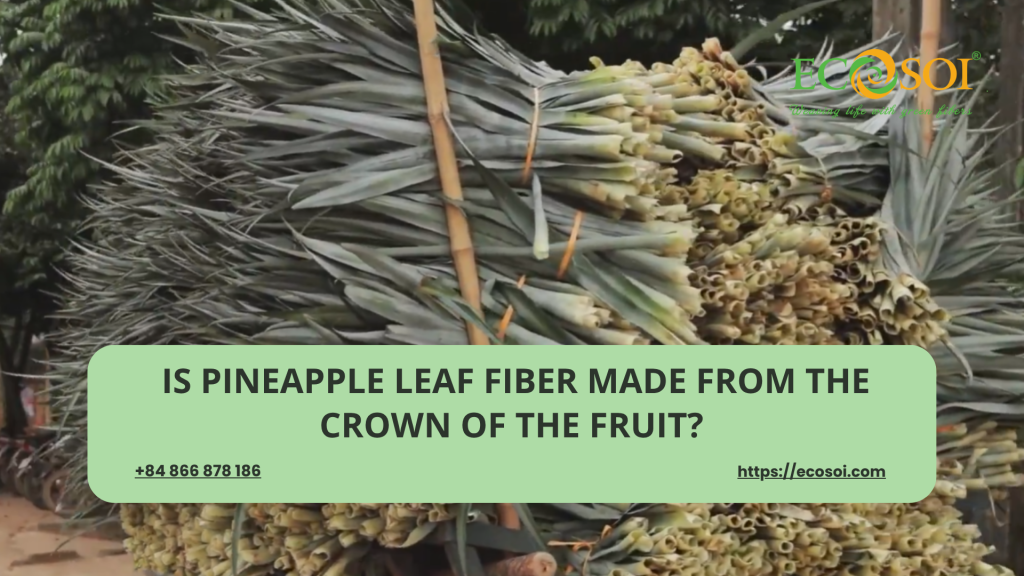
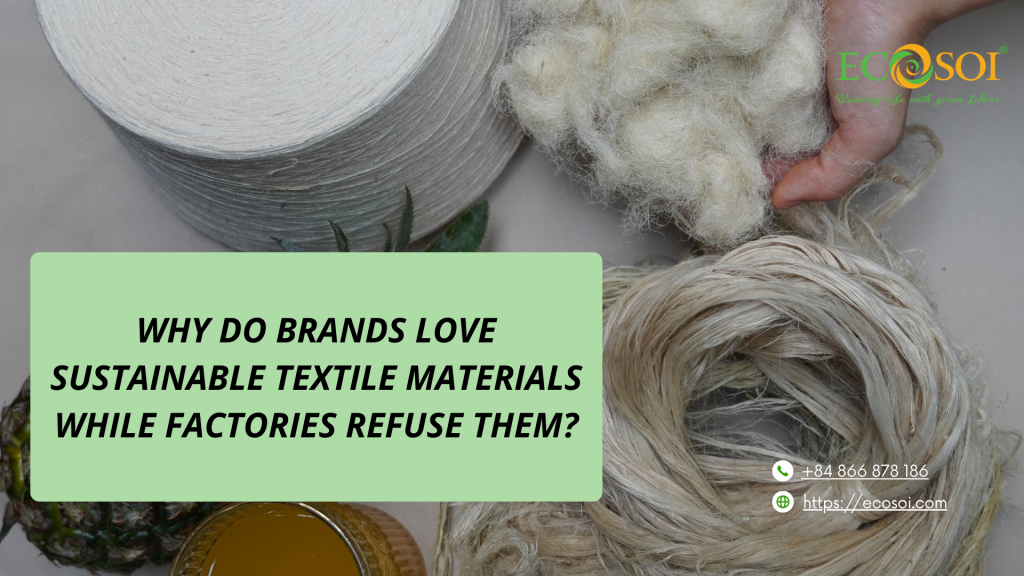
Pineapple leaf fiber (PALF) is a natural cellulose fiber extracted from pineapple leaves after agricultural harvesting. Compared to cotton or viscose, pineapple fiber has several distinctive characteristics:
- Higher fiber stiffness than cotton
- Rough fiber surface with high friction
- Good tensile strength but low elasticity
- Sensitivity to strong mechanical processing

These characteristics explain why pineapple fiber cannot be directly applied to standard industrial weaving lines used for cotton or polyester without appropriate technical treatment.
Can Pineapple Leaf Fiber Be Machine-Woven? The Answer Is YES – Under Certain Conditions
When Is Pineapple Leaf Fiber Suitable for Machine Weaving?
Pineapple leaf fiber can be machine-woven when it meets the following conditions:
- Proper softening and fiber uniformity treatment
- Blending with other fibers (cotton, viscose, lyocell, recycled fibers, etc.)
- Yarn engineering compatible with modified knitting or weaving machines
- Strict control of yarn twist, fineness, and moisture content
At Ecosoi, pineapple fiber is rarely used at 100% content for machine weaving. Instead, it is blended to ensure:
- Stable machine performance
- Reduced yarn breakage
- Consistent fabric surface quality
- Cost efficiency for large-scale production
Advantages of Machine Weaving with Pineapple Fiber
Machine weaving is suitable for:
- Large-volume B2B orders
- Consistent quality across production batches
- Easy integration into export-oriented fashion supply chains
Common applications include:
- Polo shirts
- Knitted garments
- Lining fabrics
- Interior textile applications
This approach is particularly suitable for European fashion brands facing increasing pressure related to traceability, ESG compliance, and product consistency.
Why Pineapple Leaf Fiber Is Highly Suitable for Hand Weaving
If machine weaving represents scale and efficiency, hand weaving is where pineapple fiber fully expresses its natural character and artisanal value.
Natural Advantages of Pineapple Fiber in Hand Weaving
- Preservation of the raw fiber structure
- Avoidance of excessive industrial processing that may compromise biological properties
- Clear expression of fiber texture, natural irregularities, and material emotion
- Lower fiber loss during the weaving process
When Should Hand Weaving Be Chosen?
Hand weaving is suitable when:
- Products belong to the premium or artistic segment
- Storytelling value is prioritized over volume
- The focus is on limited collections, exhibitions, or curated pieces
Typical users include:
- Independent designers
- Creative studios
- Cultural and social projects
- NGOs and livelihood development initiatives
Handwoven pineapple fiber fabrics are commonly applied in:
- High-end artisanal fashion
- Sustainable interior products
- ESG-oriented corporate gifts
- Bio-material and sustainable design exhibitions
Ecosoi’s Long-Term Strategy for Machine Weaving and Hand Weaving
Ecosoi does not position pineapple fiber as a single-use raw material, but as a material platform for multiple application ecosystems.
Machine Weaving serve international B2B clients and export-oriented fashion brands that require:
- Traceability documentation
- Production consistency
- Scalable manufacturing capacity
Hand Weaving serve
- High-end designers
- Social impact projects
- NGOs
- Brands positioned around craftsmanship and cultural heritage
This parallel approach allows Ecosoi to:
- Expand market reach
- Strengthen brand credibility
- Address diverse ESG objectives across different stakeholders
Conclusion: Choosing the Right Method to Create Long-Term Sustainable Value
- Pineapple leaf fiber can be machine-woven, but it should not be machine-woven at all costs.
- Pineapple leaf fiber is highly suitable for hand weaving, but not limited to small-scale craft products.
True sustainable value lies in:
- Understanding the intrinsic nature of the material
- Selecting the appropriate production method
- Aligning technical decisions with long-term ESG strategies
Are you looking for a pineapple fiber solution suitable for machine weaving or hand weaving within a sustainability-oriented framework?
Ecosoi is ready to collaborate with brands, designers, and organizations to co-develop pineapple fiber solutions that meet technical requirements, traceability standards, and ESG expectations.
👉 Contact Ecosoi to:
- Receive consultation on appropriate pineapple fiber ratios for specific applications
- Access yarn and fabric samples for machine or hand weaving trials
- Build long-term sustainable material solutions for your projects or supply chains
Discover more at https://ecosoi.com/ or connect directly with Ecosoi to begin your journey in developing materials from pineapple leaf fiber.