 VIETNAMESE
WHY IS ESG IN FASHION NOT A LUXURY STANDARD?
In recent years, the phrase ESG has become a very popular term. However, many textile businesses still misunderstand its real purpose. They mistakenly believe that this framework only suits mega global brands. Therefore, they assume that applying green standards always brings high costs and fake results.
In reality, this bad viewpoint creates a very big wall. Truly, practicing ESG in fashion is not a luxury item. On the contrary, it is a core tool to help companies manage risks better. From there, apparel factories can increase their strength and adapt for a long time.
Nội dung chính:
DEFINING ESG IN FASHION UNDER A SCIENTIFIC GOVERNANCE LENS
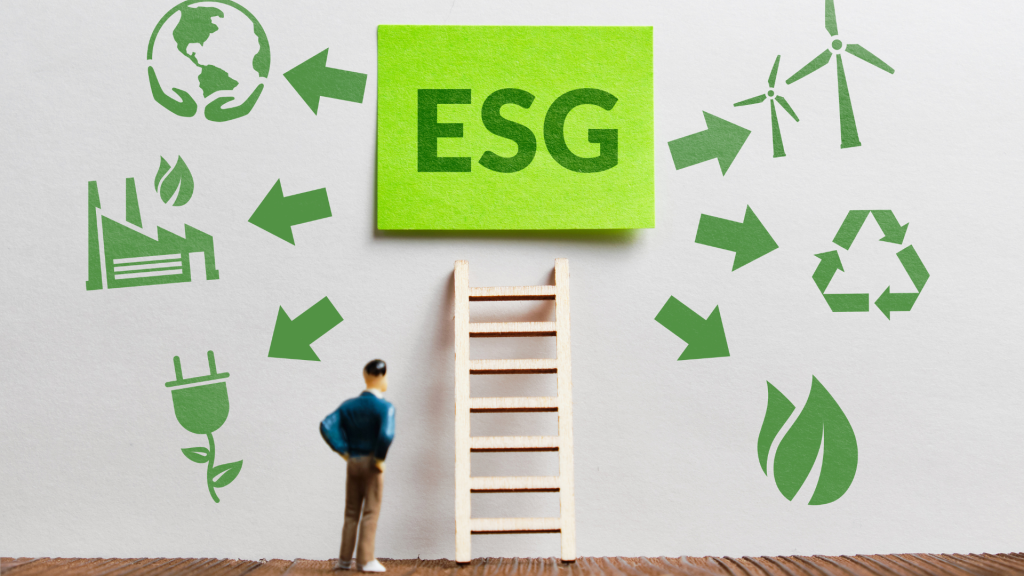
To use it well, businesses must understand the real nature of these metrics. Basically, ESG is a complete system to test sustainable development. This strategic framework stands on three main pillars:
- Environmental (E): This rule counts material origins and life cycles. It monitors carbon outputs, chemicals, and clean water use. Furthermore, it helps optimize modern circular economy models.
- Social (S): This rule ensures safe factory working spaces. It carefully protects the physical and mental health of workers. As a result, companies create good impacts on local communities.
- Governance (G): This pillar demands clear internal data reporting. Factories must practice strict product traceability. Simultaneously, they must follow commercial ethics perfectly.
According to the United Nations, these criteria are vital survival baselines. The textile sector naturally consumes massive amounts of global resources. Therefore, changing manufacturing habits holds a decisive role. It directly impacts the main goals of global nature protection.
COMMON MISUNDERSTANDINGS ABOUT ESG IN FASHION TODAY
Myth 1: ESG in fashion only belongs to big brands
This thought is a common mental block for small and medium factories. However, ESG in fashion is actually a step-by-step improvement journey. Therefore, managers can easily scale it to fit any company size:
- Small sewing shops can start by using clear, sustainable materials.
- Medium enterprises can focus on supply chain paths and save workshop energy.
- Large groups can publish green financial files and plan total carbon neutrality.
According to the OECD, this model works best when managers apply it flexibly. Truly, it must stay close to the real power of each firm.
Myth 2: Implementing green standards means higher capital costs
Many factory owners see environmental targets as a heavy financial weight. However, data from McKinsey & Company proves the exact opposite. Practically, ESG in fashion is a smart investment that reduces long-term operational risks.
Proactively sourcing eco-friendly fabrics brings a massive competitive advantage. It helps businesses reduce dependency on harmful fossil raw inputs. Consequently, this step shields production lines against global price shifts. Furthermore, factories can avoid new legal costs like the EU carbon border tax.
Myth 3: This green framework is just a marketing trick (greenwashing)
Green activities only become greenwashing tricks when they lack verified data. In contrast, ESG in fashion is not a luxury if factories act seriously. Instead, they can use it as a real scale to fix internal workflows.
When technical facts become clear, corporate trust goes up fast. Therefore, this is a golden key for Vietnamese manufacturing plants. It allows them to join the high-value supply chains of global groups easily.
Myth 4: Mass market consumers disregard esg criteria
In reality, modern buyer behaviors are shifting very quickly. Contemporary shoppers do not purchase clothes based on pure emotion anymore. Instead, they start asking hard questions about corporate social responsibility.
They prefer buying from brands that trade honestly and clearly. Therefore, meeting green targets directly affects corporate performance. It decides buying choices across both B2B and B2C segments.
PRACTICAL SOLUTIONS: START SOURCING SUSTAINABLE MATERIALS FIRST
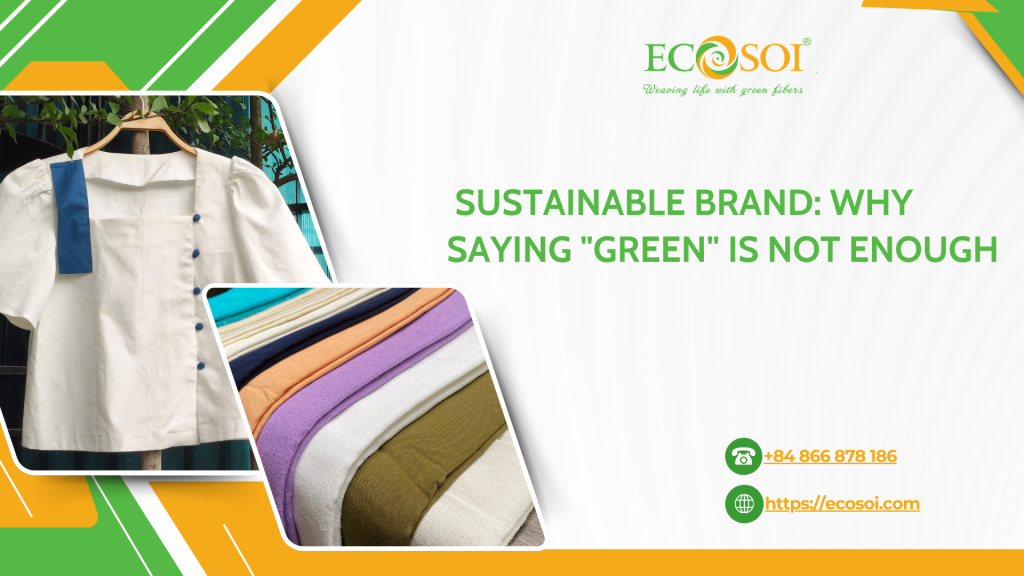
Raw inputs are the most direct and measurable touchpoint. Because factories cannot replace all industrial machinery overnight, greening the fabric supply is the most practical step. This clear trend opens up great ways for creative solutions:
- First, brands can use fabrics with clear origin data from eco-farms.
- Next, they can pick solutions that utilize rich local farm waste. This step reduces heavy pressure on farming land crops.
- Then, teams can apply clean mechanical extraction to save water and chemicals.
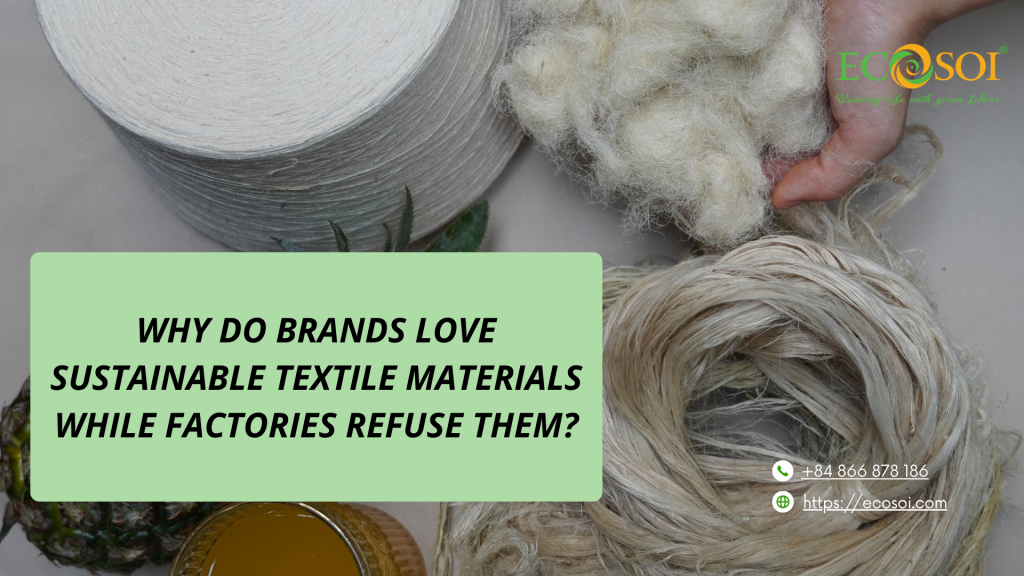
Indeed, the material research model of Ecosoi in Vietnam proves this success. They have standardized a mechanical process to harvest pineapple leaf fiber. Therefore, this smart path provides fashion brands with certified, raw eco-materials.
The method of Ecosoi solves local farm waste issues well. Simultaneously, it provides real empirical data for material life cycle assessment. This result is the clearest proof of active ESG in fashion. Truly, sustainable growth can start from very small but real deeds.
HOW ESG IN FASHION BUILDS STRONG CORPORATE COMPETITIVE ADVANTAGES
In a crowded market, green criteria are no longer a voluntary choice. On the contrary, they have become sharp brand positioning tools. This governance framework delivers clear financial rewards:
- Higher Order Conversion Rates: Transparent businesses connect with target buyers easily. They attract premium consumer groups with high lifetime value.
- Long-Term Strategic Trust: Shared values strengthen commercial bonds. It connects local factories with international sourcing managers deeply.
- Optimized Operational Costs: Managing waste flows well saves natural resources. As a result, factories cut down a large part of raw input spending.
CONCLUSION
To sum up, ESG in fashion is not a distant privilege for rich multi-national groups. It is the new rule of survival for every small link in the textile chain. Therefore, starting from small, honest, and transparent steps is the golden key. This solution converts green standards into practical competitive weapons. From there, sustainability is no longer a cost burden for your firm.
Update latest industrial solutions and official documents on green supply chains: