 VIETNAMESE
Pineapple Fiber and the Story of Sustainable Materials
In the digital era, brands face immense pressure to tell stories quickly. They often craft short, simplified content for fast consumption. Consequently, the trend of labeling products as “green” has turned into a short-term race to soothe consumer anxiety.
However, the circular fashion industry must confront a stark reality. Not every story is suitable for fast-paced communication. This is especially true for the narrative of sustainable materials.
At ECOSOI, we do not recommend that you choose pineapple fiber if your brand is not ready to be completely honest with your customers. This is because the essence of true sustainable fashion leaves no room for vague narratives.
Nội dung chính:
Sustainable materials reject the “fast-and-convenient” mindset
An eco-friendly material is never just a finished product on a retail shelf. Instead, it represents a highly complex ecosystem behind the scenes:
-
A long supply chain: The journey begins by collecting discarded pineapple leaves after the harvest season. This process directly opens up sustainable livelihoods for local farmers.
-
A proven environmental impact: The production reduces $CO_2$ emissions from traditional leaf-burning practices. Furthermore, it protects soil biology and saves fresh water through mechanical extraction technology.
-
A strict set of technical data: The natural structure of the fiber demands a deep understanding of industrial weaving techniques. Therefore, brands cannot rely on vague promises.
When oversimplified for quick marketing, the story of sustainable materials loses its roots. It transforms a profound environmental solution into an empty greenwashing slogan. Truly, the biggest risk for a brand is not telling a story that is too long. The ultimate risk is telling a story that lacks a factual foundation.
Pineapple fiber is not for brands that fear supply chain transparency
We frequently hear sweet praises about pineapple fiber. For example, popular slogans include “utilizing agricultural waste” or “eco-friendly solutions.” However, simply stopping at these beautiful adjectives is not enough.
The new generation of consumers is increasingly savvy. Consequently, they constantly demand authentic answers to tough questions:
-
Is the raw material fully traceable throughout the supply chain?
-
Does the gum-removal process abuse toxic chemicals to soften the fiber?
-
How can the brand stabilize fiber quality on an industrial scale?
If your brand is not ready for an open dialogue about these questions, pineapple fiber is not the right choice.
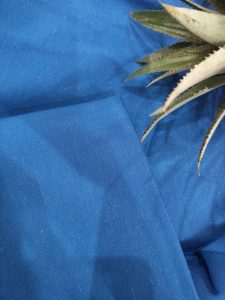
ECOSOI chooses a straightforward path. We proudly treat and degum our fibers with clean water using exclusive mechanical extraction. This technology fully preserves the natural, rustic beauty of the material. We provide real data because the trust of textile partners cannot be built on vague promises.
Explore more: PHYSICAL PROPERTIES OF PINEAPPLE FIBER THAT DESIGNERS SHOULD KNOW
The nature of green fashion: Embracing the trade-off
Another common mistake in eco-friendly communication is trying to portray a product as “absolutely perfect.” In reality, every authentic natural material always involves a technical trade-off:
-
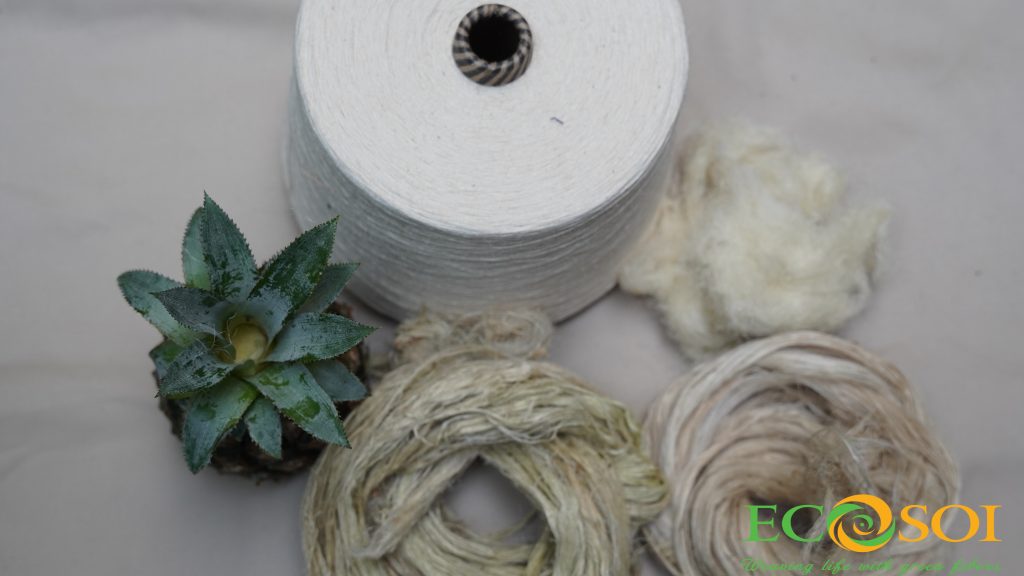
Original, raw pineapple fiber possesses a distinct natural roughness. Therefore, to make the fabric soft, breathable, and smooth, the fiber must be blended with cotton, linen, or spandex according to scientific ratios.
-
The cost of operating a green technology line from agricultural by-products cannot be as cheap as synthetic fibers derived from petroleum.
Crucially, openly stating these technical limitations does not make a brand weaker. On the contrary, honesty acts as the strongest shield to protect your business against waves of consumer skepticism. When you set the right expectations for your customers, you are selling true authenticity.
Conclusion
Pineapple fiber was not born to be a short-term tool for promotional marketing. It is a long-term material solution that comes with full ecological responsibility.
-
If you are not ready for complete supply chain transparency, please think twice before choosing sustainable materials.
-
But if you are ready to tell the truth, this unique material will be the perfect start of a trustworthy journey.
Follow ECOSOI to update honest and responsible materials perspectives: