 VIETNAMESE
SUSTAINABLE FASHION: DOES IT START WHEN WE BUY OR WHEN WE WEAR?
A garment labelled “eco-friendly” is not always the best choice. By contrast, ordinary clothing can be used more responsibly when we wear it for longer.
So, does sustainable fashion start when we buy clothes or when we use them? The answer involves both stages. Buying decisions shape demand for new products. How we use clothes determines how long they remain useful.
Understanding this connection helps consumers make more informed choices. It also helps businesses develop products and select materials with greater care.
Nội dung chính:
Should we buy less or choose more durable clothes?
These are two common approaches to sustainable fashion. However, neither can fully replace the other.
Buying less reduces demand for new clothes. Choosing durable products helps us use them for longer. However, a wardrobe can still grow if we keep buying, even when every item is well made. Similarly, buying very little may not help much if the clothes wear out quickly.
Therefore, sustainable fashion is not simply about buying expensive clothes or choosing materials labelled “green.” First, consider whether you really need the item. Then, assess its quality, suitability, and expected lifespan.
Ask yourself three questions before buying
- Do I really need this item? Do not let discounts or trends outweigh your actual needs.
- Will I wear it often? Consider your climate, work, lifestyle, and existing wardrobe.
- Does it suit its intended purpose? Attractive fabric is not enough if the garment quickly loses its shape or requires difficult care.
These questions cannot guarantee a lower environmental impact. However, they can help you avoid unnecessary purchases. They are also simple steps you can take today.
What determines a garment’s value after purchase?
Making clothes requires raw materials and energy. If we wear a garment only a few times before discarding it, we make limited use of those resources.
Therefore, extending the useful life of clothing is an important part of sustainable fashion. You can start with a few practical habits.
Care for clothes to help them last longer
Follow the washing and care instructions on the label. Avoid methods that do not suit the fabric. If a seam comes undone or a button falls off, consider repairing the garment before replacing it.
However, this does not mean keeping every item at all costs. Replacing a garment may be more practical if it is unsafe, unsuitable, or difficult to use.
The key is to avoid discarding clothes over small, repairable problems. If an item no longer suits you but remains in good condition, consider exchanging or donating it.
Do not assume old clothes will become new clothes
You can reuse, repair, or send old clothes to collection programmes. However, collection does not guarantee recycling into new garments.
The available options depend on fiber content, garment construction, and the technology at the receiving facility. Some materials can become other products, while others are harder to process.
Therefore, check how a collection programme handles clothing before sending items. If a garment remains in good condition, extending its use is often worth considering before material recovery.
Are natural materials always more sustainable?
The origin of a fiber alone cannot determine its environmental impact. Cotton, polyester, and other natural fibers have different properties. Their impacts also depend on production, durability, care, and end-of-life options.
For example, blended fabrics can combine the properties of different fibers. Some blends improve stretch or help a fabric withstand regular use. However, certain blends can also make fiber separation more difficult during recycling.
By contrast, a fabric made from a single fiber is not automatically the better choice in every situation. If the garment wears out quickly or fails to meet the user’s needs, a simpler fiber composition may not be enough to offset those drawbacks.
When assessing a material, consider at least three factors:
- Function: Does the fabric suit its intended use?
- Durability: Can the product meet your needs over time?
- End of life: Are there suitable options for repair, reuse, or material recovery?
This approach is more practical than dividing all materials into “green” and “not green” categories. You can learn more about the role of design in the textile circular economy in this report from the European Environment Agency (EEA).
Businesses need to act during product development
Fashion brands cannot place all responsibility on consumers. Many important features of a garment are decided during design and material selection.
First, businesses need to define the product’s intended use. Not every design requires the same fiber composition. Material blends should meet practical needs rather than serve only as an attractive marketing message.
In addition, businesses should maintain clear material records. These records should state the fiber content, blend ratios, and relevant technical details. This information supports quality control and helps supply chain partners understand the product.
Businesses should also consider durability, repair options, and end-of-life plans. If a market requires environmental certification, they need to identify the relevant standard. A material from a natural source does not automatically qualify a finished product for an environmental certification.
For procurement teams, early discussions with suppliers can clarify these requirements during sampling. Businesses should assess samples for intended use, technical specifications, and supply capacity before placing bulk orders.
Pineapple fiber: assess the material in context
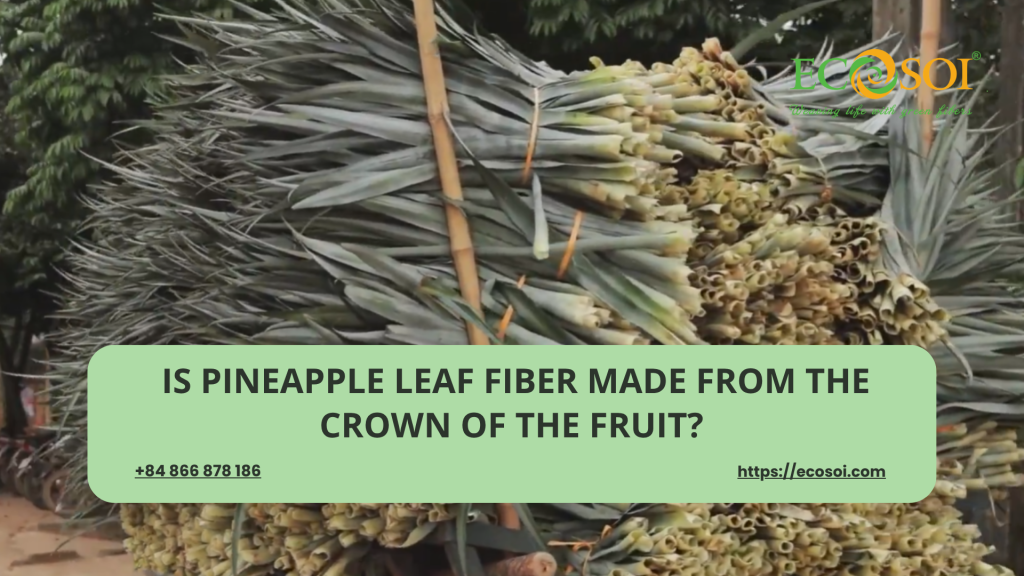
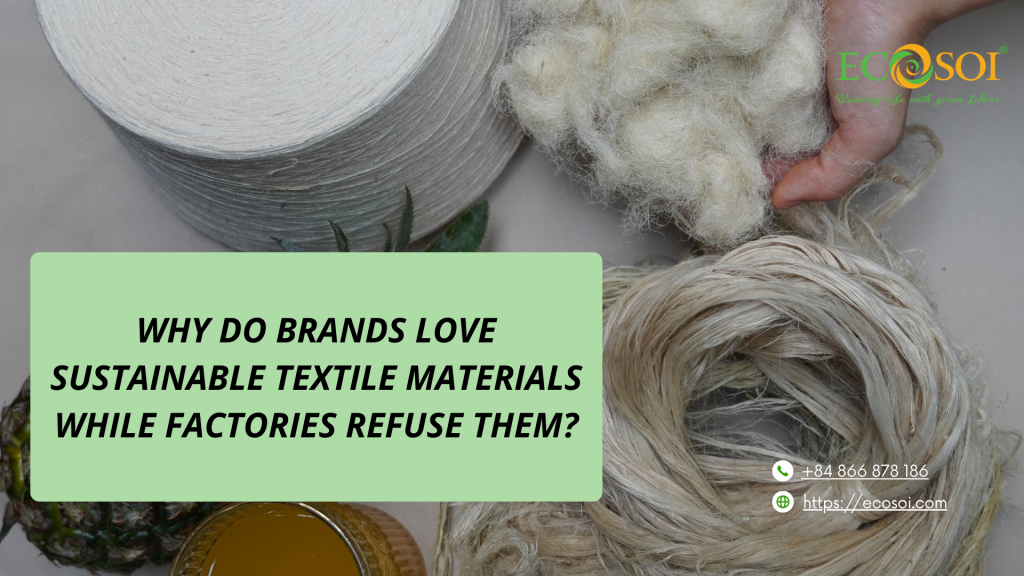
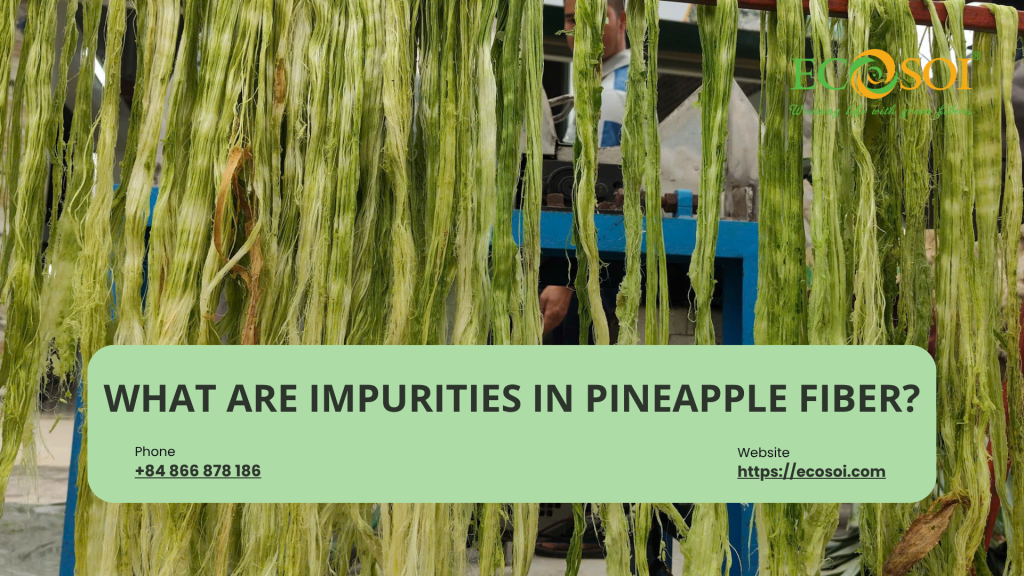
Pineapple fiber comes from pineapple leaves, which may otherwise go unused after fruit harvesting. Using these leaves offers one way to put agricultural by-products to use in textile material development.
At Ecosoi, pineapple leaves serve as a raw material for developing fiber, yarn, and fabric. The company offers different material options for different applications. Explore the Ecosoi pineapple fiber fabric collection to learn more.
However, the origin of a raw material does not determine the full impact of a finished product. Fabric containing pineapple fiber is not automatically recyclable or fully biodegradable. The outcome depends on the fiber blend, processing methods, and end-of-life conditions.
Therefore, businesses developing a new product should start with its intended use. They can then assess the composition, technical specifications, and supply capacity of each fabric option.
If you are exploring raw materials, you can also view Ecosoi’s pineapple fiber range. Discussing your specific requirements can help identify suitable materials and samples for evaluation.
Sustainable fashion starts with informed decisions
So, should sustainable fashion start when we buy clothes or when we use them? Neither stage alone determines a garment’s overall impact.
Buying only what we need can reduce unnecessary purchases. Choosing suitable clothes and caring for them properly can extend their useful life. When we no longer need an item, repair, exchange, or appropriate sorting may help it retain value.
For businesses, important decisions begin even earlier. They start with product design, material selection, and the information shared with customers.
Sustainable fashion is not just about buying a garment labelled “green.” It is about thinking carefully before buying, using clothes for longer, and handling them responsibly when we no longer need them.