 VIETNAMESE
WHAT HAPPENS WHEN CONSUMPTION OUTPACES RESOURCE REGENERATION?
Every fashion item begins with natural resources. These basic inputs include water, rich soil, crops, and energy. However, our main challenge today is speed. As a result, people now buy goods faster than the rate of natural resource regeneration.
Moreover, this rapid buying causes deep harm beyond post-use waste. In fact, entire supply chains face heavy strain. Fresh water runs dry, toxic chemical use grows, and healthy farmlands break down. Therefore, clothing makers must ask a simple question: How fast do we use up our earth?
Nội dung chính:
When consumption speed exceeds resource regeneration
First of all, living ecosystems require time to heal. For instance, a cut forest needs decades to grow back fully. In addition, rest periods help farm fields regain rich nutrients. Deep ground wells also rely on regular rainfall to refill.
In contrast, modern mills work at a very rapid pace. Brands can design and ship cheap clothes in just two weeks. Consequently, this wide gap creates three major problems:
- Heavy farm extraction: Surging market demand forces companies to take more raw materials from nature.
- Shorter product lifecycles: In turn, discarded cheap clothes drive the fast need for new goods.
- Massive waste piles: As a consequence, excess inventory places harsh stress on local wildlife.
For these reasons, finding green materials is not enough. Instead, we must reshape both factory work and daily habits through sustainable fashion.
Evaluating resources through the product lifecycle perspective
Many shoppers look only at the plant origin of a fiber. However, natural roots do not ensure full safety. Therefore, we should check the full life path of each garment.
Water and chemicals across the textile supply chain
Textile production relies on clean water at every step:
- First, farm crews use clean water to grow and harvest crops.
- Next, mill workers need huge pools to spin, weave, and wash yarn.
- Finally, dye vats consume liquid mixes to tint and finish cloth.
Thus, without strict wastewater treatment, natural items still harm nature.
Pressure on soil and biological diversity
Healthy ground keeps our natural world in balance. However, clearing land for single cash crops harms the soil. As a result, dirt loses its food value, and native field bugs die off.
Changing the approach: From fast consumption to circular fashion
Of course, our real goal is not to stop buying clothes. After all, garments remain a basic daily need. Therefore, modern brands must move toward a true circular economy:
- Smart demand planning: First, mills can cut mass runs to lower extra shop stock.
- Longer product life: In addition, teams should design strong clothes that are easy to mend and reuse.
- Closed loops: Finally, factories must clean and recycle materials by international rules.
Solutions from pineapple fiber and renewable raw materials
New materials cannot fix every green issue. However, they directly cut raw farm demand. For example, using farm by-products brings great perks:
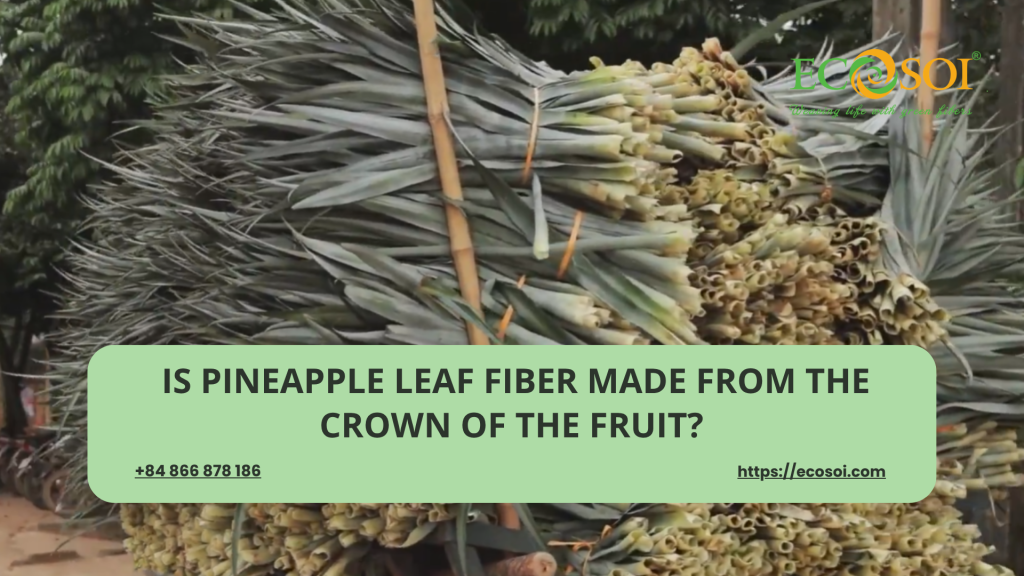
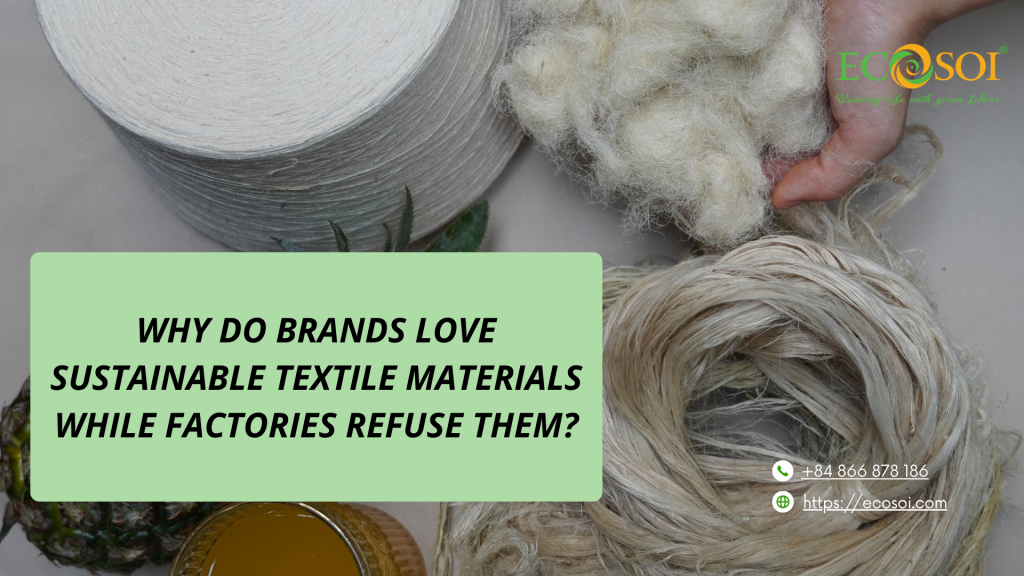
- Crop leaf recovery: Workers collect strong fibers from pineapple leaves after the fruit harvest.
- Zero extra inputs: In addition, this simple process needs no fresh farm plots or extra tap water.
- Extra trade value: As a result, leftover farm waste turns into high-grade natural textiles.
- Safe fiber milling: Furthermore, mechanical extraction methods keep the steps clean and safe.
Material selection criteria for forward-thinking fashion brands
A solid eco-material must fit real market needs:
- Physical strength: First, fabrics must offer the right softness, drape, and long wear.
- Garment fit: In addition, the chosen yarn must match specific shirts, bags, or shoes.
- Open tracking: Finally, makers must share clear data about origins and use limits.
Therefore, businesses can adopt renewable plant threads today. Indeed, this smart step creates a strong base for true resource regeneration.
Ecosoi helps fashion brands with raw pineapple fiber, yarn, and blended cloth. Above all, we focus on real-world use and clear material tracking.
👉 Contact Ecosoi today: Get your fabric swatch samples and find green options for your new line.