 VIETNAMESE
WHAT IS MORE ALARMING: MATERIAL SHORTAGE OR MATERIAL WASTE?
Global mills often worry about supply risks. Many brands fear raw material shortages today. For example, oil reserves drop and farmland shrinks fast. However, the truth is that material waste causes far deeper losses.
In fact, we face a shortage of clean inputs. Yet, we throw away tons of farm biomass each year. This article examines the link between resource shortage and waste. In addition, it introduces circular pineapple leaf fiber from Ecosoi to help build a closed-loop chain.
Nội dung chính:
The paradox of raw resource scarcity and material waste
Many textile mills face fast price swings for yarn. Besides, oil used to make polyester grows more costly each year. Furthermore, standard cotton farming suffers under bad weather and water shortages.
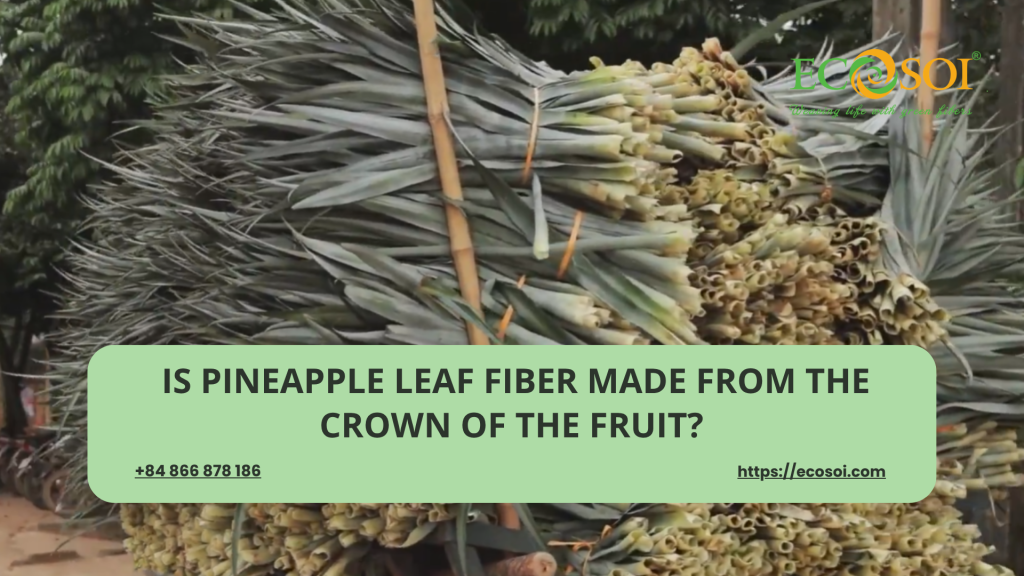
In contrast, the amount of farm waste remains huge. Farmers burn millions of tons of leftover pineapple leaves after each harvest. Consequently, this habit harms local air. It also destroys a rich source of natural fiber.
Therefore, the core issue is not just a lack of raw goods. Instead, the real problem comes from how we use our natural resources.
Why is material waste more harmful than material shortage?
A shortage of goods pushes mills to find new sources. On the other hand, careless disposal creates lasting harm for both nature and the economy.
Burning farm waste releases toxic air pollution
When farmers burn dry pineapple leaves, thick smoke and CO₂ rise into the air. As a result, this smoke harms the health of nearby homes. In addition, field fires kill helpful soil microbes. Thus, the farm soil decays very fast.
Waste disposal costs burden the whole economy
When single-use items are thrown away, towns must spend big budgets on trash. Also, petroleum-based synthetic fibers take hundreds of years to break down. During this long time, they shed microplastics into rivers and food chains.
Missing the chance to increase crop value
Pineapple leaves contain lots of natural cellulose fiber. If we treat these leaves as trash, we lose a rich local textile resource. Consequently, farmers also miss out on extra cash from their crops.
Circular economy: Turning discarded farm by-products into new resources
The old linear model follows a simple path: Take -> Make -> Waste. In short, this system uses up finite raw goods and creates heaps of trash.
Because of this issue, modern mills are shifting toward a circular model. In this setup, farm waste becomes the raw input for textile yarn. Thus, we can make useful goods without taking up new farmland.
Ecosoi – A practical answer for agricultural waste upcycling in Vietnam
Recognizing the value of local plants, Ecosoi has developed clean ways to turn discarded pineapple leaves into natural pineapple fiber.
Eco-friendly mechanical extraction without harsh chemicals
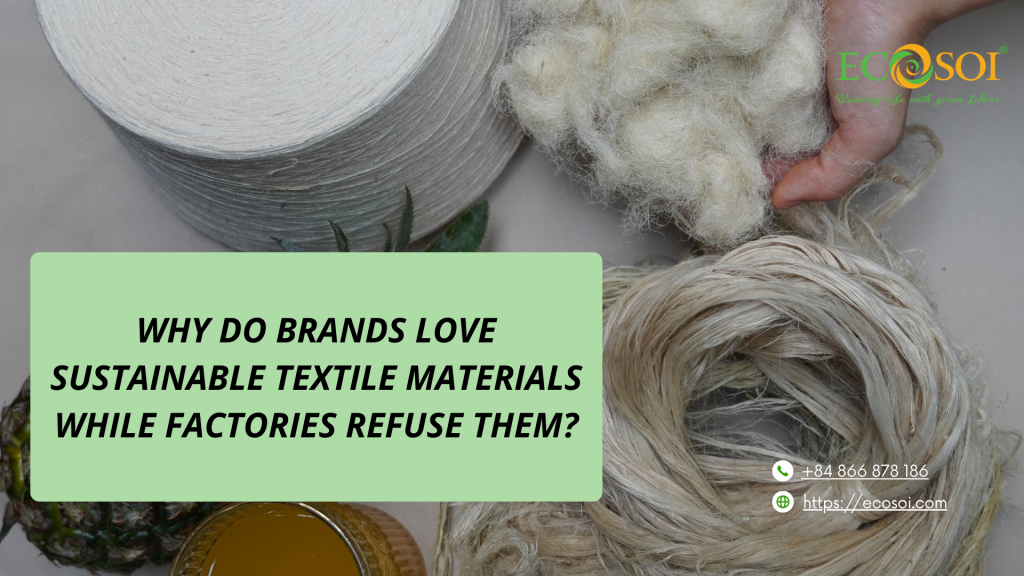
Ecosoi collects fresh pineapple leaves from farm hubs in Thanh Hoa, Nghe An, and Ninh Binh. Next, mechanical scrapers pull clean fibers from the green leaves. This step uses no harsh acids.
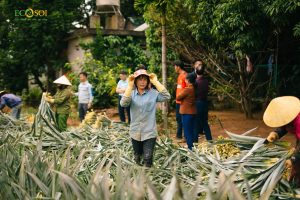
Then, workers wash the fibers with clean water. After that, they dry them under natural sunlight. As a result, this method keeps the strong fiber intact. It also protects local groundwater.
A diverse product range for textile partners
To supply steady materials for mills, Ecosoi offers diverse product lines:
- Raw pineapple fiber (grades Q1, Q2, Q3) and carded fiber: Great for spinning mills, bio-leather bases, and craft items.
- Blended yarns with Cotton or Ramie (counts 10Ne, 20Ne, 30Ne, 32Ne): Runs smoothly on industrial weaving and knitting looms.
- Pineapple canvas, woven, and knit fabrics: Delivers high strength, good airflow, and natural textures for fashion and home decor.
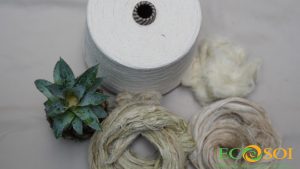
Shop – ECOSOI – Weaving life with green fibers
Creating extra income for local pineapple farmers
Beyond green gains, the project brings stable jobs to rural towns. For instance, farmers earn extra cash by selling leftover leaves. Therefore, they no longer need to pay to clear their fields. In this way, the model builds a strong bond between modern fashion and rural life.
How can businesses and consumers take meaningful action?
To cut down resource losses, both groups can take simple steps:
- For individual buyers: You can pick clothes made from natural fibers that break down safely in soil. In addition, caring for old clothes helps reduce waste in nature.
- For fashion brands: Apparel labels can test new fabrics made from farm by-products. Thus, adopting green materials helps firms build circular supply chains. As a result, brands can meet global export rules with ease.
Conclusion
Stopping agricultural material waste is a key task that needs quick action. By turning leftover leaves into fine yarns, Ecosoi converts farm waste into high-value textiles.
👉 Is your business looking for high-grade pineapple fiber and sustainable fabrics?
- Explore our raw fiber and fabric options on the official Ecosoi Website
- Get direct technical advice and wholesale pricing via the Ecosoi Facebook Page