 VIETNAMESE
Why Does Pineapple Fiber Production Efficiency Vary So Much?
Recently, experts mention pineapple leaf fiber often as a top bio-based material in green fashion. However, a strange paradox exists in the current market. Even when using the same pineapple fiber, production efficiency varies greatly among suppliers. Specifically, this huge gap appears from spinning to weaving and final use.
Ultimately, this gap affects costs, product quality, and long-term eco-goals. Therefore, this article explores the core reasons behind these big differences. We will look closely at tech, supply chains, and factory management.
Nội dung chính:
Understanding True “Production Efficiency” in Pineapple Fiber
Basically, pineapple fiber production efficiency is not just about raw leaf yield or starting costs. Instead, it also includes several key factors:
-
Yarn spinning stability.
-
Waste rates during raw fiber treatment.
-
Consistent use on a large industrial scale.
-
Extra post-production costs (like cleaning wastewater).
According to Textile Exchange, bio-based materials only work well when factories perfectly control total costs and eco-impacts.
5 Factors That Decide Pineapple Fiber Production Efficiency
Raw Materials: Not All Leaves Are Equal
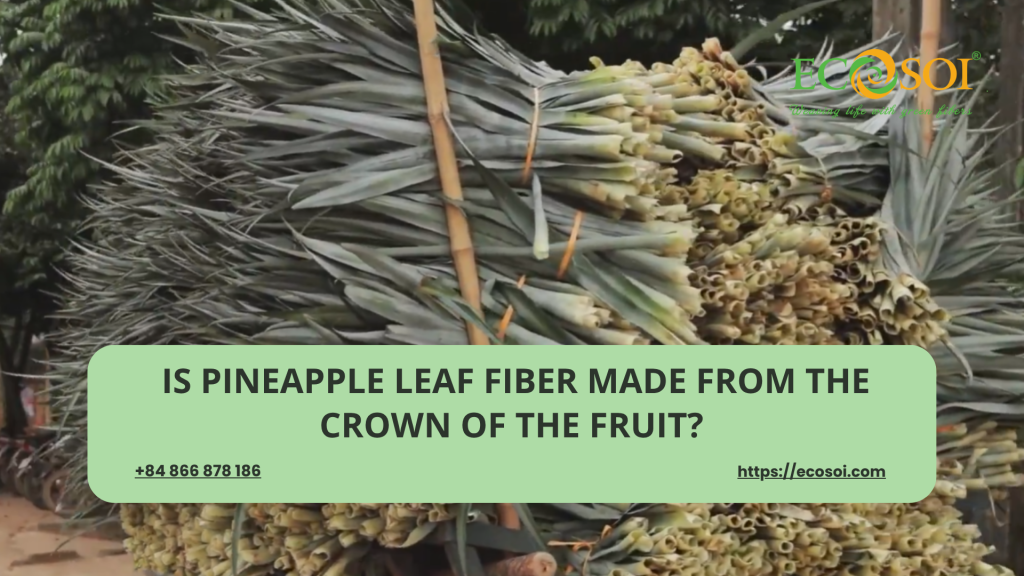
First, the biggest difference starts with raw material quality. Naturally, pineapple fiber depends heavily on plant breeds, soil, leaf age, and storage.
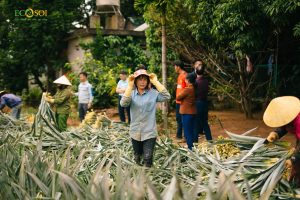
For example, very young leaves lack strong cellulose. Meanwhile, old leaves contain too much stiff lignin. As a result, the fiber becomes hard to process, brittle, and uneven. If factories cannot standardize their leaf collection zones, efficiency drops right at step one.
Extraction Methods: Manual vs. Machine
Second, the extraction method creates a huge divide.
-
Manual extraction: Starting costs are low. Yet, fiber quality is very uneven. It relies totally on worker skill and fails to meet large volume needs.
-
Machine extraction: Machines easily control fiber length and cleanliness. Plus, output stays stable and meets strict global rules.
Consequently, this difference directly affects supply abilities for B2B textile buyers.
Processing Pineapple Fiber: The Biggest Gap
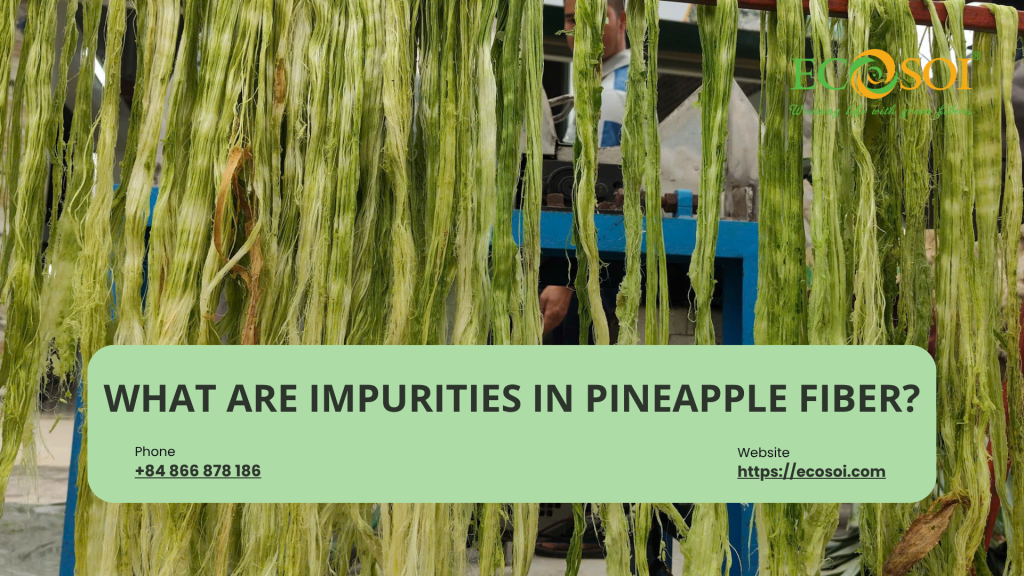
Third, after extraction, workers must treat the fiber biologically for textile use. Truly, this stage creates the widest gap between suppliers. Key factors include picking the right bio-enzymes, controlling heat, managing dirty water, and saving energy.
Careless processing pineapple fiber makes the yarn weak and brittle. According to studies, treatment quality directly decides the final product’s strength and smoothness.
Spinning: Where Good and Bad Fibers Show Their True Colors
Next, many raw fibers look exactly the same at first glance. However, they reveal their true power only inside the spinning machines.
-
Well-treated fiber: It rarely breaks and blends smoothly with cotton or viscose. Thus, it creates highly stable yarn rolls.
-
Poorly treated fiber: Sadly, it jams machines and stops factory lines. Furthermore, it increases waste and pushes costs way up.
👉 This explains why one factory runs smoothly while another faces huge daily risks using the exact same plant.
Consistency and Environment: The Survival Factors
Finally, in the global fashion market, real efficiency means keeping thousands of batches perfectly consistent. Also, it requires clear eco-data transparency.
A pineapple fiber production line is only truly green if it proves a real drop in carbon emissions. Moreover, it must meet strict ESG rules and avoid dumping toxic waste at the very end.

Ecosoi’s View: Controlling the Value Chain is Key
At Ecosoi, we clearly understand a hard truth. A natural origin does not automatically make pineapple fiber in textiles highly efficient. Actually, true efficiency only happens through smart planning and strict control.
We actively set up standard production hubs in major farming areas. Also, our team strictly measures carbon data and meets tough B2B partner rules. Ultimately, we know that human management decides the final material quality, not just the plant itself.
Conclusion
To sum up, production differences in pineapple fiber are never just random luck. Instead, they come from raw leaf quality, smart bio-tech, and strong supply chain management. The plant itself does not grant success. Rather, how we process and standardize it builds the true foundation of future textiles.
Frequently Asked Questions (FAQ)
1. What fibers blend best with pineapple fiber? To lower costs and boost strength, makers often blend it with cotton, viscose, or silk. Clearly, the choice depends on whether you make everyday clothes or luxury home decor.
2. Why is fiber uniformity so important for factories? Industrial machines run at extremely high speeds. If the fiber length varies or contains bio-trash, the yarn will snap constantly. Consequently, this stops the whole production line and causes huge money losses.