 VIETNAMESE
Do Pineapple Fiber Products Face Greenwashing Risks?
In the booming sustainable fashion market, many natural materials appear today. However, this trend brings a growing fear of “greenwashing.” Therefore, do products using pineapple fiber face the risk of greenwashing? This article gives an objective view based on supply chain management.
Nội dung chính:
What is Greenwashing? Why is the Textile Industry at Risk?
Basically, greenwashing happens when a business claims its goods are highly eco-friendly without proof. Often, they make these claims without scientific data or real checks.
According to the OECD, greenwashing destroys market trust. Furthermore, the textile sector easily falls into greenwashing in textiles traps because its supply chain is very long and broken. Usually, factories mix materials in complex ways. Meanwhile, marketing moves much faster than real measuring tools.
Are Pineapple Fibers Naturally “Green”?
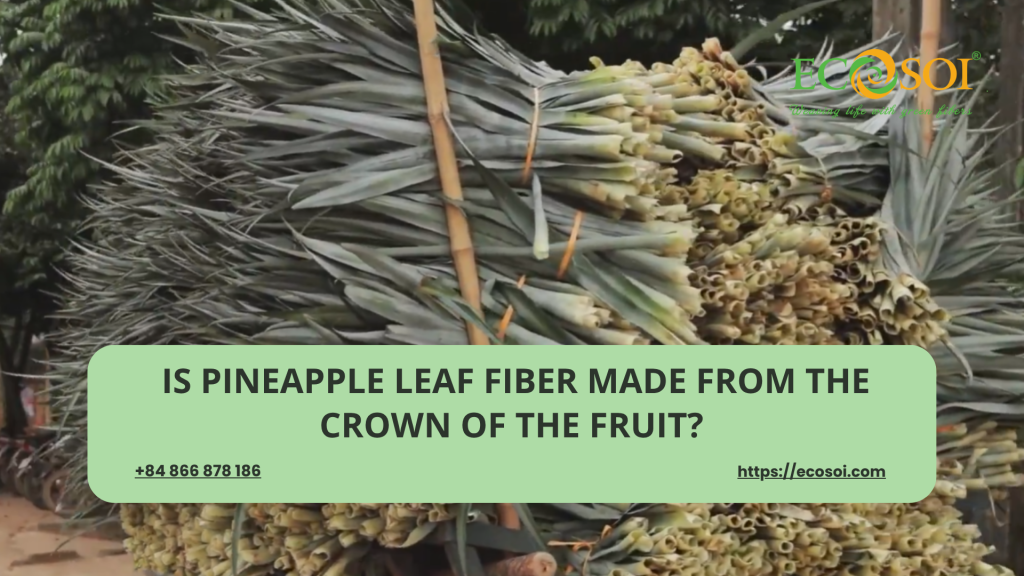
By nature, workers extract pineapple fiber from leaves after the fruit harvest. Thus, this is entirely an agricultural waste material.
Using these leaves brings double benefits. First, it greatly reduces farm waste. Second, it absolutely does not compete with food-growing land. According to the UN Environment Programme (UNEP), using farm waste is a key way to reduce resource pressure.
Consequently, pineapple yarn is not just “green on paper.” Instead, it has a very clear and sustainable bio-based materials foundation.
Where Are the Greenwashing Pineapple Fiber Risks?
Actually, the greenwashing pineapple fiber risk does not come from the material itself. Rather, it comes from how a business develops, controls, and markets it.
Lack of Transparency in Blending Ratios
In real industrial production, factories rarely use 100% pure pineapple fiber. Instead, they usually mix it with cotton, linen, hemp, or viscose to maximize strength.
Technically, this is perfectly normal. However, greenwashing risks arise when brands hide the true mixing ratio. Highlighting only the “pineapple” factor deeply misleads buyers.
Broken Material Traceability
According to the ISO, clear material data is a core base. If a product lacks clear material traceability, the risk of doubt jumps high.
Indeed, the EU market simply rejects vague ads. If you cannot prove your processing steps, your material might still be marked as bad for the earth.
Exaggerated Marketing Words
Greenwashing happens when claims exceed real data. For example, using words like “100% green” or “totally eco-friendly” is a huge trap. According to the European Commission, green marketing must be exact and backed by strict science.
Solutions: How to Avoid Greenwashing Risks?
To make pineapple fiber a trusted solution, businesses must follow three core rules:
-
First, Input Transparency: You must clarify which farm the leaves come from and how workers pick them. The data does not need to be complex, but it must be consistent.
-
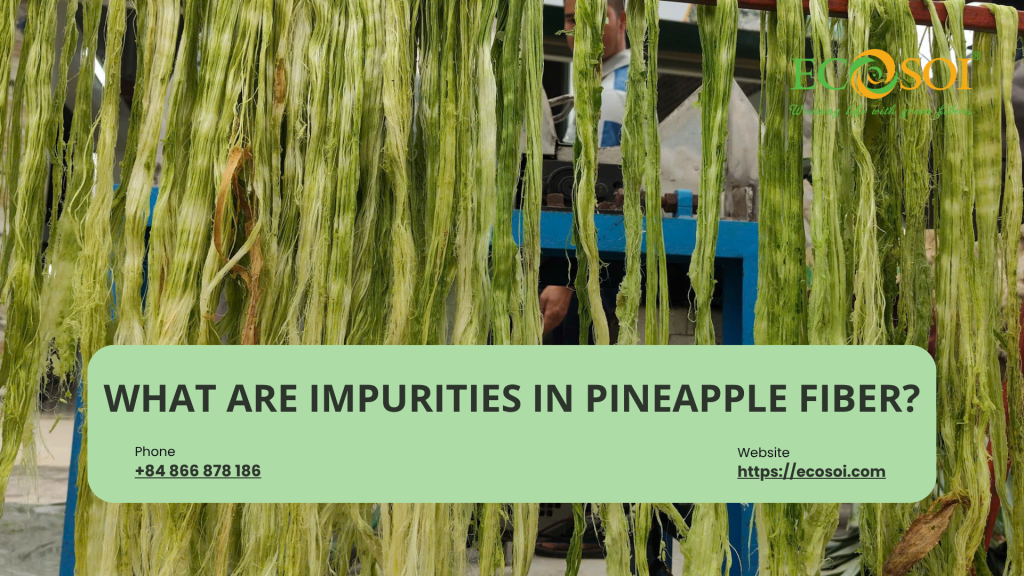
Second, Technical Standardization: Factories must strictly control the fiber’s cleanliness, length, and waste removal.
-
Third, Data-Driven Communication: You must publish clear limits. Frankly explain both the pros and the challenges instead of painting a fake perfect picture.
Ecosoi: Committing to Clear and Standardized Sustainable Materials
Pineapple fiber brings huge potential, but it demands equal duty. Sustainability is never just a slogan. Instead, it must be a clear operating system.
Knowing this well, Ecosoi chooses a strict data-driven approach. We specialize in supplying fiber, yarn, and fabric extracted from natural pineapple leaves.
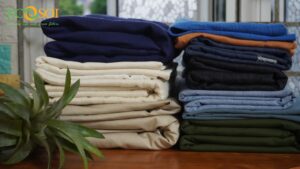
To meet the real needs of the textile sector, Ecosoi offers highly flexible blended fabrics. We mix pineapple yarn with other natural fibers (like hemp, linen, and cotton) in fully clear ratios. Furthermore, Ecosoi provides all technical specs and origin data. Ultimately, this helps B2B brands confidently pass ESG in textiles barriers. Also, it totally removes greenwashing pineapple fiber risks.
Conclusion
In conclusion, products using pineapple fiber are not automatically greenwashing. When controlled with real data and honest ads, they are excellent sustainable materials. Choosing the right, honest supplier is the ultimate key to protecting your brand’s reputation.
Is your brand looking for natural materials with 100% clear tracking data? 👉 Contact Ecosoi to get advice and receive premium natural blended fabric samples!
The truth about sustainable fashion always needs a multi-sided view. 👉 Follow the Ecosoi Fanpage right now to equip yourself with the most accurate knowledge and become a smart consumer!