 VIETNAMESE
How Do Sustainable Materials Help Brands Stand Out in the Market?
In today’s fierce global fashion market, a beautiful design is not enough to survive. Fast fashion and mass production have completely flooded the market.
Today, buyers and B2B partners deeply care about product origins and eco impacts. Therefore, sustainable materials are no longer just a short PR trend. Instead, they are becoming a strategic lever. Ultimately, they help brands stand out, boost trust, and increase competitive edges.
Nội dung chính:
What Are Sustainable Materials? (Understand First)
Basically, sustainable materials are raw goods harvested or made with the lowest eco impact. Also, they must offer clear traceability and meet strict social rules.
According to the OECD, sustainable materials in textiles play a core role. Specifically, they reduce supply chain risks and drive long-term growth. The most important thing to remember is this: Sustainability does not mean sacrificing quality. Actually, it is a perfect balance between technical performance and eco impact.
3 Core Ways Sustainable Materials Create a Difference
Instead of just competing on price, smart brands use materials to reposition themselves.
Differences Start with a Transparent Material Story
First, when a product uses clear eco-friendly materials, the brand gains a powerful marketing weapon. You can tell a clear story about the product’s journey from the farm to the shelf.
While many products look exactly the same, material origins are the hardest factor to copy. According to a Nielsen survey, buyers will gladly pay more for green materials. However, the exact data must be fully clear and highly trusted. Indeed, this transparency is the key to true fashion brand differentiation.
Building a Unique Brand “Signature”
Second, serious brands often link their materials to their core vision. They turn natural fibers into a unique brand signature.
As a result, this helps buyers remember the brand much longer. When materials become a core identity, your brand becomes very hard to replace in the buyer’s mind.
Avoiding “Greenwashing” and Building Trust
Third, global buyers and partners are increasingly wary of vague “green” claims. Therefore, they strictly demand verified data and clear technical records.
When standardized, sustainable materials help brands avoid the huge “greenwashing” risk. According to the ISO, material clarity is the ultimate base of quality control.
Practical Impacts on ESG Strategies and Supply Chains
For brands exporting to Europe, standing out also means following the law.
From Legal Compliance to Competitive Advantage
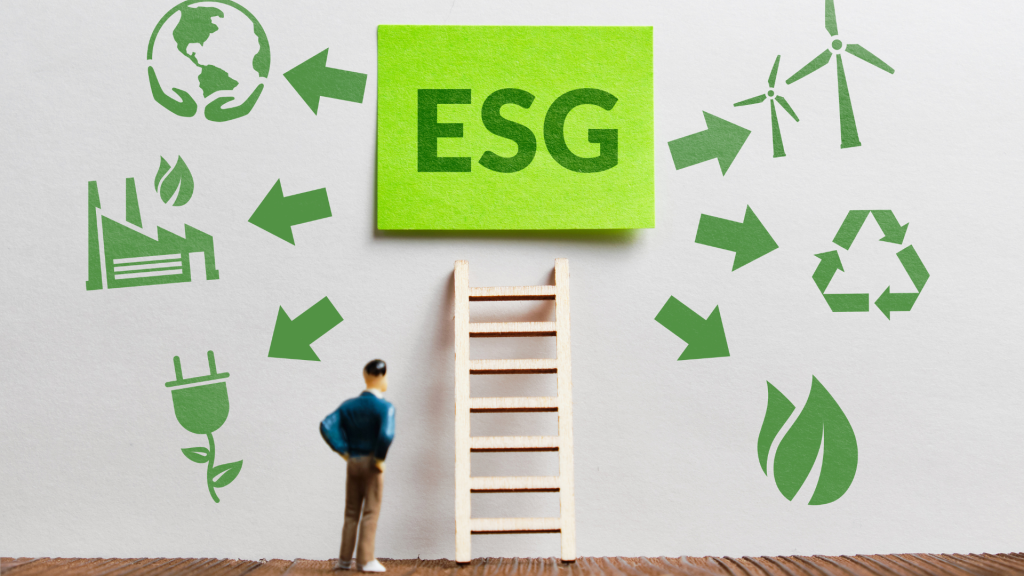
First, you cannot build ESG in textiles (Environmental, Social, and Governance) reports without real input data. According to the UN Environment Programme (UNEP), raw materials create the biggest eco impact in fashion.
Using sustainable materials helps businesses accurately measure their carbon footprint. Therefore, early movers will rarely face sudden shocks from strict EU policy changes.
Economic Benefits: Not Just a “Cost” Problem
Many people wrongly think green materials are always too expensive. Although the first buying cost might be slightly higher, the long-term benefits are huge.
A stable material source cuts down production errors and lowers claim costs. More importantly, it helps your brand easily pass supplier checks from giant global retail chains. Ultimately, this builds a truly strong and sustainable supply chain.
Material Solutions from Ecosoi: The Base for Differentiation
Companies do not need to change their whole supply chain overnight. Instead, the smart approach is to find key materials and partner with clear suppliers.
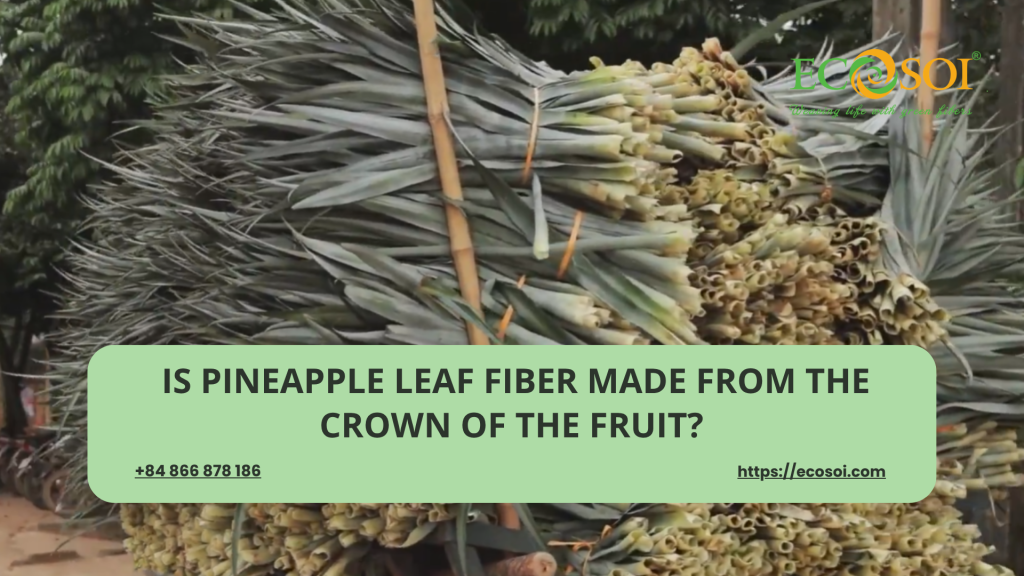
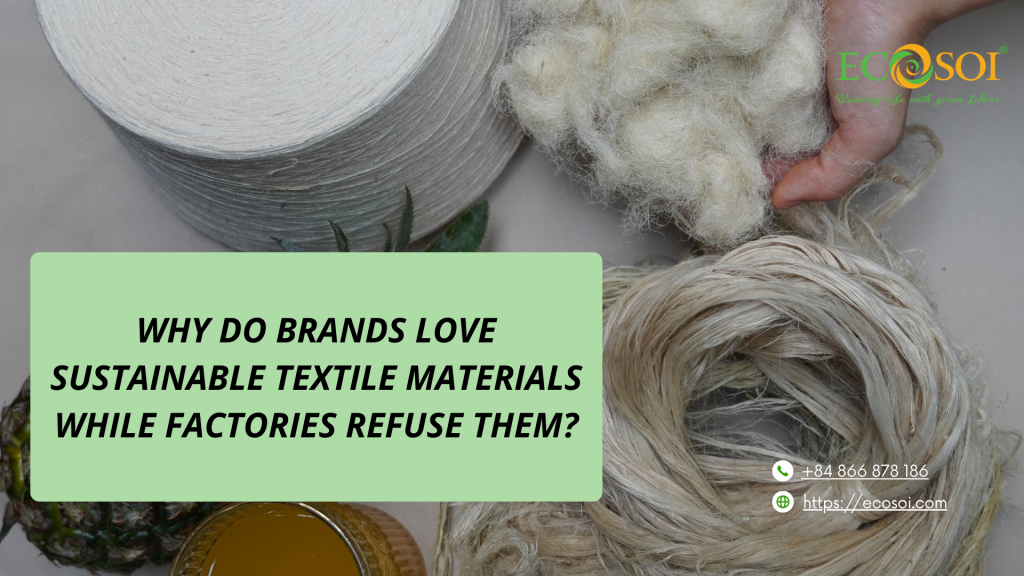
Understanding this puzzle, Ecosoi strictly commits to offering breakthrough plant-based fiber solutions. We specialize in extracting fibers from pineapple leaves. This is a very abundant farm waste in Vietnam.
To optimize costs and features, Ecosoi develops diverse blended yarns. We flexibly mix pineapple fiber with cotton, linen, or hemp as needed. Furthermore, Ecosoi’s material data is perfectly traceable. As a result, this helps B2B brands easily write ESG reports and create a real market difference.
Conclusion
To sum up, sustainable materials are not just simple eco-protection tools. Indeed, they are strategic levers that help brands stand out and build long-term trust. For modern textile brands, investing in green materials is the safest investment for the future.
Is your brand ready to stand out and conquer the toughest markets?
Every clothing choice you make has the power to change the world.
Follow the Ecosoi Fanpage to explore the amazing stories behind every sustainable thread with us!