 VIETNAMESE
SUSTAINABLE MATERIALS IN FASHION: A GUIDE TO CHOOSING “GREEN” CLOTHING
The phrase “green clothing” has appeared with increasing frequency in recent years. You can easily find it on labels, websites, and marketing campaigns. However, the concept of “green” is still not fully standardized in legal terms. This is a strong confirmation from many independent reports by reputable environmental organizations.
Unfortunately, this lack of clarity has led to a worrying reality in the market:
- Consumers: Face many difficulties in identifying actual sustainable materials in fashion.
- Businesses: Easily face the risk of accidental or intentional fashion greenwashing. This means they promote a green image without taking real action.
Therefore, you need to equip yourself with knowledge to understand the true nature of fabrics. This is the first and most important step before making any shopping decision.
Nội dung chính:
WHAT ARE SUSTAINABLE MATERIALS IN FASHION?
A textile material is only recognized as sustainable when it meets many strict technical standards. We cannot rely solely on its natural origin to judge its eco-friendliness.
International textile associations evaluate this group of materials based on the following core pillars:
- Input Materials: Priority is given to renewable sources, agricultural by-products, or recycled fibers.
- Deep Processing: Optimizing water consumption is essential. Moreover, factories must minimize toxic chemicals discharged into the environment.
- Product Lifecycle: The material must have a low carbon footprint. It should be naturally biodegradable or easily recyclable.
- Transparency: Brands must ensure clear traceability along the entire supply chain.
Consequently, consumers should note a vital fact. Not every “natural” material is automatically sustainable.
CLASSIFYING MATERIALS OFTEN LABELED AS “GREEN”
TRADITIONAL NATURAL FIBERS
This group includes familiar natural fibers like cotton, linen, wool, and silk. Their major advantage is a purely biological origin. In addition, their natural biodegradability is excellent. Nevertheless, they still have notable limitations.
For example, conventional cotton cultivation consumes a massive amount of water. It also uses many pesticides if there is no strict control. Furthermore, not all cotton products on the market meet organic standards. Therefore, checking the accompanying certifications is always more important than the material name.
RECYCLED FIBERS FROM WASTE
The most common representatives of this group are recycled polyester (rPET) and recycled nylon. Their outstanding strength is helping to reduce plastic waste in the environment. At the same time, they decrease dependency on new fossil resources.
However, they still pose a risk of shedding microplastics during washing because they are synthetic fibers. Many international environmental organizations have recorded this negative impact. The specific level of impact will depend on the surface treatment technology of each manufacturer.
BIO-MATERIALS AND AGRICULTURAL BY-PRODUCTS
This is a new generation of materials. Experts research and develop them entirely from renewable biological sources. People also utilize agricultural by-products to replace fossil raw materials.
The core value of this solution is optimizing discarded resources. As a result, it helps reduce intensive farming pressure on land and water. This solution is fully compatible with the circular economy model.
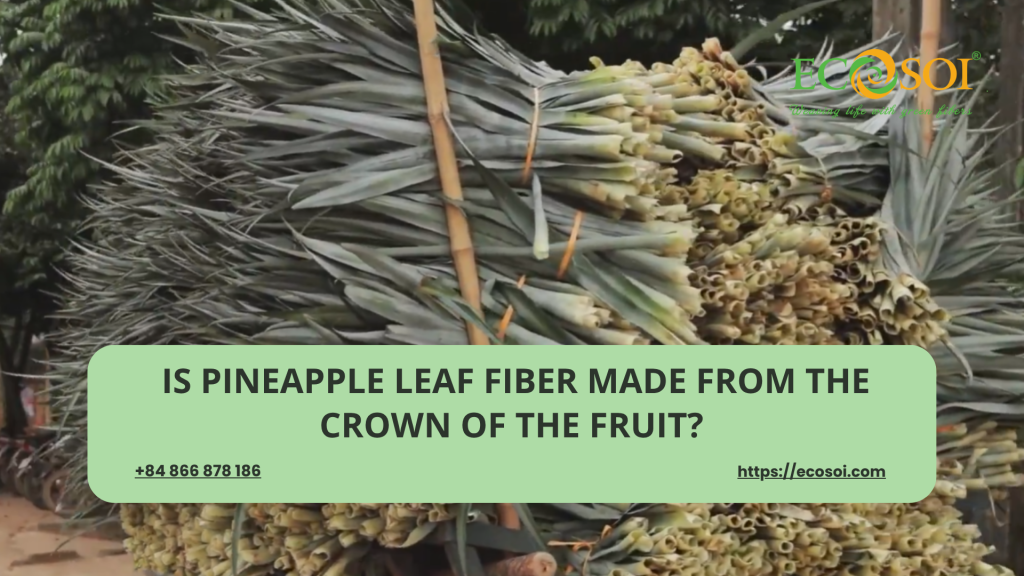
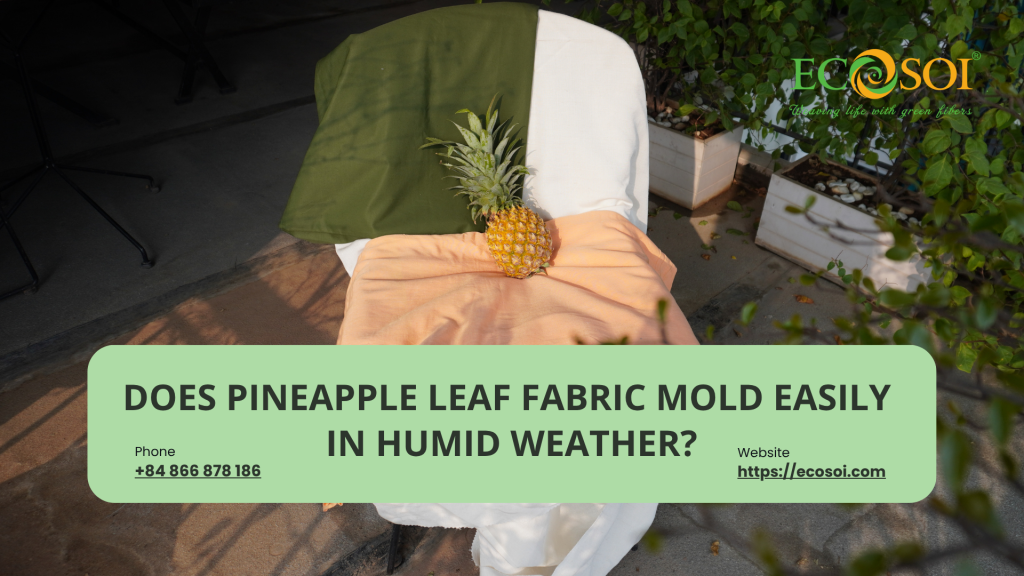
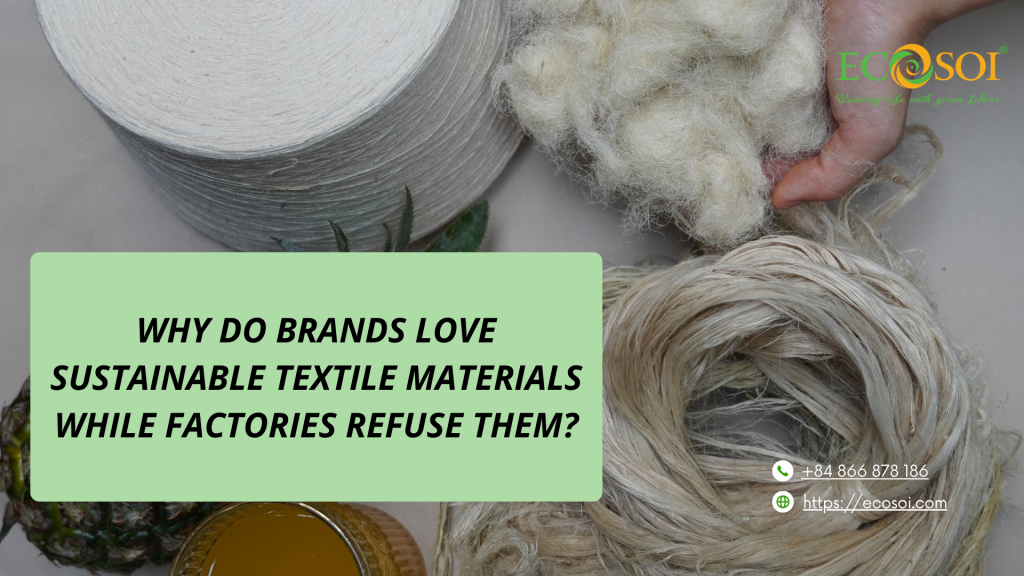
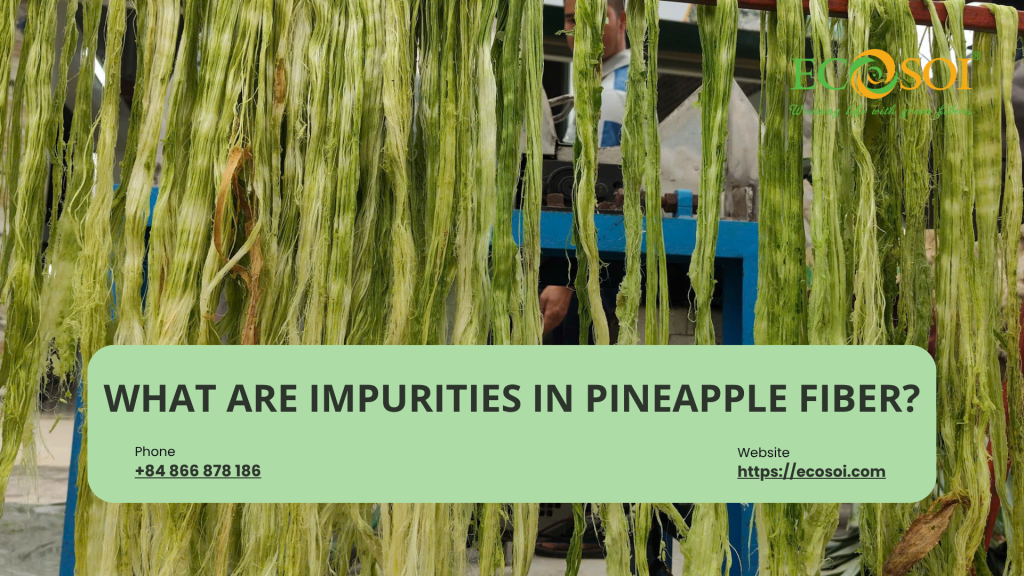
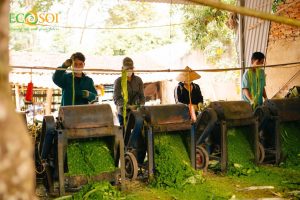
In Vietnam, Ecosoi is pioneering this strategic direction. We focus deeply on pineapple leaf fiber extraction and processing technology. From there, we supply high-quality bio-materials. Our products serve both the B2B textile value chain and practical applications.
INTERNATIONAL CERTIFICATIONS – THE “COMMON LANGUAGE” OF ECO-FRIENDLINESS
Parties should not put full trust in loud advertisements. Both consumers and businesses should view independent third-party certifications as the most standard benchmark:
- GOTS Certification (Global Organic Textile Standard): The world’s leading organic textile standard. It guarantees the entire process from cultivation to production.
- OEKO-TEX Standard 100: An independent testing system. This standard ensures that products do not contain harmful chemical residues.
- GRS (Global Recycled Standard): This standard verifies the exact recycled content. It also helps control social responsibility in the supply chain.
However, you need to understand one thing clearly. Each certification only focuses on a specific aspect. There is absolutely no “all-powerful” certification for every single criterion.
IDENTIFYING GREENWASHING TRAPS IN MODERN FASHION
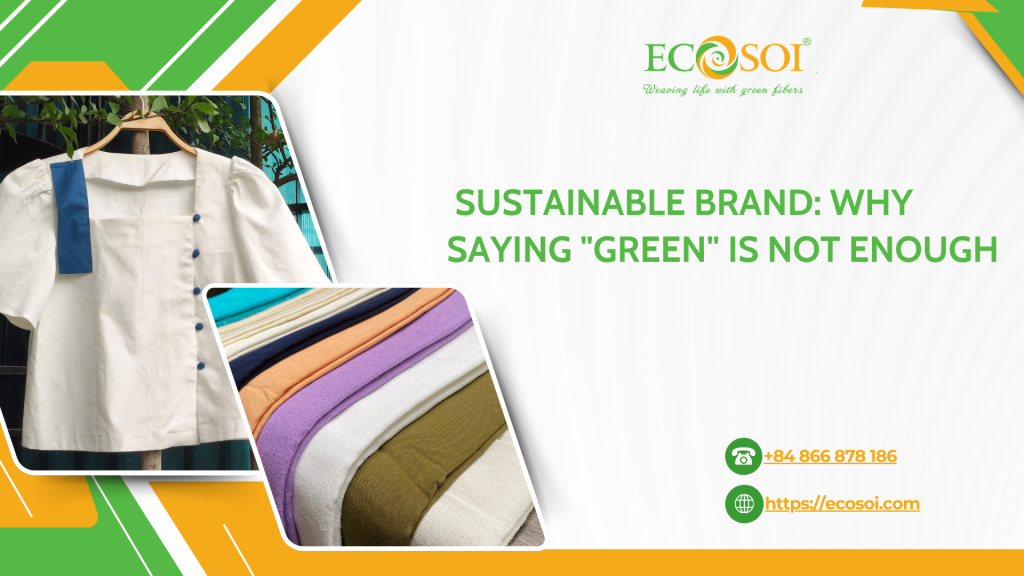
The phenomenon of fashion greenwashing often occurs when brands use vague terms. Examples include words like “eco-friendly”, “green”, or “natural”. Yet, they do not disclose clear ingredient percentages or corresponding certifications.
These products are often only “green” in media campaigns. Meanwhile, their actual supply chain still leaves a massive carbon footprint.
To protect themselves, smart consumers should practice the following habits:
- Read labels carefully to check the detailed percentages of fabric components.
- Look for specific certification codes instead of looking at leaf icons drawn by the brand.
- Prioritize transparent brands that openly publish their supply chain origins.
WHY UNDERSTANDING MATERIALS MATTERS FOR BOTH B2C AND B2B
FOR END CONSUMERS (B2C)
Understanding sustainable materials in fashion brings great benefits. First, consumers will avoid paying for low-quality products hidden under an eco-friendly cover. Second, this helps protect skin health during long-term fabric contact. Finally, you will shape a lifestyle that matches true sustainable fashion values.
FOR MANUFACTURERS AND TEXTILE PARTNERS (B2B)
From a commercial perspective, mastering material knowledge helps manufacturers reduce legal risks. Businesses can also avoid PR crises regarding greenwashing allegations.
Simultaneously, this is the golden key to meeting strict technical standards from international partners. Therefore, you can build long-term competitiveness based on transparent data. Businesses do not need to rely on empty marketing slogans.
Media trends based on transparency are becoming an inevitable solution. Ecosoi is actively providing foundational knowledge about bio-materials through official channels. We explain technical concepts in the most visual way to eliminate confusing information in the current market.
Explore more: Sustainable Materials: True Value or Just a Story?
CONCLUSION: “GREEN” IS NOT ON THE LABEL – IT IS IN YOUR UNDERSTANDING
In conclusion, green fashion is not purely a temporary trend. It is the result of a chain of responsible actions. This chain goes from the supplier’s research into sustainable materials in fashion to the manufacturer’s transparency, and finally to your conscious shopping decisions. When we know how to ask the right questions about fabric origins, the market will be forced to shift.
ECOSOI SUSTAINABLE MATERIAL SOLUTIONS INFO BOX
As a pioneer in the eco-textile field in Vietnam, Ecosoi specializes in researching and supplying high-quality natural pineapple leaf fibers. Our products comprehensively serve the domestic and international B2B supply chain.
Ecosoi’s solutions help utilize agricultural waste and optimize material lifecycles. Furthermore, we commit to absolute transparency on every fiber. Contact Ecosoi today to co-create real sustainable fashion solutions!