 VIETNAMESE
Sustainable Marketing in the Fashion Industry: Is Going Green the New Trend?
The fashion industry, one of the few sectors to have seen consistent growth over the past decade, faces the challenge of maintaining growth on a sustainable foundation. With the current pace of fashion production and consumption, the industry risks exacerbating environmental damage and overuse of resources. Annually, over $500 billion in value is lost due to underutilized clothing and lack of recycling efforts. This situation is not only detrimental to society and the environment but also forces fashion companies to consider resource costs, directly impacting profitability. This article explores the primary obstacles the fashion industry faces in achieving sustainable growth and examines potential solutions.

Nội dung chính:
Recent Trends in the Fashion Industry
In recent decades, the fashion industry has evolved into a thriving business, becoming a focal point for researchers examining its impact on global economic flows. According to McKinsey consultants, the global apparel, fashion, and luxury markets have experienced steady growth over the past 15 years, surpassing high-growth sectors like technology and telecommunications. Figure 1 illustrates fashion industry sales growth by region, category, and segment in 2018.
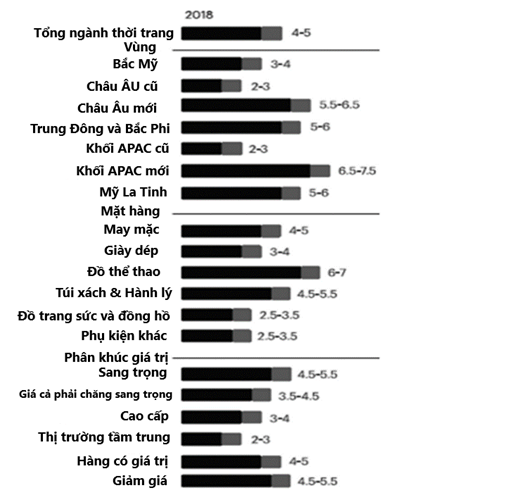
While fashion business giants enjoy significant profits, the industry is known for frequent changes and high risks, particularly for new market entrants. Globalization has shifted production from Europe and North America to Asia and developing nations, with Asia-Pacific emerging markets recording the highest sales growth (6.5–7.5%).
Fast Fashion and Sustainable Growth
One pioneer of fast fashion, Inditex (Zara), is the world’s most profitable fashion company, with economic returns of approximately $4 billion in 2017. However, while fast fashion showcases how to increase profits, it is often criticized as a business model that encourages overconsumption and excessive waste. Reconciling fast fashion with sustainability may seem paradoxical, but it is achievable. The solution lies in a circular economy, ensuring that garments are made from safe, renewable materials and that old clothing is recycled into new items.

Key themes for sustainable development in the fashion industry include:
- Establishing standards and practices for designing fashion products that are easy to reuse or recycle.
- Investing in new fibers that minimize environmental impact.
- Managing innovations that reduce CO2 emissions.
- Encouraging environmentally conscious consumer behavior.
- Supporting recycling technology advancements.
- Setting high environmental standards and better control mechanisms in supply chains.

Sustainable Performance Metrics
Rising awareness of fashion’s negative impacts has created a demand for stringent monitoring of company and product performance. One notable metric is the Pulse Score, which measures the fashion industry’s sustainability performance.
The Pulse Score, developed to monitor global fashion sustainability in social and environmental impact areas, is based on the Higg Index created by the Sustainable Apparel Coalition. It evaluates sustainability across three areas: brand, facility, and product. These metrics measure transparency, environmental/social impacts, and collaboration between brands and their facilities.
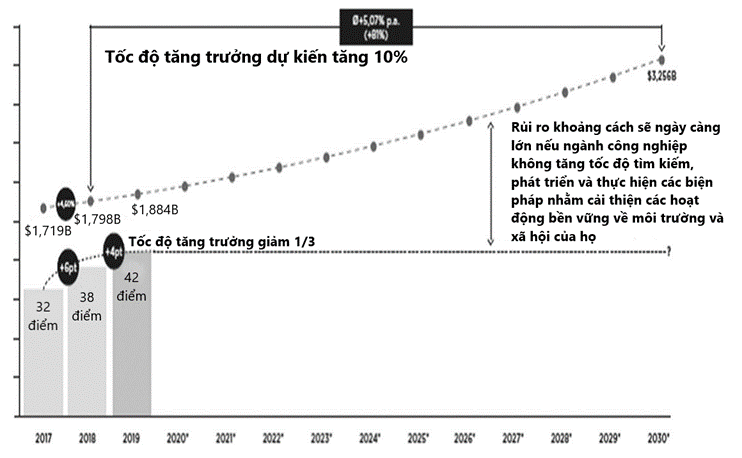
Over recent years, the Pulse Score has improved from 32 to 42, marking significant progress. However, the gap from 42 to 100 highlights the vast opportunities for the industry to create new value for society and individual businesses.
Sustainable Solutions for the Fashion Industry
According to the Global Fashion Agenda, influential CEOs play a crucial role in driving sustainability due to their impact on the value chain. The CEO Agenda 2019 emphasizes immediate core actions and long-term transformational priorities:
Core priorities for immediate action include:
- Supply chain traceability: Linked to implementing a circular business model that ensures responsible resource use from raw material sourcing to product disposal. Notably, brands like Nike, Adidas, and Levi’s have committed to sustainability goals for 2020-2030.
- Combating climate change: Measuring the fashion industry’s climate impact across its value chain, focusing on production and washing processes.
- Efficient resource use: Reducing water, energy, and chemical consumption, particularly in cotton production, which requires 10,000–20,000 liters of water per kilogram.
- Safe working environments: Addressing labor rights, gender discrimination, and forced labor remains a pressing challenge.
Transformational priorities include:
- Developing innovative, eco-friendly fibers.
- Establishing circular fashion systems for recycling and reusing.
- Enhancing wage systems.
- Leveraging Industry 4.0 through digitalized value chains.
Adidas’ creation of one million pairs of shoes from recycled ocean plastics and Stella McCartney’s adoption of sustainable materials exemplify successful sustainable innovations. Leading brands like Zara and Tesco have also taken accountability for their production impacts, experimenting with wastewater solutions and fostering better relationships with workers in developing nations.
Consumer Perspectives on Sustainability
Sustainability has become a key criterion influencing consumer purchasing decisions. A survey by Fashion Revolution revealed that European consumers prioritize transparency regarding:
- Sustainable product claims (72%).
- Material sources and production details (77%).
- Environmental responsibility practices (74%).
While the industry’s Pulse Score has improved, a significant gap remains, highlighting the need for balanced environmental, social, and economic strategies. Achieving sustainability requires collaboration across all stakeholders, including owners, designers, engineers, workers, and consumers.
Vietnamese Pineapple Fiber Enters the European Market
At the GWAND Sustainable Festival in Lucerne, Switzerland, ECOSOI showcased pineapple fiber products and handbags. The initiative emphasized environmental friendliness, livelihood creation, and local material development, representing sustainable practices that resonate with global markets. Such efforts align with Vietnam’s broader aspirations to integrate local resources into international markets while adhering to sustainable practices.