 VIETNAMESE
Is industrial pineapple fiber fabric stable for production?
Many fashion brands want to use green materials today. As a result, industrial pineapple fiber fabric gets a lot of attention. However, textile factories still ask an important question. Is this eco-friendly material stable enough for big orders?
Both factories and fashion brands worry about this issue. They want to know if pineapple fabric has consistent quality across batches. In addition, they wonder if the fabric can run smoothly on modern sewing lines.
In fact, the answer does not depend only on the raw fiber. Fabric quality depends on the whole production line. This process goes from fiber cleaning to weaving. In this article, Ecosoi will explain the key factors for industrial pineapple fiber fabric stability.
Nội dung chính:
What makes pineapple fiber fabric stable in production?
In the textile industry, fabric stability does not happen by luck. Instead, it comes from strict control across four key steps:
1. Quality of raw pineapple fiber
Pineapple leaf fiber comes from leaves after harvest. However, raw fiber quality can change with each weather season.
First, fiber cleanliness directly affects the spinning process:
- Short fibers and dirt: Raw fibers with too much dust break easily during spinning.
- Surface defects: Dirty fibers create small knots called neps. As a result, these knots make the fabric surface rough.
- Factory choices: Spinning mills always prefer clean fibers over bright color. In fact, clean fibers make weaving much easier.
2. Fiber blending and yarn spinning
Factories rarely use 100% pineapple fiber for daily clothing. Instead, workers blend pineapple fiber with Cotton, Lyocell, or Viscose. This blend increases fabric strength and improves weaving speed.
The blend ratio defines how the final fabric works:
- T-shirts: Proper blends add softness and good stretch.
- Shirts: Need a smooth, flat, and neat surface.
- Canvas: Needs high thread density to carry heavy weight.
- Upholstery: Requires strong resistance against daily wear.
Therefore, when you evaluate industrial pineapple fiber fabric, look at the whole yarn blend. You should not look only at the pineapple fiber percentage.

3. Batch-to-batch quality control (QA/QC)
Consistent quality across all batches is vital for factories. Small changes in color, fabric weight (GSM), or shrinkage will stop sewing lines quickly.
Natural materials can change with nature. However, a good pineapple fiber production process can control these changes well. Good suppliers sort raw fibers carefully. Also, they test small samples before starting big orders.
Industrial pineapple fiber fabric: How well does it fit current machines?
Most modern pineapple fabrics are made carefully. Thus, they fit well with standard factory equipment.
Performance on weaving and sewing machines
When fabric meets basic technical standards, factories do not need new machines. The fabric simply needs to pass these points:
- Good tensile strength and tear resistance.
- Good dimensional stability to control shrinkage after washing.
- Strong friction resistance when needles go through fast.
- A smooth surface that prevents broken stitches.
Pro tip: Factories should always run a small test first. This step helps workers set thread tension and needle size correctly. As a result, machines can run at top speed.
Ability to fulfill large orders
Many people think natural materials are hard to make in big volumes. However, supply capacity depends on good management. By setting up large farm areas, suppliers secure raw materials easily. Furthermore, standard cleaning processes guarantee steady output for big orders.
3 common myths about pineapple fiber fabric
Many businesses hesitate to use green materials due to simple misunderstandings:
- Myth 1: Pineapple fiber fabric is weak and breaks during sewing.
- Fact: Natural pineapple fibers are very strong. When blended with Cotton or Lyocell, the fabric gets high tensile strength. Thus, it meets all normal garment standards.
- Myth 2: Natural materials always change color between batches.
- Fact: Color shifts happen in nature. However, proper fiber sorting fixes this problem. Modern dyeing keeps color differences very small (Delta E < 1.0).
- Myth 3: Factories must buy new sewing machines.
- Fact: The fabric works well on current machines. Factories only need to adjust thread tension. Also, workers should pick the right needle size for the fabric weight.
Key technical checks before full production
Brands must reduce risks in green supply chains. This goal follows recommendations from Textile Exchange. Therefore, companies should check these points carefully:
- Practical sewing tests: Check seam smoothness and stitch stretch. Also, test heat safety during fusing.
- Check technical sheets (Techpack/TDS):
- Fabric weight (GSM) and usable width.
- Fiber blend ratios.
- Shrinkage rates and colorfastness.
- Check supplier capacity: Evaluate the factory QA/QC process. Also, check their origin certificates and delivery plans.
Practical material development at Ecosoi
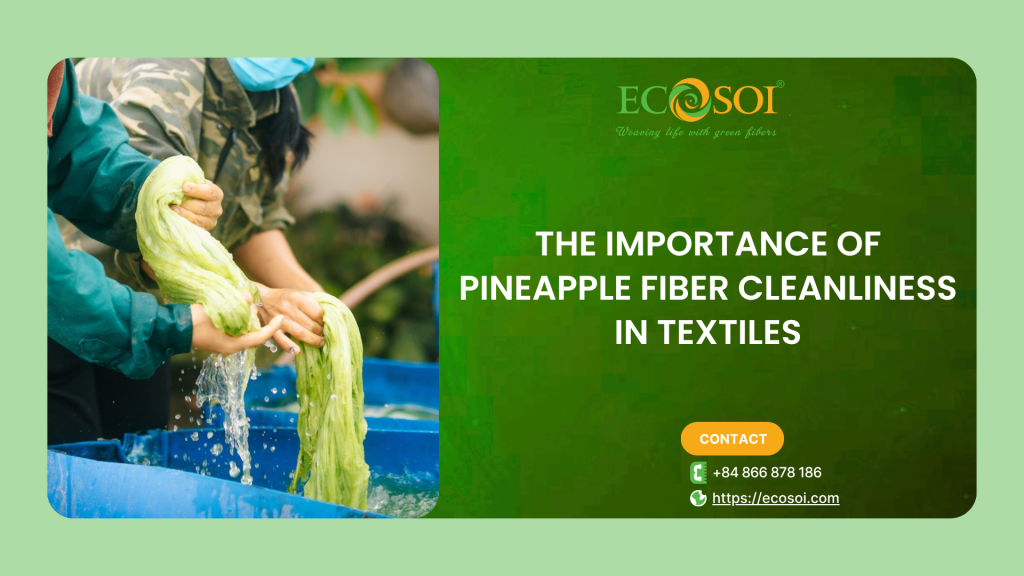
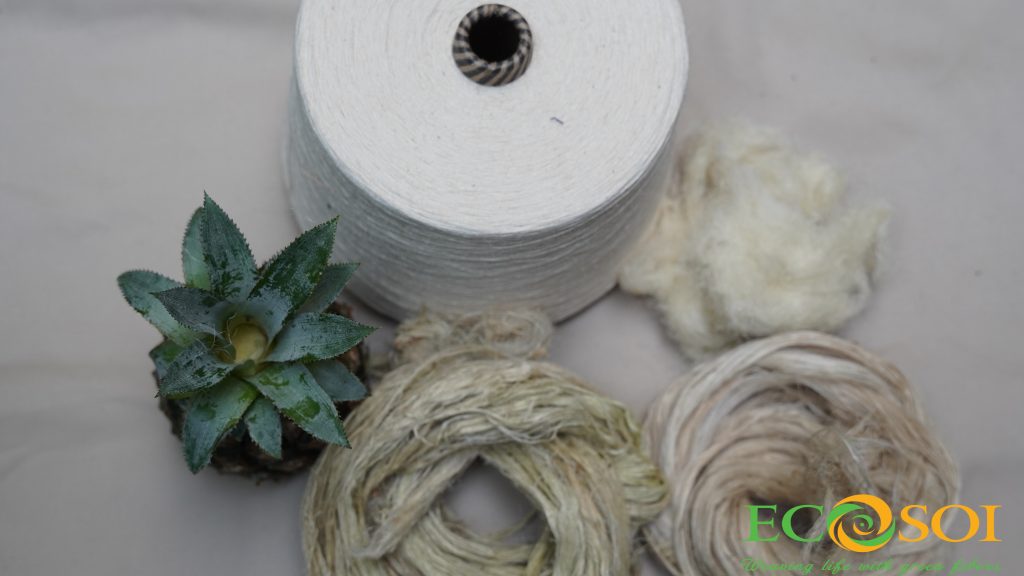
Ecosoi focuses on practical materials for real production. We do not stop at theoretical concepts. First, Ecosoi cleans raw pineapple fibers thoroughly. This step ensures clean fibers before spinning yarn.
Next, we work closely with weaving mills to test fabrics on industrial lines. Today, pineapple fiber fabric Ecosoi offers many blend options.

Conclusion
Industrial pineapple fiber fabric can easily handle big production runs. The main requirement is correct technical processing. Therefore, companies do not need to worry about usability. Instead, look for reliable suppliers with clear quality control.
If you need pineapple fabric for your next collection, contact Ecosoi today. We are ready to send swatches and full technical guides.
Frequently asked questions (FAQ)
- Does industrial pineapple fiber fabric need special sewing methods?
No. The fabric works well on standard sewing machines. Workers only need to adjust thread tension and pick the right needle size.
- Why do factories blend pineapple fiber with other fibers?
Blending creates better fabric performance. Pineapple fiber gives strength and a unique texture. Meanwhile, Cotton or Lyocell adds softness and lowers costs.
- What should companies do before placing big orders?
Companies should ask for a Technical Data Sheet (TDS). Next, run a small test on your sewing line to check shrinkage after washing.