 VIETNAMESE
ECOSOI SUPPLIES PINEAPPLE LEAF FIBER AND YARN FOR INDUSTRIAL PRODUCTION
Choosing materials for textile production involves several factors. Price is only one of them. Businesses must also consider quality, processing needs, and supply. Pineapple leaf fiber and yarn come from pineapple leaves. They offer another option for businesses that want to explore plant-based materials.
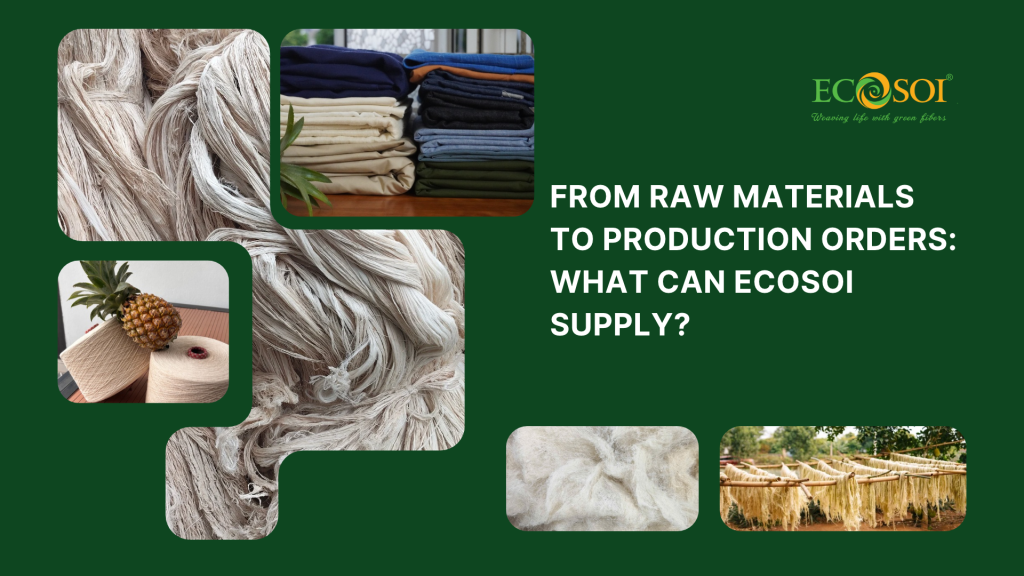
In Vietnam, Ecosoi develops several products from pineapple leaves. These include raw pineapple leaf fiber, fluffed pineapple leaf fiber, and pineapple yarn. Each product serves a different stage of production. Ecosoi aims to bring these materials into real manufacturing use. This also gives businesses more options based on their own production needs.
Nội dung chính:
Pineapple leaf fiber and yarn in the textile industry
How manufacturers extract fiber from pineapple leaves
Pineapple leaf fiber (PALF) is a plant-based material. Manufacturers extract it from pineapple leaves. After farmers harvest the fruit, they often leave the leaves in the fields. However, these leaves can also provide a source of fiber. The process usually includes four main steps:
- Collecting leaves after fruit harvest.
- Removing fiber from the leaves.
- Cleaning and treating the fiber.
- Sorting and preparing it for the next stage.
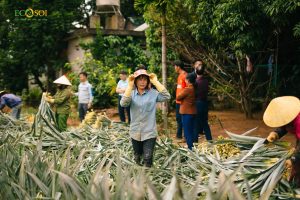
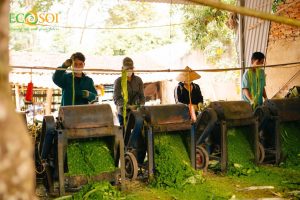
The treatment method affects the fiber’s cleanliness and properties. As a result, sorting plays an important role. It also helps manufacturers choose the right material for each use.
Raw fiber, fluffed fiber, and pineapple yarn: What is the difference?
These three products are not the same. Each belongs to a different stage of the production process.
- Raw pineapple leaf fiber: Manufacturers obtain this material by removing fiber from the leaves. Its cleanliness and treatment level depend on the process.
- Fluffed pineapple leaf fiber: This fiber goes through extra treatment and preparation. It is made for use in later spinning stages.
- Pineapple yarn: Manufacturers create this product through spinning. They can use it alone or blend it with other fibers.
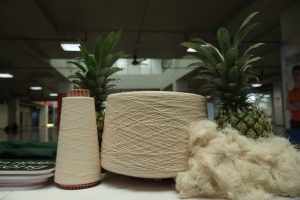
These differences matter when choosing materials. For example, spinning mills need to check the quality of the fiber they receive. Weaving mills, on the other hand, need to check yarn count and evenness.
Ecosoi’s range of pineapple leaf fiber and yarn
Ecosoi develops several types of material from pineapple leaves. This range allows businesses to choose products for different stages of production.
Raw pineapple leaf fiber in three grades
Ecosoi extracts raw fiber from pineapple leaves. The company then sorts it by treatment level and actual properties.
Currently, Ecosoi offers three grades: Q1, Q2, and Q3.
- Q1 pineapple leaf fiber: This grade goes through water-based degumming with clean water. Its residual gum content is below 10%.
- Q2 pineapple leaf fiber: This grade has a degumming level of about 70–80%. Its impurity content is below 15%.
- Q3 pineapple leaf fiber: This grade has not gone through degumming. Therefore, it still contains natural gum and impurities.
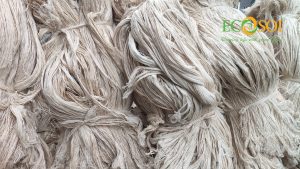
Each grade reflects a different level of treatment. Businesses can choose based on their current production process. For example, manufacturers with their own fiber treatment systems may consider Q3. Meanwhile, Q1 and Q2 are options for those who need pre-treated fiber.
However, these figures alone cannot show the full quality of the material. Businesses should check fiber cleanliness, length, and consistency before making a choice.
Explore Ecosoi’s pineapple leaf fiber range.
Fluffed pineapple leaf fiber for spinning
After extraction and treatment, manufacturers can prepare pineapple fiber for spinning. Ecosoi also develops fluffed pineapple leaf fiber for this purpose. The product supports spinning needs and material research.
Fiber length can vary based on the intended use. Therefore, suppliers and manufacturers should discuss this point before production. Spinning mills should pay attention to several key factors:
- Fiber length and consistency.
- Cleanliness and remaining impurities.
- Ability to blend with other fibers.
- Fit with existing spinning machines.
In addition, mills should test the fiber on their own machines. These trials help them assess how the material works in real production.
Pineapple-cotton yarn for fabric production
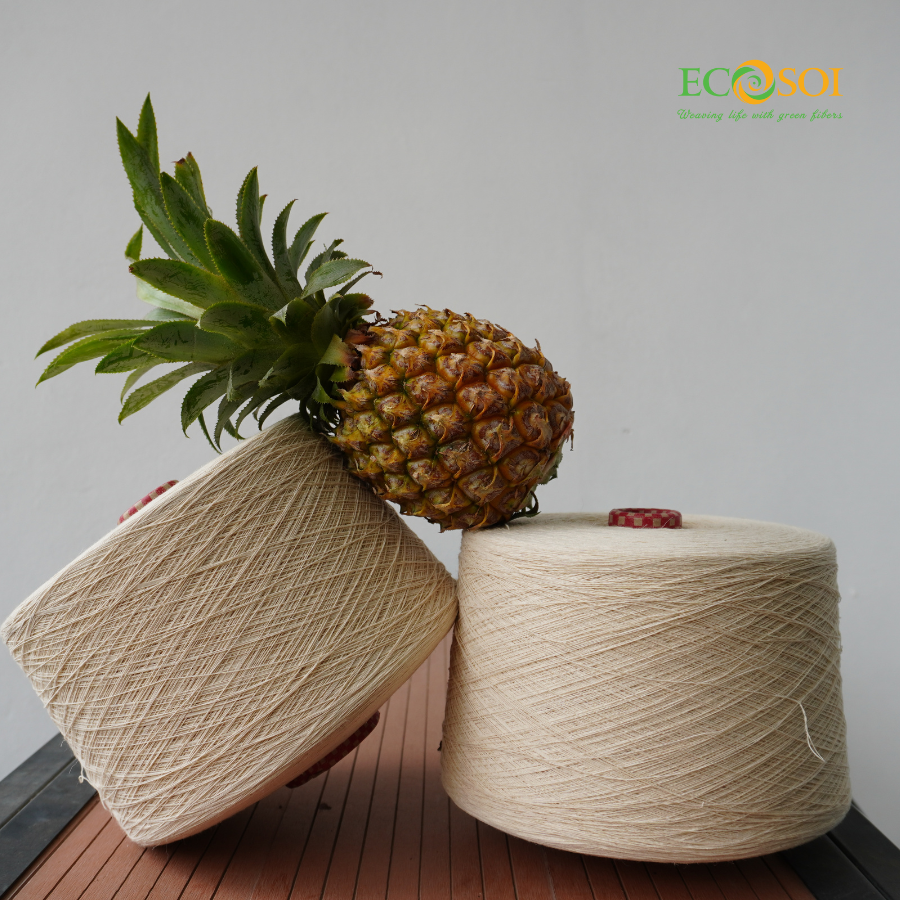
Pineapple yarn offers another way to use fiber from pineapple leaves. Manufacturers can also blend it with cotton to create yarns with different fiber content. The right blend depends on the needs of the final product.
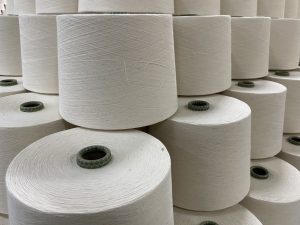
Ecosoi currently develops several pineapple-cotton yarn options. These include blends with 40% pineapple and 60% cotton. Another option contains 20% pineapple and 80% cotton. The available yarn counts are 20 Ne, 30 Ne, and 32 Ne.
These figures help businesses make an initial choice. However, yarn count and fiber content do not tell the whole story. Machine performance also depends on the equipment and the planned fabric structure.
How manufacturers can use pineapple leaf fiber and yarn
Each type of material serves different production needs. Therefore, businesses should first identify where they plan to use it.
For spinning mills
Spinning mills can explore raw or fluffed pineapple leaf fiber. The best choice depends on their current fiber treatment systems. Several factors need careful checks. These include fiber length, cleanliness, and blending ability. Mills should also run trials to find the right blend ratio.
For weaving mills and fabric makers
Weaving mills can explore pineapple-cotton yarn. They can test this material in both woven and knitted fabrics. However, each method has its own needs. Yarn count, evenness, and yarn structure all affect the production process.
Ecosoi also develops fabrics that contain pineapple yarn. One example is woven fabric CFD 2500011. Its composition is: 15% pineapple yarn; 83% cotton; 2% spandex. The fabric weighs 200 g/m² and has a width of 54/56 inches. This product shows how manufacturers can combine pineapple yarn with common textile materials.
Explore Ecosoi’s pineapple fabric range.
For fashion brands and designers
Fashion brands and designers can also explore materials from pineapple leaves. These materials offer another choice when they develop products with plant-based fibers. Depending on the fabric structure and blend, manufacturers can use these fabrics for clothing or accessories.
However, the material must meet the needs of each product. Key factors include strength, shrinkage, surface feel, and care needs. Businesses should test these features before choosing a fabric.
Why use materials from pineapple leaves?
Making use of farm by-products
Pineapple leaves can provide a source of plant-based fiber. This gives farm by-products another possible use in manufacturing. As a result, this approach supports better use of available resources. It also creates more value from pineapple crops.
However, using farm by-products does not always mean a lower impact on the environment. The final impact also depends on how manufacturers process the fiber. Energy, water use, and transport all matter.
Adding more options for textile materials
Pineapple yarn gives businesses more choices when they develop textile products. In particular, manufacturers can blend it with cotton at different ratios. This opens up ways to explore new yarn and fabric structures. However, manufacturers need to test each blend before using it in production.
Supporting the development of plant-based products
Materials from pineapple leaves can support research into new materials. They also give fashion brands more choices when planning product content. However, material origin and environmental certification are not the same thing. A product that contains pineapple fiber does not automatically qualify as green or organic. Businesses need clear records of material content and traceability. They must also support any environmental claims with separate data.
What should businesses check when choosing a fiber and yarn supplier?
Price should not be the only factor when sourcing new materials. Businesses must also check whether the material fits their production lines. First, identify the type of material you need. Raw fiber, fluffed fiber, and pineapple yarn each have different technical needs. Next, discuss these details with the supplier:
- Material treatment level and cleanliness.
- Fiber length or yarn count.
- Blend ratio and material content.
- Expected order volume.
- Quality needs and product documents.
In addition, check whether the supplier can keep product quality consistent across batches. This matters when a factory needs a steady supply for ongoing production. Another key step is to test the material on actual machines. These trials help manufacturers find any issues that may need changes.
Therefore, businesses should check samples before placing large orders. This step helps them assess product quality. More importantly, it shows whether the material works with their production process.
Ecosoi supplies pineapple leaf materials for industrial production
Ecosoi focuses on materials made from pineapple leaves. Its product range includes raw pineapple leaf fiber, fluffed pineapple leaf fiber, and pineapple yarn. Each product serves a different stage of production. Therefore, businesses should choose based on their own technical needs.
For B2B customers, Ecosoi encourages direct discussions about material types and intended uses. These talks help both sides find suitable products for further testing. If your business is looking for a pineapple leaf fiber or yarn supplier, you can share a few details first:
- The type of material you need.
- Your desired technical specifications.
- Your expected order volume.
- Your production stage and intended use.
These details help Ecosoi discuss suitable supply options with your business. You can also review samples before placing an order.
Ecosoi aims to supply pineapple leaf fiber and yarn based on real production needs. From raw fiber to pineapple yarn, each material needs the right checks for its intended use.
Website: https://ecosoi.com/
Facebook: https://www.facebook.com/profile.php?id=100075927471698