 VIETNAMESE
FROM RAW MATERIALS TO PRODUCTION ORDERS: WHAT CAN ECOSOI SUPPLY?
Choosing a new textile material takes more than a good idea. Businesses must also check its properties and technical needs. Pineapple fiber raises several questions for buyers. Where does it come from? Which production stages can use it? And in what form can businesses buy it?
Ecosoi offers materials at different stages of the supply chain. These include pineapple fiber, blended yarn, and finished fabric. Each type serves a different need. Buyers can choose materials for spinning, weaving, knitting, or product development. So, what materials does Ecosoi offer? Which options suit your business?
Nội dung chính:
Pineapple fiber materials supplied by Ecosoi
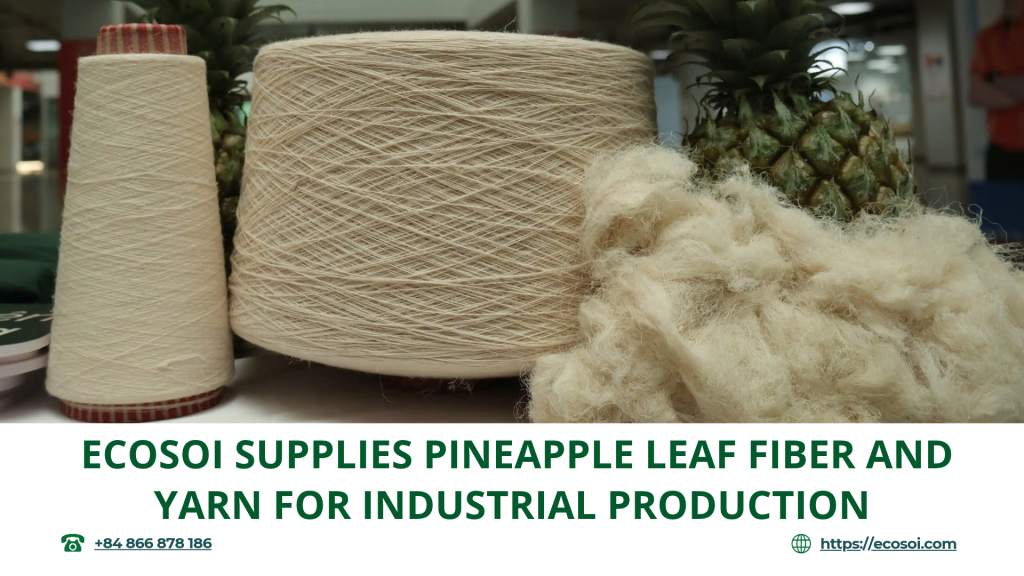
Pineapple leaves left after harvest can provide fibers for textile use. The fibers go through extraction and processing before they become textile materials. Depending on their needs, buyers can choose raw fiber, blended yarn, or finished fabric.
Raw pineapple leaf fiber and fluffed pineapple fiber
This group is for businesses that need fiber as a production input. It may suit spinning mills and material research units. Ecosoi currently offers three processing grades:
- Q1 pineapple fiber: This grade has gone through degumming. Its residual gum content is below 10%. The fiber has a milky white color.
- Q2 pineapple fiber: Its degumming level is around 70–80%. Its impurity content is below 15%. The stated fiber length is 70–120 cm.
- Q3 pineapple fiber: This grade has not gone through degumming. Its gum content is around 20%, while its impurity content is above 25%. The fiber may be white, green, or brownish.
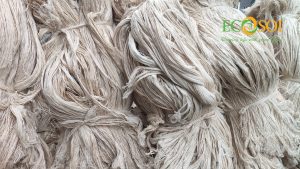
Each grade has a different processing level and material condition. Therefore, Q1 is not always a better choice than Q2 or Q3. The right grade depends on the input needs and the next production step.
Ecosoi also offers fluffed pineapple fiber. This form can be used for spinning and some other material applications. Its length can be adjusted to meet specific needs.
If you need fiber for spinning, discuss these points with the supplier first:
- Processing level and impurity content.
- Required fiber length.
- Desired yarn properties.
- Planned production process.
These details help both parties find a suitable fiber grade.
Blended pineapple yarn for weaving and knitting
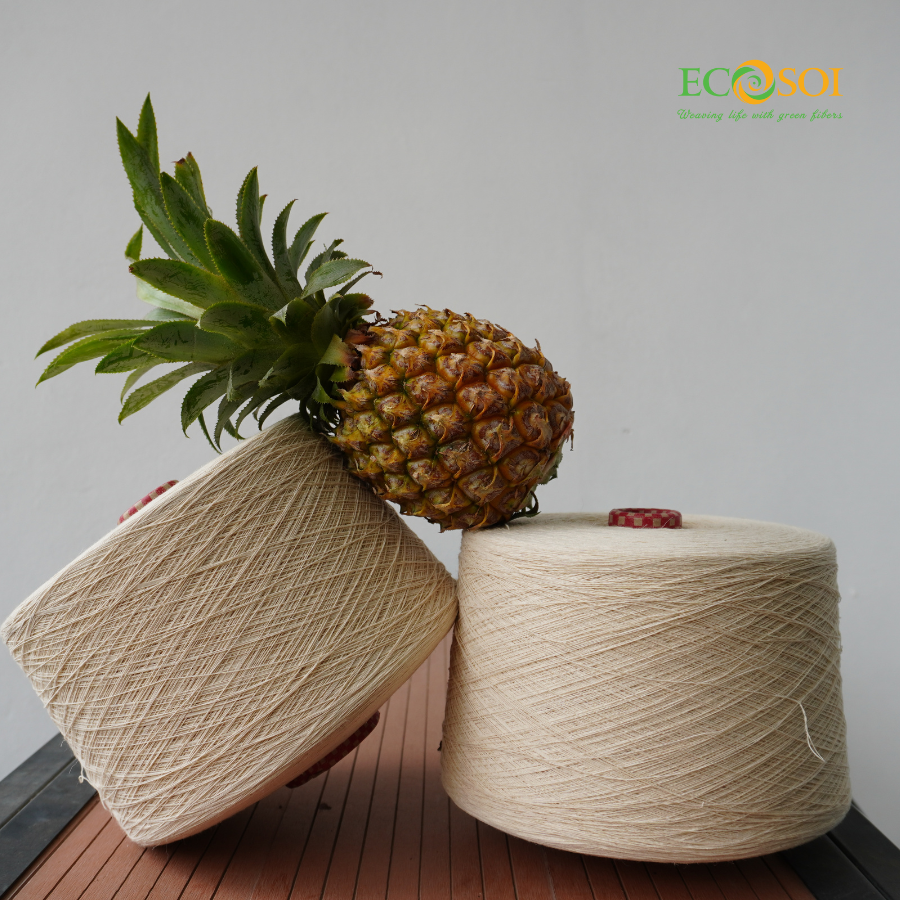
Some businesses do not need to buy raw fiber and process it into yarn. For companies that already have weaving or knitting processes, blended yarn may be a more direct option.
Ecosoi offers several pineapple blended yarn options. They differ in fiber content and yarn count:
- 20% pineapple / 80% cotton yarn: Available in 20 Ne for woven fabrics. For knitted fabrics, the listed counts are 20 Ne, 30 Ne, and 32 Ne.
- 40% pineapple / 60% cotton yarn: Available in 10 Ne.
- 30% pineapple / 70% ramie yarn: Available in 18 Nm. This yarn is listed for woven fabric applications.
Fiber content and yarn count help buyers make an initial choice. They also help compare yarn with production needs.
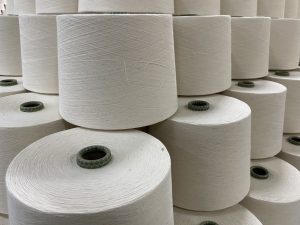
However, these details alone cannot show if a yarn suits a specific production line. Buyers should also check evenness, strength, twist, and ease of processing.
For spinning mills, discussions should focus on fiber properties and the required yarn specifications. Weaving and knitting mills should also clarify their production methods and target fabric structures.
Pineapple fabric for handloom and machine production
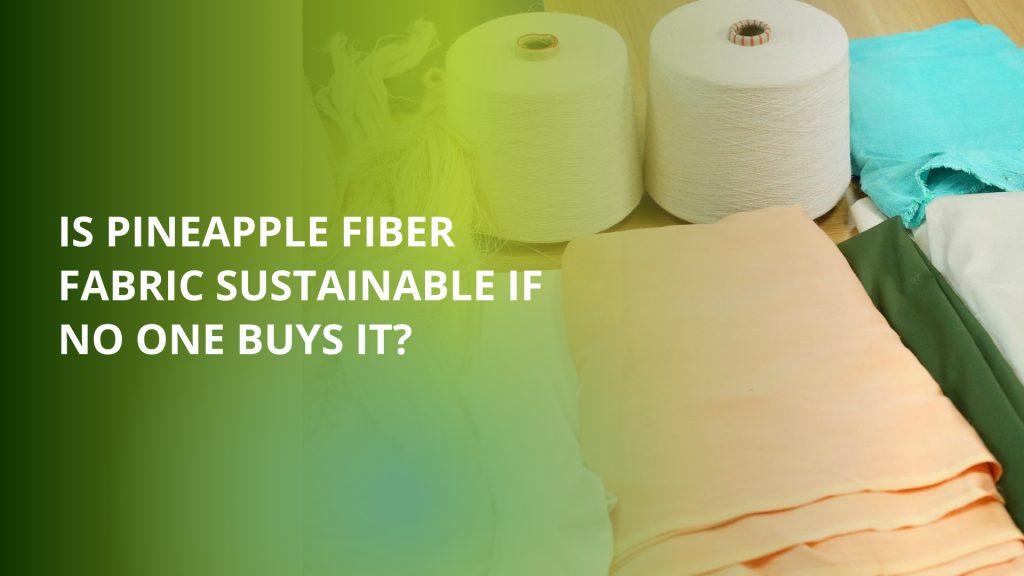
Finished fabric can help fashion brands, garment workshops, and fabric users save time when sourcing materials. Ecosoi’s fabric catalog has two main groups: handwoven and machine-made fabrics.
Each product comes with its own composition and technical details. For example:
- CFD 2500011 (NO.11): 15% pineapple yarn, 83% cotton, and 2% spandex. Its weight is 200 g/m², and its width is 54/56 inches.
- Canvas CV40: 40% pineapple yarn and 60% cotton. Its weight is 300 g/m², and its width is 1.6 m. The listed color is natural.
These details give buyers a starting point. For example, fabric weight and width help estimate how much material a project may need.

However, product specifications do not show the full feel or performance of a fabric. Buyers still need to check its drape, stretch, color fastness, and shrinkage after washing.
A fabric that works well for T-shirts may not suit shirts or bags. Therefore, define the final use before choosing a fabric.
Explore the Ecosoi product catalog.
Which production needs can Ecosoi materials serve?
The right pineapple material depends on the production stage and the buyer’s needs.
For spinning mills and material research units, raw pineapple fiber and fluffed pineapple fiber are worth considering. Buyers should check the processing level, fiber length, and impurity content. They should also define the yarn properties they want after spinning.
Fabric mills may use pineapple blended yarn to study and develop new fabric structures. Key details include fiber content, yarn count, and weaving method. Meanwhile, fabric makers and garment workshops can explore woven, knitted, and Canvas fabrics. Their choice depends on fiber content, fabric weight, width, and the needs of the final product. Fashion brands and designers can also explore pineapple fabric for different designs. These may include T-shirts, polo shirts, dress shirts, and accessories.
Technical details are not the only factors to consider. Buyers should also check the fabric surface, drape, stretch, and ease of processing. These points help show if the material suits a design. Individual buyers and small research projects can also view Ecosoi’s product catalog. For specific needs, contact Ecosoi first to check product details and availability.
What should buyers prepare before placing an order?
A clear purchase request helps the supplier understand what the buyer needs. It also gives both parties a basis for discussing supply options. Before contacting Ecosoi, prepare the following details.
Identify the material you need
First, decide whether you need raw pineapple fiber, fluffed pineapple fiber, blended yarn, or finished fabric. Each type serves a different production stage. Choosing the right form from the start can save time and avoid extra discussions.
Provide technical requirements
For fiber, state the required processing level, length, and impurity content. For yarn, provide the blend ratio, yarn count, and intended use. Also state whether you plan to weave or knit the yarn. For fabric, share the fiber content, weight, width, color, and intended application.
If you have internal standards or reference samples, send them with your request. This helps the supplier review your needs more closely.
Estimate the order quantity and delivery time
State whether you need the material for research or production. The estimated quantity helps both parties discuss prices and supply options. Your required delivery date is also important. Delivery time must be confirmed for each material type and order size.
Agree on evaluation criteria before production
For orders with special technical needs, both parties should agree on how to assess the material. These criteria may cover fiber content, physical properties, or finished-product quality. When needed, buyers should test samples on their actual production lines. The results help show if the material is suitable before a large order begins.
Confirm supply conditions
After reviewing the request, both parties can discuss product details, sample or stock status, quantity, and price. They should also confirm the minimum order quantity (MOQ), production time, and delivery schedule. These terms may vary by material type and order size.
Pineapple fiber and the development of sustainable textile materials
Pineapple leaves left after harvest are agricultural by-products. They can serve as a source of fiber. With suitable processing, these fibers can become inputs for textile production and other material uses.
The potential of pineapple leaf fiber in textiles
Pineapple leaf fiber offers another material option for the textile industry. It comes from agricultural by-products and can be used to develop different material forms. These include raw fiber, blended yarn, and woven fabric. The material also draws interest because of its properties. These may support the development of different textile products.
However, the final properties depend on how manufacturers extract, process, and blend the fiber. They can adjust these steps to meet different needs. Large-scale use still requires further work. The industry needs to improve processing methods and quality control. It must also assess how stable the fiber supply can be. These factors will help determine how widely the material can be used in textile production.
Natural origins do not always mean lower environmental impact
Using pineapple leaves can help add another source of raw materials. However, an agricultural by-product origin does not prove that a product has a lower environmental impact. The actual impact depends on several steps. These include collection, processing, blending, manufacturing, and transport.
Therefore, businesses need to assess the material and share clear information about it. This also helps them make more responsible claims about sustainability.
Ecosoi supplies materials from pineapple fiber to finished fabric
Ecosoi offers materials for different stages of textile production. The range includes raw pineapple fiber, fluffed pineapple fiber, blended yarn, and fabric. The best choice is not always the product with the highest pineapple fiber content. Instead, businesses should choose materials that match their processes and technical needs.
If your business needs pineapple fiber, blended pineapple yarn, or pineapple fabric, please share these details with Ecosoi:
- Required material type.
- Product specifications and technical needs.
- Estimated order quantity.
- Intended application.
- Required delivery time.
With this information, both parties can discuss suitable products, supply capacity, pricing, and the next steps.
Contact Ecosoi to discuss your pineapple fiber material needs for a project or production order.
- Website: https://ecosoi.com/
- Product catalog: https://ecosoi.com/shop/
- Facebook page