 VIETNAMESE
Pineapple Fiber Fabric – Potential for the Green Fashion Industry
Author: Dong Nghi – Article excerpted from the Green Business & Economy Magazine.
Recently, alongside the growing trend of eco-friendly living, the term “sustainable fashion” is gaining widespread recognition and interest. Especially within the fashion industry, selecting environmentally friendly materials is prioritized, and among the top choices today is pineapple leaf fiber fabric.
An Essential Green Material
As the fashion industry generates vast amounts of waste and environmental hazards, like toxic dyes, sustainability in production and consumption processes is increasingly prioritized. This “greening” trend has led major global fashion brands such as Uniqlo, H&M, Gap, and Levi Strauss & Co. to adopt strategies to integrate eco-friendly materials in fashion, aiming for sustainable growth. In response to global trends, many Vietnamese enterprises are researching sustainable fiber alternatives, and pineapple fiber is emerging as an excellent substitute for leather, fabric, and accessory production.

People harvest pineapple leaves
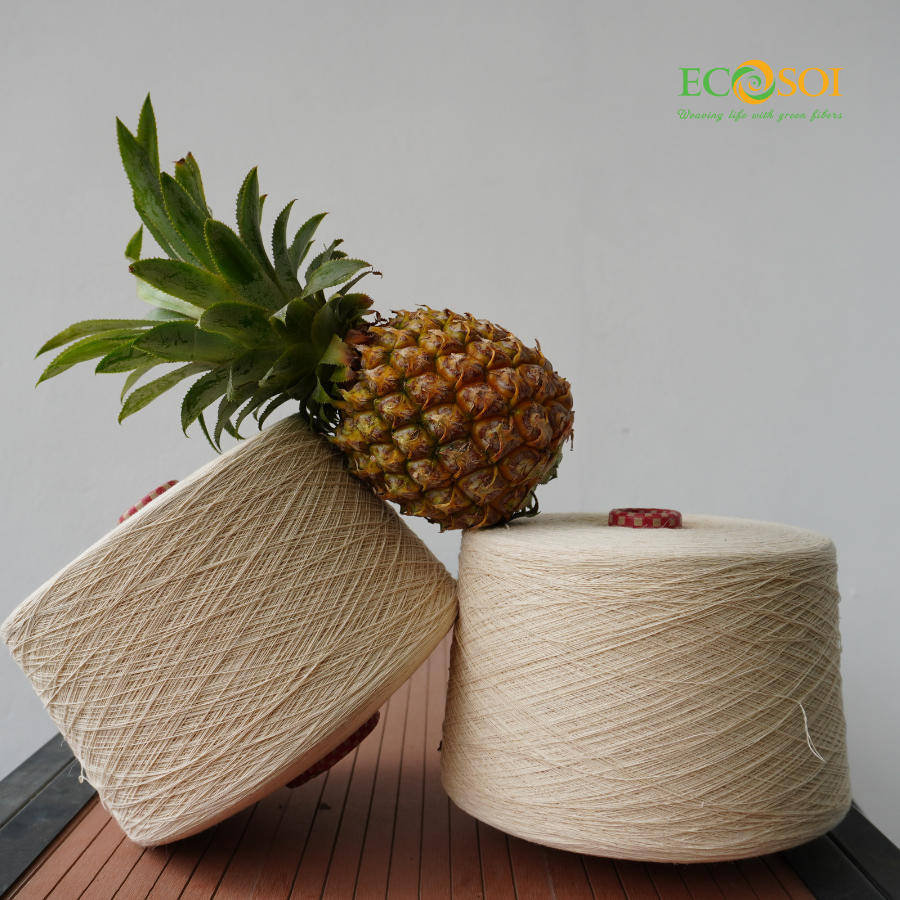
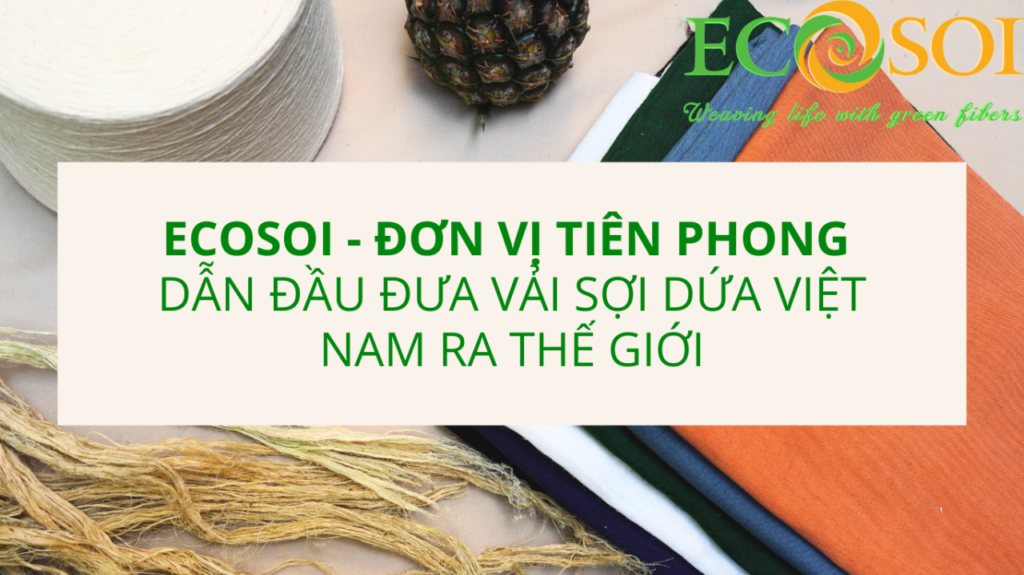
Additionally, pineapple is widely cultivated in Vietnam, with over 47,000 hectares dedicated to the crop, yielding over a million tons of fruit and leaving millions of tons of leaves unused each year. Typically processed by chopping or burning, these leaves present an opportunity to increase the pineapple plant’s value while supporting rural livelihoods and environmental goals. ECOSOI, a joint-stock company founded in 2021, is focused on converting pineapple leaves, banana stems, and other materials into eco-friendly fibers, producing premium products for domestic and international markets. ECOSOI specializes in developing fiber extraction machines, including fiber separators and fluffing machines, to create both raw and refined fibers.
Moreover, the by-products from the pineapple fiber production process add further value, forming a naturally closed-loop cycle. For example, tangled fibers are dried and supplied to traditional papermaking units, while leaf pulp is repurposed as animal feed or fertilizer.
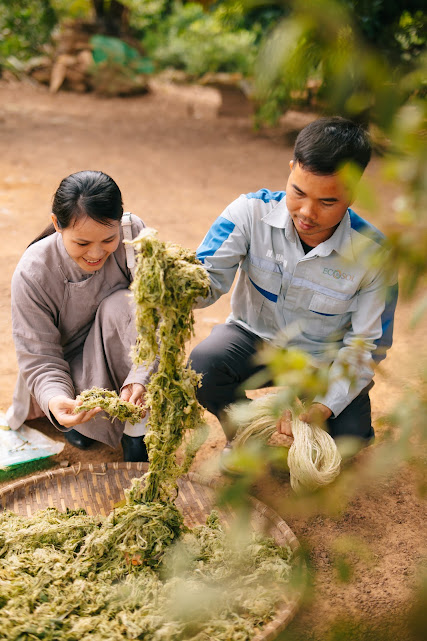
The tangled fibers from ECOSOI are dried and supplied to traditional paper-making units
Durable and Breathable Pineapple Leaf Fiber
Regarding pineapple fiber, Vu Thi Lieu, founder and CEO of ECOSOI, explains: “Pineapple leaf fiber fabric, often called ‘pineapple fiber,’ is produced from natural fibers extracted from pineapple leaves. Repurposing these abundant leaves for eco-friendly textile production optimizes resource use and reduces the need for other materials. Due to its fine, soft texture, pineapple fiber fabric resembles linen or natural silk in feel.”
This fabric’s weaving technology strengthens its structure while maintaining breathability, making it easy to dye with lasting color vibrancy, yielding beautifully unique fabric colors. An advantage of pineapple fiber fabric over linen or silk is its high tensile strength. Additionally, it requires minimal maintenance during washing and drying, saving time for users.
By pioneering pineapple fiber research and application in Vietnam’s apparel industry, ECOSOI not only showcases Vietnam’s natural fiber products internationally but also provides a sustainable job creation solution for farmers. Pineapple leaf fiber, like other natural-origin fabrics, has broad applications in clothing, bags, rugs, shoes, tablecloths, and even automotive products like tires and conveyor belts, as well as household items like coasters and ropes. Ecosoi products are already reaching markets in Vietnam, Japan, China, South Korea, and have been showcased at green fashion events worldwide.
Pineapple fiber isn’t entirely new—Piña, a fiber from pineapple leaves, has long been used in the Philippines, with garments made from it appearing as far back as Greece and parts of Africa centuries ago. However, Vietnamese production and export of pineapple leaf fabric to Western markets is a promising signal for the green fashion industry in Vietnam and beyond, offering a sustainable, circular future for pineapple farming and textile innovation.