 VIETNAMESE
WHY IS ECOSOI PINEAPPLE FIBER BLENDED WITH COTTON?
In eco-friendly textiles, fabrics made from crop waste are gaining great attention. Among these, blending pineapple fiber with natural cotton is very popular. Many buyers and manufacturers often ask why pineapple fiber is blended with cotton instead of being woven as 100% pure fiber. The answer lies in how both fibers balance each other out. This mix enhances fabric softness, boosts durability, and lowers production costs. This article explains the technical reasons behind this blend. In addition, we introduce Ecosoi pineapple fiber solutions for green supply chains.
Nội dung chính:
Technical properties of pineapple fiber and cotton
Characteristics of natural pineapple fiber
Workers extract pineapple fiber from leaves left behind after harvesting. This leaf fiber offers high tensile strength and great durability. In addition, its hollow structure allows moisture to escape very quickly. However, 100% pure pineapple fabric can feel slightly coarse for daily clothing.
Characteristics of cotton fiber
Cotton is a very familiar natural fiber in textile production. Cotton yarn is famous for its softness and good sweat absorption. As a result, it feels very gentle on human skin. Even so, pure cotton fabric wrinkles easily and shrinks after washing. Also, cotton lacks the high tensile strength of pineapple fiber.
Key reasons: Why pineapple fiber is blended with cotton
Mixing these two natural fibers brings clear technical improvements to finished fabrics.
Offsetting weaknesses for a softer fabric surface
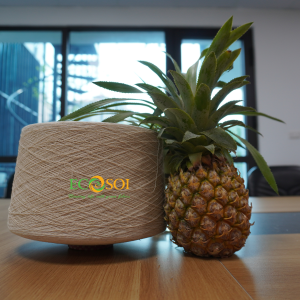
When spinning blended yarn, cotton acts as a softening agent. Consequently, cotton reduces the initial coarseness of pineapple leaf fiber. Conversely, pineapple fiber adds a strong structural frame to cotton. This combination creates a fabric that is soft yet holds its shape well.
Improving mechanical strength and reducing wrinkles
Garments made from 100% cotton can lose their shape after repeated washing. However, adding pineapple fiber increases the fabric tensile strength significantly. Thanks to the strong structure of soft Ecosoi fiber, blended fabrics resist shrinking and wrinkle far less.
Enhancing breathability and antibacterial qualities
Pineapple fiber possesses natural antibacterial properties. Furthermore, its hollow fiber channels help water evaporate rapidly. Therefore, pineapple-cotton blends dry much faster than standard cotton items. This feature makes the fabric ideal for casual wear and light activewear.
Optimizing production costs and mass weaving
Spinning 100% pure pineapple yarn requires complex mechanical adjustments on machines. Therefore, blending pineapple with cotton helps yarn run smoothly on standard industrial looms. Common blend ratios include 30% pineapple with 70% cotton or 20% pineapple with 80% cotton. As a result, factories reduce yarn breakage, lower costs, and keep retail prices reasonable.
Benefits of pineapple fiber blended with cotton
Value proposition for factories and fashion brands
For manufacturers, using a pineapple fiber cotton blend offers clear commercial advantages:
- Easy application: Works smoothly on existing knitting and weaving machines.
- Green certification: Increases the ratio of eco-friendly inputs in products. This helps brands meet international green textile rules for export.
- Product versatility: Ideal for making t-shirts, dress shirts, casual trousers, and home textiles.
Peaceful experience for consumers
Cotton blended with pineapple fiber feels comfortable, cool, and safe on sensitive skin. Buyers enjoy durable clothing while helping recycle agricultural waste leaves. In addition, this choice supports local farming communities in Vietnam directly.
Quality pineapple fiber supply process from Ecosoi
Ecosoi is a pioneer in Vietnam in collecting pineapple leaves and producing standardized textile fiber.
We apply mechanical extraction combined with safe biological treatment. Furthermore, our process uses zero harsh chemicals. Finished Ecosoi fiber achieves high purity and uniform length. Therefore, it is ready for spinning mills to blend with cotton or other natural inputs.
Conclusion and partnership invitation
In short, the points above explain clearly why pineapple fiber is blended with cotton. This blend combines the best qualities of both fibers into a soft, durable, and cost-effective fabric.
If your company needs quality fiber to develop green textiles, contact Ecosoi today. Our team is ready to send free samples and offer pineapple fiber blend consulting for your orders.